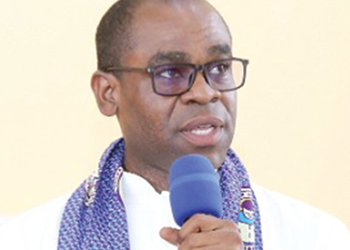
The Deputy Ranking Member of Parliament’s Health Committee, Patrick Boakye-Yiadom, has urged government to train more specialised doctors and nurses to staff Ghana’s cardiac centres, warning that the country cannot keep relying on a single team at the Korle Bu Teaching Hospital.
He made the call during the committee’s oversight visit to the hospital, where he said the cardiac centre depends on one team working without breaks or leave, and that a second centre under construction at the Komfo Anokye Teaching Hospital (KATH) needs a team ready before it is commissioned.
The committee visited Korle Bu to inspect the cardiac centre. Mr. Boakye-Yiadom said members were happy with the progress made so far.
He praised the doctors at the centre, who he said are working assiduously to care for patients, many of whom might otherwise never get such highly skilled care.
One Team Working Around the Clock
The Deputy Ranking Member said his main concern during the visit was the need to train more skilled doctors and nurses to run the centre. At present, he said, only one cardiac team works there, and it works around the clock.

“As I speak, there is only one cardiac team working at the centre. They are working around the clock. They don’t have breaks, and they can’t take leave. What happens if one of them falls sick?”
Deputy Ranking Member of Parliament’s Health Committee, Patrick Boakye-Yiadom
The question points to a risk that goes beyond the comfort of the staff. A centre that depends on one team has no cover when a member is ill, on leave or exhausted, and patients who need specialised cardiac care are the ones exposed.
Training Must Come First
Mr. Boakye-Yiadom said government should place emphasis on training more highly skilled doctors and nurses so that the centre can be maintained and sustained. His appeal covers both doctors and nurses, since cardiac care depends on whole teams. He also looked beyond Korle Bu, noting that it is not the only cardiac centre in the country.
“This is not the only centre. There is another one under construction at Komfo Anokye Teaching Hospital. We have to get a team ready before the project is commissioned.”
Deputy Ranking Member of Parliament’s Health Committee, Patrick Boakye-Yiadom
His point is one of sequencing. Specialists take years to train, so the people who will run a new facility have to be in training long before the building is finished.
His concern is consistent with what other specialists have said. In January 2026, Dr. Kow Entsua-Mensah, the Director of the National Cardiothoracic Centre at Korle Bu, told the inaugural meeting of the Ghanaian Society of Cardiovascular and Thoracic Surgeons that Ghana has only 14 cardiothoracic surgeons, working in five hospitals.

He called for training to be scaled up, and the workforce increased for the middle and northern belts as well as the south.
The Ghana Medical Trust Fund said in May 2026 that the entire northern sector had only two practising cardiologists, according to the Information Services Department.
New Centres on the Way
The pressure on staffing will grow as new facilities open. The Ghana Medical Trust Fund, working with the Ministry of Health, is building cardiology centres at Korle Bu, KATH and the Tamale Teaching Hospital. Each is to have catheterisation laboratories, hybrid theatres, intensive care units and recovery wards.
At KATH, the contractor told the Health Committee during a separate inspection that the catheterisation laboratory is 67 per cent complete and on course for a December deadline. The hospital’s Chief Executive Officer, Dr. Paa Kwasi Baidoo, said it is committed to delivering the laboratory on or before December 31, 2026.
For the committee, those timelines make the staffing question urgent. Equipment and buildings will not treat patients without trained teams to run them.
Attention now turns to whether the Ministry of Health and the teaching hospitals will match the new cardiac centres with a pipeline of trained doctors and nurses. With the KATH laboratory due by December 31 and further centres under construction, the committee’s call places the question of cardiac workforce training before government before the doors open.
READ MORE: Digital Infrastructure Exclusion of TVET Deepens Skills Gap