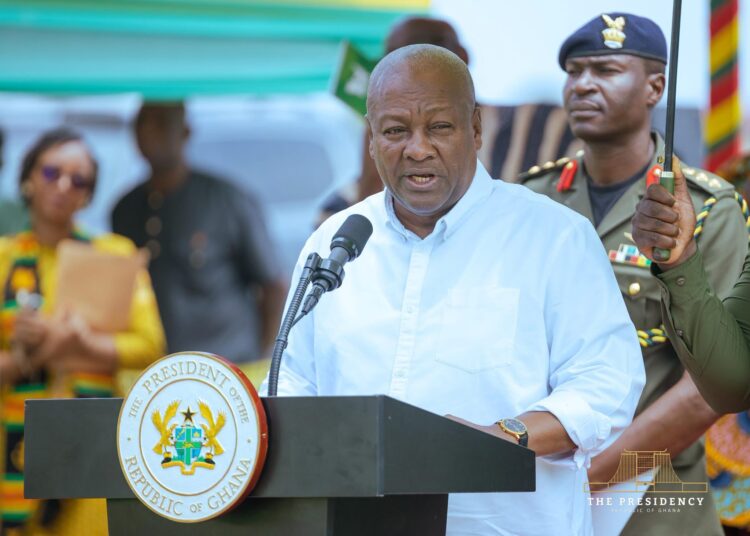
President John Dramani Mahama has announced plans to invest US$2 billion annually over four years under the government’s proposed US$10 billion New Economy Programme, as Ghana intensifies efforts to accelerate industrialisation, expand domestic production, attract private capital and create employment.
The initiative is expected to support productive sectors, with agriculture and agro-processing receiving half of the proposed investment and the remainder directed towards industry and infrastructure.
The President announced the investment plan during the sod-cutting ceremony for the Afienya Industrial Park in the Greater Accra Region.
The project forms part of the government’s strategy to expand industrial capacity, strengthen export competitiveness and position Ghana as a manufacturing and logistics hub for West Africa.
The proposed programme comes as Ghana seeks to translate economic stabilisation into stronger productive activity, greater value addition and sustainable employment.
However, its impact will depend on implementation, the mobilisation of investment, infrastructure delivery and the ability of businesses to establish commercially viable operations.
”With the start of the construction of this Afienya Industrial Park, we are creating space for businesses to establish and expand, for new industries to take root, and for more Ghanaians to secure productive and decent jobs.”
President of Ghana, H.E John Dramani Mahama
Industrial Infrastructure Targets Investor Demand
The Afienya Industrial Park covers approximately 1,238 acres, equivalent to about 501 hectares, and is expected to accommodate more than 120 enterprises.
According to the Ghana Free Zones Authority (GFZA), the site is approximately 20 kilometres from Tema Harbour and 35 kilometres from Kotoka International Airport, providing access to important transport and trade infrastructure.
The authority has also identified access to the Tema-Mpakadan railway corridor as a potential logistical advantage for businesses seeking to transport goods between industrial production centres and markets.
The development is intended to provide serviced industrial land, factory facilities and essential infrastructure to help businesses establish and expand their operations.
Such facilities could reduce the time and initial investment required for companies to develop individual industrial sites, although the actual benefits will depend on the availability, cost and reliability of the services provided.
President Mahama explained that growing investor interest and limited space at the Tema Export Processing Zone had increased the need for additional industrial land.
The expansion is significant for Ghana’s export ambitions. Industrial parks can support manufacturing clusters by bringing producers, suppliers, logistics companies and service providers into closer proximity.
This can improve supply chain coordination and create opportunities for local businesses to supply larger manufacturers.
However, attracting investors will require more than land availability. Reliable electricity, water, transport links, customs administration, access to finance and predictable regulation will remain important considerations for businesses evaluating Ghana against competing investment destinations.
$10bn Programme Prioritises Production
The New Economy Programme is intended to channel public investment into activities capable of expanding production, generating employment and strengthening the domestic economy.
Under the announcement at Afienya, the government plans to allocate US$2 billion annually over four years.
Half of the proposed funding is earmarked for agriculture and agro-processing, while the remainder is expected to support industry and infrastructure connecting producers to markets.
The allocation creates a potential link between industrial expansion and agricultural development. Investment in agro-processing could enable businesses to transform locally produced crops into packaged foods, processed ingredients and other higher value products for domestic consumption and export.
For farmers, stronger processing capacity could create additional markets for agricultural produce, provided that factories establish dependable purchasing arrangements and offer commercially viable prices.
For manufacturers, reliable supplies of locally produced raw materials could reduce exposure to imported inputs and international supply chain disruptions.
”Half of the funding is earmarked for agriculture and agro-processing, while the remainder will support industry and the infrastructure needed to connect producers to markets.”
President of Ghana, H.E John Dramani Mahama
The economic rationale is consistent with Ghana’s broader need to increase the value generated from domestic production. World Bank national accounts data show that industry, including construction, accounted for approximately 29.3 per cent of Ghana’s gross domestic product in 2023.
However, this measure includes mining, utilities and construction; it should not be interpreted as manufacturing’s individual contribution.
The distinction matters because a larger industrial sector does not automatically translate into stronger manufacturing performance. Sustained industrialisation requires investment in processing, technology, skills, productivity and businesses capable of competing in regional and international markets.
The full programme’s financing arrangements, implementation framework and allocation across individual projects will therefore be important in determining how effectively the proposed investment translates into measurable economic gains.
Land Security and Local Jobs Key to Success
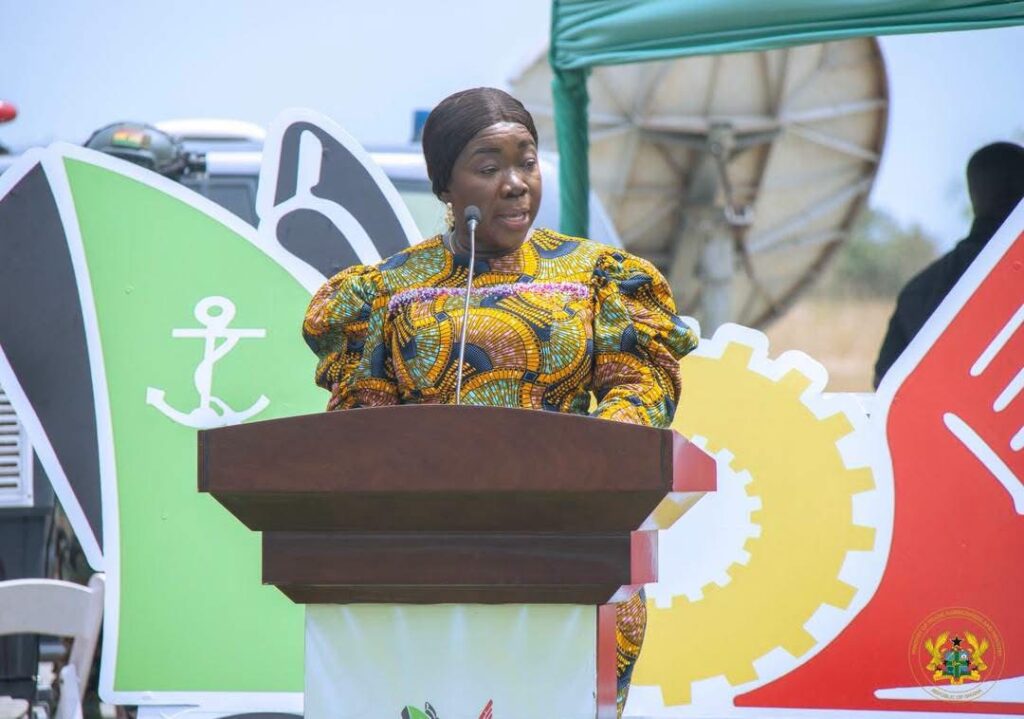
Minister for Trade, Agribusiness and Industry Elizabeth Ofosu-Adjare, who also chairs the board of the Ghana Free Zones Authority, emphasised the importance of securing land free from litigation to facilitate industrial development.
Drawing on her 22 years of experience at the Bar, the minister highlighted the role of cooperation between traditional authorities, host communities and government in making land available for investment.
Land disputes can delay construction, increase project costs and create uncertainty for investors. Securing clear land rights and completing the necessary legal and administrative processes are therefore essential to reducing investment risks.
“Access to undisputed land is critical to creating an enabling environment for businesses to establish factories and expand their operations.”
Minsiter for Trade, Hon. Elizabeth Ofosu-Adjare
The minister’s remarks also highlight the importance of cooperation between public institutions and local communities in industrial development. Beyond making land available, such cooperation must support transparent land acquisition, appropriate compensation where applicable and meaningful opportunities for affected communities.
Employment creation will be another measure of the project’s success. President Mahama has called for training programmes to prepare residents of Afienya and neighbouring communities for jobs expected to emerge from the industrial park.
The development could generate employment during construction and, subsequently, in manufacturing, warehousing, transport, maintenance and other business services.
Nevertheless, the number and quality of jobs will depend on the industries attracted, their production capacity and their ability to sustain operations.
“There should be a programme that trains the local people so that they can get some of the jobs created in this industrial park.”
Minister for Trade, Hon. Elizabeth Ofosu-Adjare
The government will also need to ensure that local suppliers and small businesses can participate in the park’s supply chains. Procurement opportunities, technical training and partnerships with established manufacturers could help domestic enterprises benefit beyond direct employment.
Ultimately, the Afienya Industrial Park represents an opportunity to connect industrial infrastructure with Ghana’s wider production and export ambitions.
The proposed US$10 billion New Economy Programme provides the policy framework for that ambition, but the outcome will depend on financing, execution and investor confidence.
For Ghana’s industrialisation agenda to deliver lasting economic benefits, the test will be whether the investment produces operating factories, competitive locally made goods, stronger exports and sustainable jobs for Ghanaians.
READ ALSO:IMF Warning Raises Fresh Concerns for Ghana’s Economic Recovery