South Korea has proposed military talks with North Korea to clarify the location of their shared military demarcation line and reduce the risk of accidental clashes along the heavily fortified border, following recent landmine blasts that injured three South Korean soldiers.
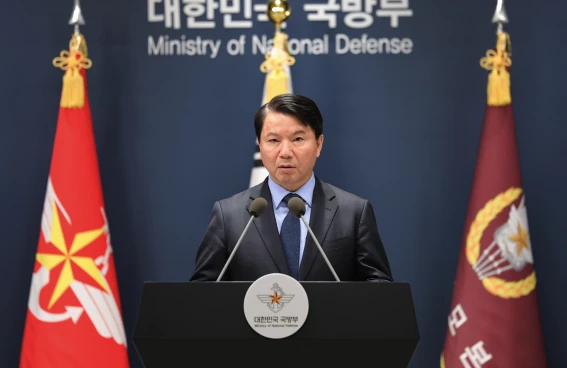
Kim Hong-Cheol, South Korea’s Deputy Minister for defence policy, announced the proposal in a televised statement, saying that the talks would address border disagreements, military communication and measures to prevent unintended confrontations between troops.
“Our Ministry of National Defense officially proposes to North Korean authorities that South-North military talks be held to mutually confirm the exact location of the ground military demarcation line between the South and the North, discuss the restoration of military communication lines, and discuss measures to prevent accidental clashes in border areas.”
Kim Hong-Cheol
He added that Seoul was also willing to participate in three-way discussions involving the US-led United Nations Command.
The proposal comes amid rising tensions over North Korea’s border fortification activities and disagreements about where the military demarcation line lies. However, it remains unclear whether Pyongyang will accept the offer, given its suspension of virtually all dialogue and cooperation with Seoul in recent years.
Mine Blasts Prompt Renewed Diplomatic Effort
South Korea has shown greater urgency in seeking to ease tensions following the September 21 landmine blasts, which injured three of its soldiers near the border.
South Korea’s military concluded that the explosions were caused by North Korean mines planted south of the military demarcation line. North Korea has denied responsibility and rejected Seoul’s demand for an apology and the removal of its remaining mines.
South Korean officials have argued that the incident highlights the dangers posed by disagreements over the precise location of the border, particularly as North Korean troops continue to reinforce their positions.
Kim Hong-Cheol warned that leaving the dispute unresolved could increase the likelihood of accidental confrontations because troops on both sides operate according to their own understanding of the demarcation line. “The recent increase in North Korean activities along the military demarcation line, as well as our warning broadcasts and warning shots, is also related to this situation,” he said.
The border was established under the 1953 armistice that ended the fighting in the Korean War. Some of the boundary markers installed decades ago have since disappeared, contributing to uncertainty over the line’s precise location.
However, South Korean Defence Minister Kang Shin-chul has maintained that the area where last month’s mine blasts occurred was not disputed.
Seoul previously proposed similar military talks in November, but North Korea did not respond to the offer.
North Korea Rejects Border Claims, Threatens Retaliation
North Korea has continued strengthening its border defences, adding mines, barbed-wire fences, tactical roads, anti-tank walls and other fortifications along what is already one of the world’s most heavily armed borders.
South Korea’s military has reported that North Korean soldiers crossed the military demarcation line 50 times this year while carrying out fortification work. Seoul said its forces responded with warning shots and broadcasts.
Pyongyang has disputed South Korea’s account, accusing it of using the alleged crossings as a pretext to escalate tensions.
The latest proposal came days after Kim Yo Jong, the influential sister of North Korean leader Kim Jong Un, visited frontline areas where North Korean troops are reinforcing the border.
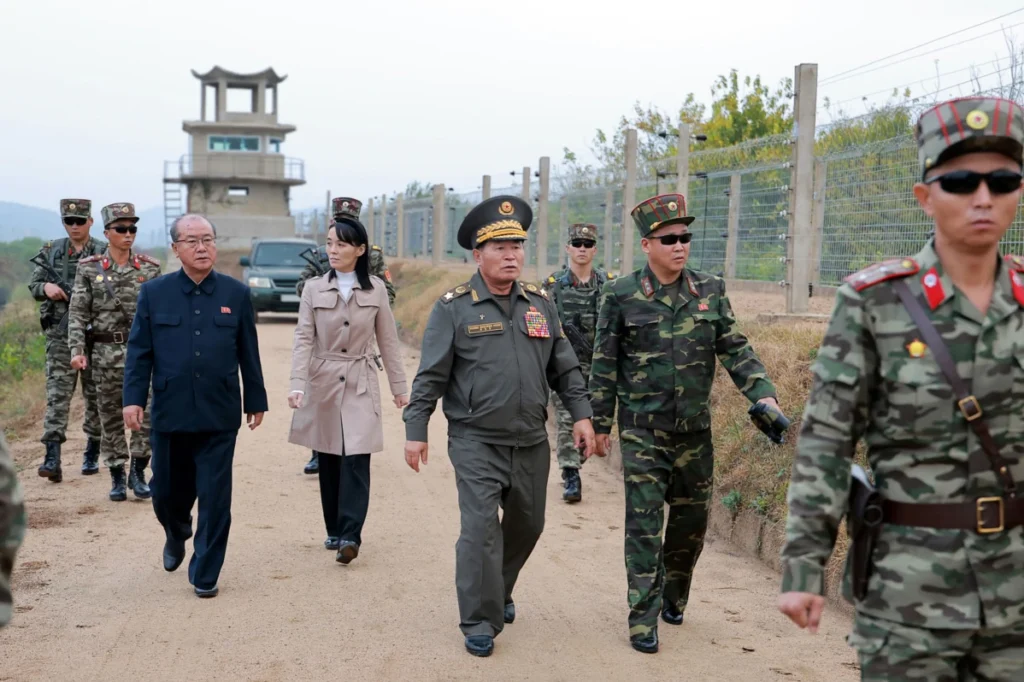
During the visit, she renewed warnings that Pyongyang would retaliate against South Korean provocations directed at the fortification work.
Kim Yo Jong also said North Korea planned to activate border loudspeakers broadcasting anti-Seoul propaganda, a psychological warfare tactic previously used by both countries. She added that unspecified “new counter means” had been placed on alert along the border.
She blamed South Korea for firing warning shots and broadcasting warnings towards North Korean soldiers, arguing that Seoul had falsely accused them of crossing the military demarcation line.
North Korean Army Marshal Pak Jong Chon, who accompanied Kim Yo Jong during Wednesday’s visit, also denied that North Korean troops had breached the border during fortification work. “Our army knows where our borderline is better than any others,” Pak said.
He accused South Korea of making “deliberate, premeditated and absurd” claims to shift responsibility for the escalating tensions and threatened an “overwhelming response” to any South Korean provocations.
The conflicting accounts emphasize the difficulties facing Seoul’s latest initiative. While South Korea says clarifying the boundary and restoring communication channels could help prevent unintended clashes, North Korea has continued rejecting its account of the border incidents and warning against interference with its defensive activities.
Whether Pyongyang agrees to the proposed talks remains uncertain. For now, the competing military activities and threats highlight the risk of further incidents along the Korean Peninsula’s heavily militarised frontier.
READ ALSO: North Korea To Resume Propaganda Broadcasts Against Seoul