Ghana’s gas production increased in the first half of 2026, and flaring fell sharply across its three producing oil fields, but the financial position of Ghana National Gas Company Limited (GNGLC) remains under pressure as collections weaken and some customers pay tariffs below the applicable cost-recovery benchmark.
The Public Interest and Accountability Committee (PIAC), in its 2026 Semi-Annual Report, identified a 17.53% year-on-year decline in the value of receipts under the Cash Waterfall Mechanism (CWM), alongside concerns about outstanding receivables and differentiated tariffs for some lean-gas off-takers.
The findings expose a tension within Ghana’s gas value chain. Higher production and improved management of gas flaring are positive operational developments, but they do not automatically guarantee that the infrastructure responsible for processing and supplying gas is financially sustainable.
Gas infrastructure requires predictable payments to cover operating costs, maintenance, investment and obligations to upstream suppliers.
If the revenue collected from customers does not adequately reflect the cost of supplying gas, financial pressure can spread through the chain and threaten the reliability of supply.
PIAC warned that the conditions could affect GNGLC’s financial viability, upstream payments to GNPC and the long-term reliability of gas infrastructure and supply.
The concern is especially important for Ghana because natural gas supports electricity generation and industrial activity.
Weakness in the gas value chain can therefore affect the wider energy system, even when production volumes appear relatively strong.
More Gas Does Not Automatically Mean More Revenue
PIAC reported that total gas production increased by approximately 4.4% to 136,151.09 million standard cubic feet during the first half of 2026.
The increase provides a positive operational indicator, but gas production and gas revenue are not interchangeable measures.
The financial return from gas depends on how much is sold, the prices charged, the cost of processing and transportation, the terms of supply agreements and the collection of payments from customers.
PIAC’s report noted that no amount was paid into the Petroleum Holding Fund for raw gas supplied during the period, consistent with the government’s zeroed gas pricing policy under the Cash Waterfall Mechanism.
That finding raises a policy question about the treatment of gas supplied through arrangements where the raw-gas price is set at zero.
Although such a policy may be intended to support affordability or other commercial objectives, the absence of a payment into the fund means that the value of production does not translate into a corresponding petroleum revenue receipt through that channel.
The wider financial effects depend on how costs and revenues are distributed among the entities involved.
If the cost of producing or processing gas is not adequately recovered elsewhere in the chain, the burden may ultimately fall on state-owned companies, upstream suppliers or the public finances.
The report does not establish that the zeroed pricing policy alone caused GNGLC’s financial pressures.
However, it shows why the pricing framework, the treatment of policy objectives and the actual recovery of costs need to be considered together.
Cash Waterfall Receipts Are Under Pressure
The CWM is an important mechanism for distributing payments across parts of Ghana’s energy value chain. PIAC noted that settlements by the Volta River Authority and regular CWM receipts had improved GNGLC’s cash-flow predictability.
However, those improvements were not sufficient to remove the financial pressures identified by the committee. The total value of CWM receipts declined by 17.53% year on year, while collections improved only modestly.

The distinction between payment regularity and total collections is important. A company may receive payments more predictably while still collecting less than it needs to cover its obligations. Cash-flow timing can improve without resolving the underlying gap between revenue and costs.
PIAC’s recommendation was direct:
“GNGLC should strengthen its collection arrangements to convert processed gas sales into timely and predictable cash receipts, prioritising the reduction of outstanding receivables and consolidating recent gains in payment discipline among major off-takers, particularly those with weaker collection ratios.”
The recommendation places the emphasis on converting sales into cash rather than relying on the value of gas supplied or invoiced.
For infrastructure operators, unpaid invoices can constrain working capital, delay payments to suppliers and limit the resources available for maintenance and investment.
The policy challenge is to improve collections without undermining the ability of customers to obtain the gas needed for electricity generation and industry.
That requires more reliable payment arrangements, transparent treatment of arrears and a clear understanding of the financial obligations of each participant in the chain.
Tariff Differences Create a Cost-Recovery Question
PIAC also found that effective tariffs paid by some lean-gas off-takers remained below the Weighted Average Cost of Gas (WACOG), the applicable cost-recovery pricing framework identified in the report.
Where a customer pays less than the applicable cost-recovery tariff, the difference represents revenue that the supplier does not recover through that transaction.
If the discount is not transparently funded, the resulting shortfall can weaken the supplier’s financial position or shift costs elsewhere in the system.
PIAC recommended that GNGLC review differentiated tariffs applied to lean-gas off-takers and align them with the applicable WACOG framework. It added that any discounts retained for policy or commercial reasons should be explicitly identified, justified and transparently funded.
“Any discounts retained for policy or commercial reasons should be explicitly identified, justified and transparently funded.”
This is a significant distinction for energy policy. Governments may have legitimate reasons to support particular customers or sectors through preferential pricing, particularly where affordability and industrial competitiveness are priorities.
But such support should be visible in the financial system rather than concealed within the accounts of an infrastructure operator.
If the state wants a particular class of customer to receive a discount, the cost should be clearly identified and the funding mechanism disclosed.
Otherwise, the policy may weaken cost recovery without making the subsidy visible to taxpayers or allowing regulators to assess its effectiveness.
The issue is not simply whether tariffs should be higher or lower. It is whether the price structure reflects the actual costs of supply and whether any departures from that structure are justified and paid for.
Flaring Declines, but Compliance Still Matters
The report also records an important environmental improvement. Total gas flaring across Jubilee, TEN and SGN declined by 69%, from approximately 13,843.55 million standard cubic feet in the first half of 2025 to 4,248.05 million standard cubic feet during the same period in 2026.
PIAC commended the marked reduction in flaring across the three fields. The decline indicates improved performance in limiting the burning of gas that could otherwise be reinjected, used operationally or directed towards processing and supply, subject to technical and commercial conditions.
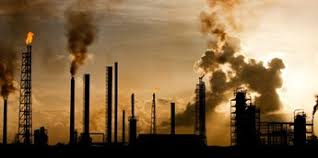
However, the aggregate reduction should not obscure field-level compliance issues. PIAC found that flaring at TEN exceeded the Environmental Protection Authority’s permissible policy limit of five million standard cubic feet per day during the reporting period, while the reported volumes for Jubilee and SGN remained within the applicable limits.
That finding demonstrates why national totals and field-specific performance must be examined separately. A substantial reduction in overall flaring is welcome, but it does not remove the need to address a field that exceeds its applicable limit.
The report also recommended coordinated monitoring and reporting of gas venting volumes by the relevant environmental and energy regulators.
More comprehensive reporting would help distinguish flaring from venting and improve oversight of gas management across the producing fields.
Gas Security Requires Financial and Operational Reform
Ghana’s gas sector must manage several connected priorities: increasing the productive use of gas, reducing avoidable flaring, recovering the costs of processing and supply, and ensuring that customers meet their payment obligations.
These priorities cannot be handled independently. Improved production offers limited value if the gas cannot be processed or delivered reliably.
Stronger sales may not strengthen infrastructure if invoices remain unpaid. Preferential tariffs may support selected customers but can undermine the supplier if the resulting costs are not transparently funded.
PIAC’s findings point towards a more integrated approach. GNGLC needs stronger collection arrangements, clearer treatment of differentiated tariffs and better management of outstanding receivables.
Regulators must also ensure that gas flaring and venting are monitored consistently and that field-level compliance is addressed.
The government must make the policy choices behind gas pricing explicit. If affordability or industrial policy requires discounts, those decisions should be transparent and financially sustainable rather than leaving infrastructure operators to absorb unexplained shortfalls.
The first-half results show that Ghana can improve gas production and reduce flaring while still facing significant financial risks within the gas value chain.
The next test is whether those operational gains can be matched by stronger cost recovery, reliable payments and transparent pricing.
Without that alignment, the country risks improving the physical supply of gas while leaving the institutions needed to deliver it under financial strain.
READ ALSO: Ghana’s Interest Rate Rally Leaves Long-Term Bond Yields Unchanged