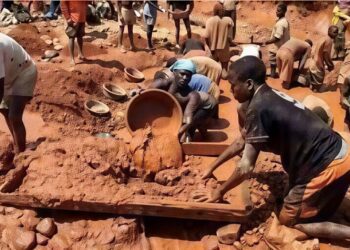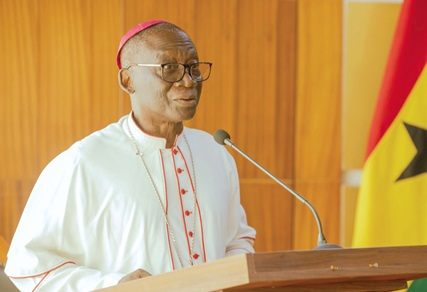
The President of the Ghana Catholic Bishops’ Conference, Most Rev. Matthew Gyamfi, has questioned the economic benefits of illegal small-scale mining, popularly known as galamsey, warning that its environmental destruction, health risks and loss of livelihoods could outweigh the revenue generated.
He argues that Ghana must assess the full cost of galamsey, including the treatment of illnesses linked to mining pollution and damage to farmlands and water bodies, rather than judging the activity mainly by the gold it produces. He called for sustainable, long-term policies and a more decisive response from government.
“To predicate the development of the economy on this small-scale mining, which has disastrous effects health-wise, environmentally, et cetera, we believe is not good for the country.”
President of the Ghana Catholic Bishops’ Conference, Most Rev. Matthew Gyamfi
Most Rev. Gyamfi stated that relying on gold to support the economy could offer only short-term benefits because the mineral resource is finite. He cautioned against building Ghana’s development strategy around small-scale mining without considering the damage it causes to the environment and public health.
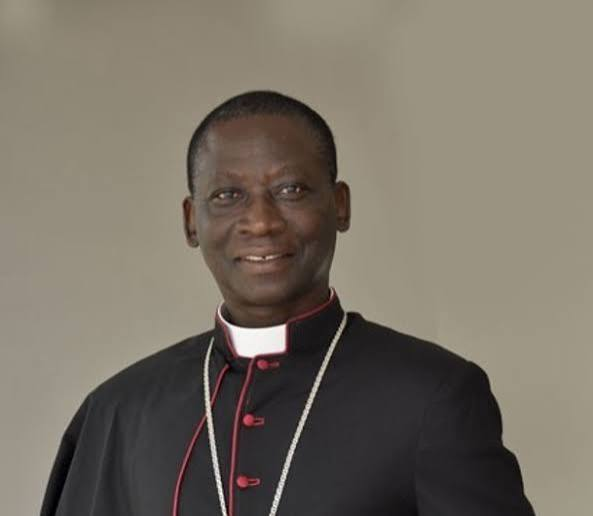
He urged authorities to consider the consequences for communities, farmlands and water bodies. While efforts to protect forests were welcome, he disclosed that the wider population must also be considered.
Health Risks Raise Questions Over Public Costs
He questioned whether gold production could justify galamsey’s effects, asking whether the country could drink or eat gold, or rely on it to meet its needs.
He warned that benefits for a few should not be considered apart from the wider costs of extraction. He said the debate should not be reduced to whether mining produces income, but should examine who benefits, who bears the consequences and whether those consequences undermine the country’s future.
Most Rev. Gyamfi called for the cost of treating diseases and other health conditions associated with galamsey to be included in any assessment of its economic value. He questioned whether the medical bills faced by affected people were adequately considered when authorities discussed the contribution of gold mining to the economy.
“Do we factor all of this into the economy?” he asked, pointing to the consequences for people who become sick and face substantial medical expenses.
He argued that the activity could generate income for a limited number of people while polluting water bodies and exposing Ghanaians to serious health hazards. The resulting burden, he suggested, should form part of the national debate on whether the economic returns justify the damage.
Bishop Calls for Sustainable Mining Policies
Describing galamsey as a complex issue, Most Rev. Gyamfi cautioned against ad hoc solutions. He called for policies that are carefully planned, thoroughly examined and designed with the long-term future in mind.
“We need a sustainable system of mining or any other things that lead us into the future, and we do not see that,”
President of the Ghana Catholic Bishops’ Conference, Most Rev. Matthew Gyamfi,
He expressed concern about statements from political leaders and people in responsible positions that, in his view, could compromise efforts to control illegal mining. He said public questions about galamsey should not be interpreted as hostility towards a government, individual or institution.
He stressed that Ghanaians must discuss the issue openly, consider the evidence and make informed choices for the country. He maintained that the issue was not about opposing any political authority, but about asking questions that all Ghanaians have a stake in discussing.
Government Urged to Intensify Galamsey Response
Most Rev. Gyamfi recalled that many Ghanaians had voted for the current government, partly because of its promises to end galamsey. With almost two years having passed, he questioned the state of progress and argued that the measures being taken remained insufficient.
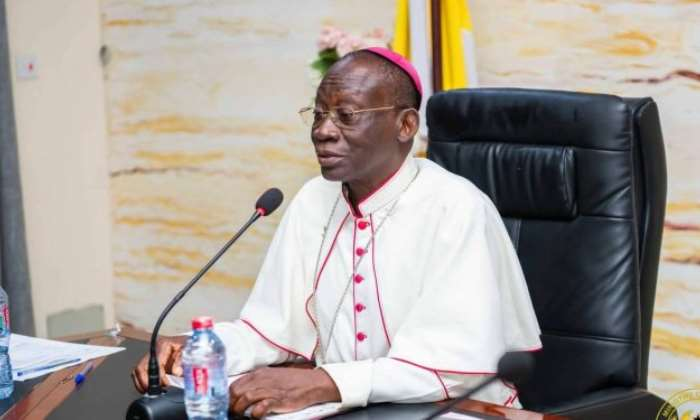
He challenged claims that galamsey provides jobs, arguing that some mining-related work destroys existing livelihoods, particularly those of farmers whose work depends on productive land and safe water.
“Galamsey is a job that destroys the work of farmers,” he stated, adding that the activity puts money into the pockets of a few while polluting water bodies and bringing health hazards to Ghanaians.
Although he acknowledged that the government had taken action, the bishop considered the response too limited to address the scale of the problem. He warned that unless more radical measures were introduced, Ghanaians would have many questions for the government in the coming year.
His remarks call for an assessment that weighs gold revenues against health risks, environmental damage and lost livelihoods.
READ MORE: UG Calls for African Research Commercialization to Drive Innovation