The Minority in Parliament has criticised the Government’s handling of the cost of living, challenging the Finance Minister’s appeal for patience.
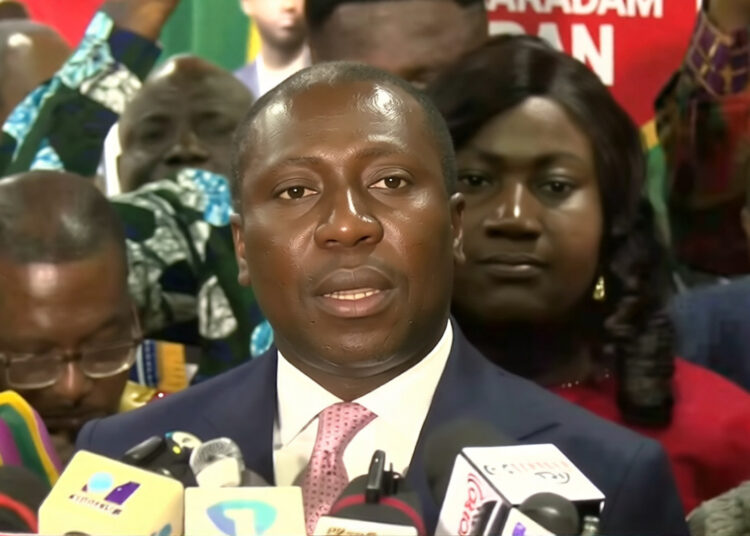
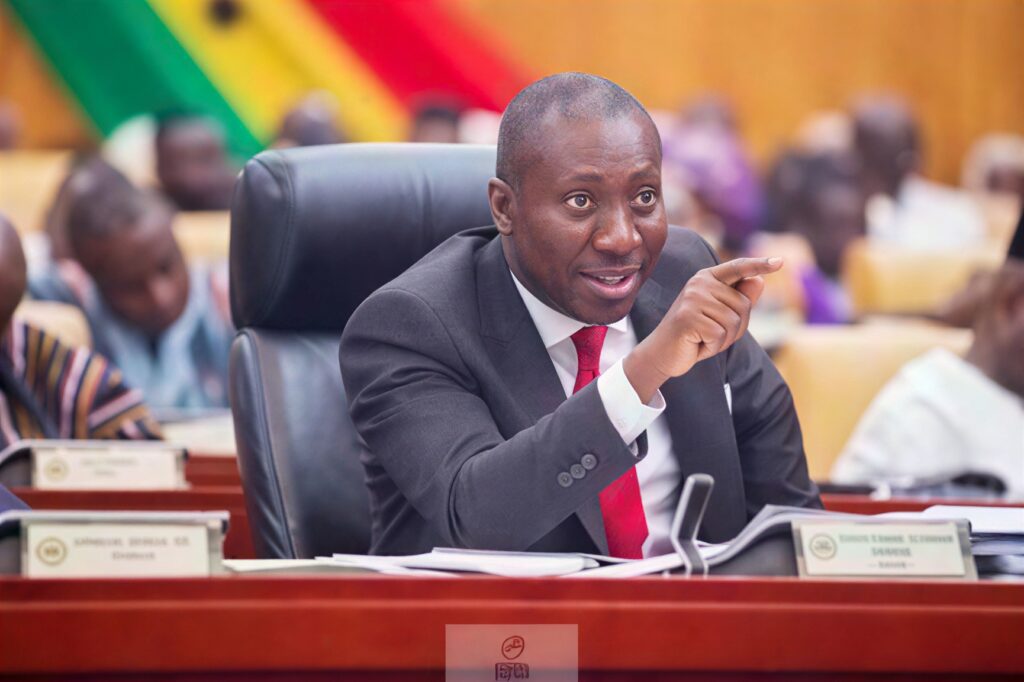
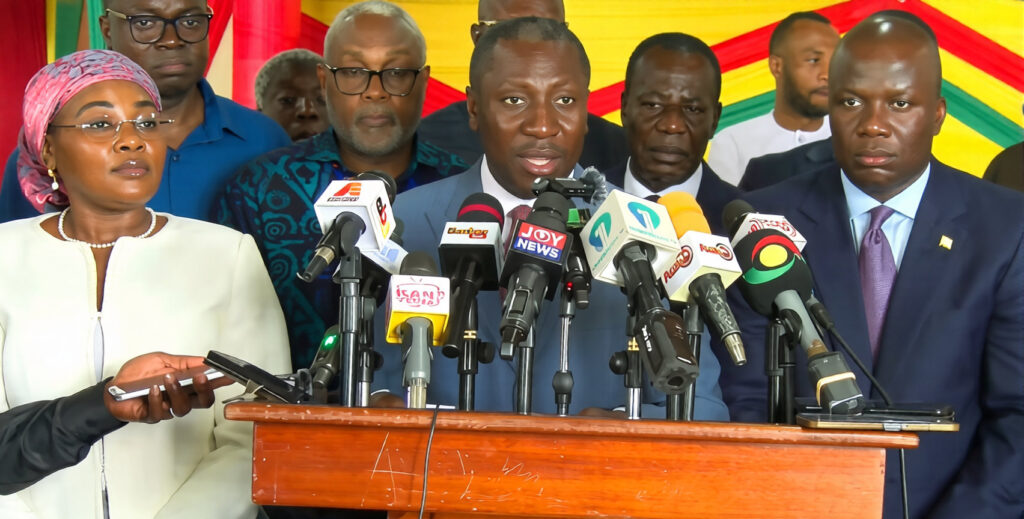
Speaking at a press conference after the presentation of the 2027 Budget, the Minority Leader and Member of Parliament for Effutu, Honourable Alexander Kwamena Afenyo-Markin questioned why Ghanaians should “continue waiting for relief” after two years under the National Democratic Congress (NDC) administration.
Honourable Afenyo-Markin argues that the economic indicators presented by the Finance Minister do not correspond with the daily experiences of households, traders and farmers. He pointed to the rising cost of essential foodstuffs and the difficulties confronting local producers, insisting that the Government’s assessment of economic stability overlooked the pressures facing ordinary citizens.
“The figures do not reflect the reality on the ground. At the Kotokuraba market, at the Koforidua market, Techiman market, Aboabo market, Kumasi Asafo market, and at the Winneba Central market, prices of foodstuffs remain high and Ghanaians cannot afford.”
Honourable Alexander Kwamena Afenyo-Markin
According to him, rice, maize, sorghum and yam have become more expensive over the two years, with some locally produced commodities costing more than their imported counterparts. He attributed this situation to inadequate support for farmers, arguing that domestic producers are struggling to compete despite the Government’s stated commitment to agricultural development.
The Effutu MP also challenged the administration’s cocoa sector record, pointing to a reduction in the farmgate price per bag since it assumed office. He contrasted this development with the assurances made by the NDC while in opposition, questioning the extent of the support currently reaching cocoa farmers.
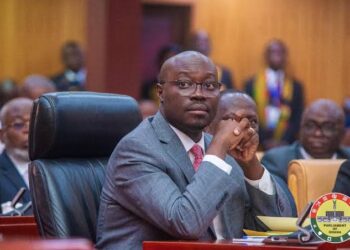
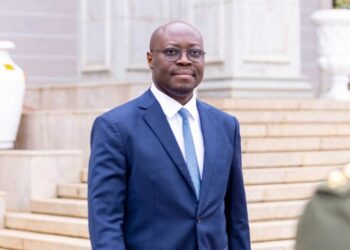
Dr Cassiel Ato Forson indicated during the budget presentation that “the work ahead would require patience” a position Honourable Afenyo-Markin considers difficult to reconcile with the Government’s previous promises. “Patience after two years? This is his penultimate budget, and he is calling for patience” he questioned, drawing attention to the administration’s employment commitments and the expectations it created before taking office.
The Minority Leader insisted that Ghanaians require tangible improvements in their livelihoods, not assurances detached from household realities. He also challenged the Government to demonstrate how its economic policies would translate into jobs, affordable food and meaningful relief.
He further characterised the budget as presenting “stability on paper, hardship in our pocket” arguing that macroeconomic progress would have little significance if citizens continued to struggle with the cost of living.
The Minority Caucus intends to conduct a detailed examination of the 2027 Budget and present a “a full critique” after the budget workshop.
Minority Questions Government’s New Economy And Big Push
Beyond the immediate pressures of living costs, the Minority in Parliament also questioned the Government’s proposed New Economy Programme and the funding arrangements for its Big Push infrastructure initiative, demanding greater clarity on allocations, timelines and expected outcomes.
The Effutu MP contends that the Government has not provided sufficient details to enable Parliament and the public to track the programme’s implementation. He also questioned the rationale for introducing a four-year development plan covering 2027 to 2030 when the current administration’s term would end in 2028.
“They did not tell us how much of the 10-billion-dollar IMF for the new economy will be available for the year 2027. They also failed to tell us how much will be expended in 2027 and the specific projects this will finance for proper tracking.”
Honourable Alexander Kwamena Afenyo-Markin
Honourable Afenyo-Markin further questioned the distinction between the New Economy Programme and the NDC’s previously promoted 24-hour economy initiative. He challenged the Government to explain how the two programmes differ, particularly in their financing, objectives and implementation arrangements.
He also criticised the reduction in the amount earmarked for the Big Push, claiming that the Government has moved from an earlier commitment of GH¢30 billion to approximately GH¢14 billion in the 2027 Budget. The Minority Leader considered the change “a significant departure from the original announcement” and called for an explanation of the revised allocation.
Turning to employment, he challenged the administration to provide verifiable figures showing the number of jobs created since assuming office. He questioned the Government’s ability to meet its employment commitments, pointing to complaints from party supporters and the absence of figures he considered sufficient to demonstrate progress.
The Minority Leader also questioned the continued absence of the proposed women’s bank from the latest budget.
He recalled that the Government announced the initiative in its 2025 and 2026 Budgets but made no corresponding announcement in the 2027 fiscal statement. “Where is the woman banking?” he queried, arguing that traders and women who expected access to the promised financial support are still waiting for the initiative to materialise.
Furthermore, Honourable Afenyo-Markin criticised the Government’s proposed incentives for businesses under its renewed industrial policy. He argues that the proposed one-year exemption on machinery does not provide sufficient encouragement for investors, contrasting it with the previous NPP administration’s incentives covering both machinery and raw materials under the One District, One Factory initiative.
He also pointed to electricity tariff increases of almost 28 percent, arguing that higher operating costs could undermine private-sector investment and employment. In his assessment, the Government’s approach places excessive emphasis on taxation without creating a sufficiently supportive environment for businesses to expand.
The Minority Leader consequently characterised the administration as a “sloganeering government” insisting that economic policies must produce jobs and opportunities instead of relying on repeated political promises.
READ ALSO: Gov’t to Establish 24-Hour Mineral Processing Enclave to Derive Mineral Wealth