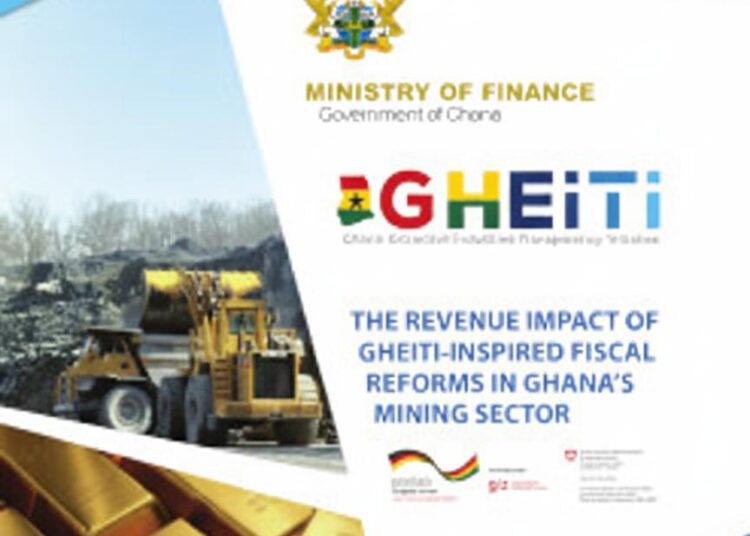
The Ghana Extractive Industries Transparency Initiative (GHEITI) has uncovered systemic flaws in how Ghana collects, tracks, and distributes revenues generated from its mineral wealth, pointing to glaring lapses in royalty disbursements, ground rent administration, and state equity holdings across major mining operations.
Released through the 2023 GHEITI Mining Sector Report, the audit highlights structural accountability failures that threaten to undermine public trust and deprive mining-host communities of desperately needed socio-economic infrastructure.
“In some districts, such as Mpohor Wassa East, their share of the revenue allocation was used to attend a funeral, while the Amansie West District used part of its allocation to evacuate refuse dumps.”
Dr. Steve Manteaw, Co-Chair of GHEITI.
Presented by Fadil Iddi, an Economics and Technical Officer at GHEITI, during a stakeholder dissemination workshop in Bolgatanga, the report arrives at a pivotal moment as the Upper East Region emerges as a major frontier for large-scale commercial gold extraction.
With operations such as the Cardinal Namdini Gold Mine in the Talensi District ramping up activity, governance watchdogs warn that failing to plug existing administrative leakages could repeat the resource-curse cycle witnessed in older mining enclaves across southern Ghana.
Royalty Disbursement Gaps and Misdirected Spending
A central red flag raised in the 2023 reconciliation report involves the persistent breakdown between statutory royalty calculations and actual transfers reaching local government authorities.
Investigators established that none of the district assemblies assessed under the review received their accurate mineral royalty allocations as stipulated under Ghana’s prescribed disbursement formula.
Remarkably, this shortfall persisted even though regional branches of the Office of the Administrator of Stool Lands (OASL) had accurately computed the exact sums owed to each beneficiary jurisdiction.

Beyond delayed and incomplete transfers, the report also exposed troubling anomalies in ground rent payments involving four major multinational producers: Newmont Ghana Gold Ltd, Adamus Resources, Golden Star Wassa Ltd, and Gold Fields Ghana Ltd.
To resolve these accounting mismatches, GHEITI recommended formal engagement with the OASL to audit payment trails and reconcile the discrepancies.
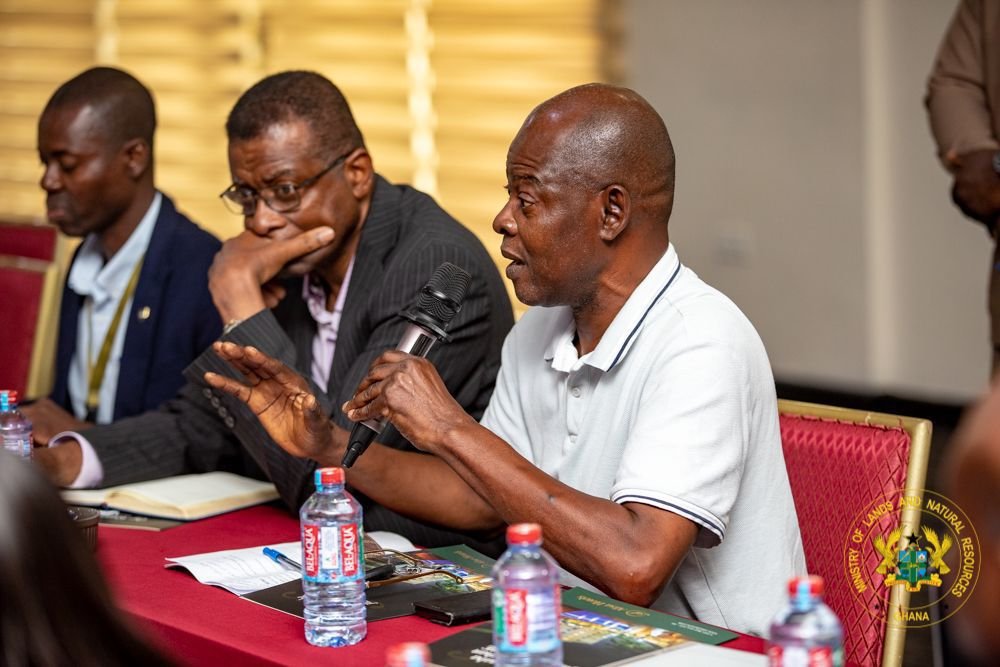
Dr. Manteaw noted that established mining districts had largely failed to convert decades of mineral extraction into durable community assets, urging Upper East stakeholders to enforce strict fiscal discipline before large-scale inflows begin.
Statutory Deviations in State Equity Participation
Equally concerning are wide variations in the Government of Ghana’s equity stakes across active mining leases, which deviate sharply from statutory benchmarks.
Under Section 43(1) of the Minerals and Mining Act, 2006 (Act 703), the state is entitled to a mandatory 10 per cent free-carried interest in all large-scale mineral rights holders, designed to guarantee sovereign participation in corporate dividends without financial outlay.
However, the GHEITI audit revealed stark inconsistencies in how this legal provision is applied across the industry.

While the state maintained a 20 per cent stake in the Ghana Bauxite Company, its free-carried interest dropped to just four per cent in both AngloGold Ashanti Limited and AngloGold Iduapriem Limited.
Even more notably, the government held zero equity interest in Newmont Ghana’s lucrative Ahafo and Akyem operations a disparity attributed to legacy stability agreements and negotiated investment treaties that bypassed standard statutory thresholds.
Why Transparent Extractive Governance Matters
Established in 2003 following Ghana’s accession to the global Extractive Industries Transparency Initiative, GHEITI serves as an indispensable institutional safeguard in an economy heavily reliant on natural resource exports.
Operating through a Multi-Stakeholder Group comprising government regulators, mining companies, and civil society advocates, the body independently reconciles corporate tax, royalty, and rent declarations against official state receipts.
This dual-verification model closes information asymmetries, deters illicit financial outflows, and empowers citizens to scrutinize how finite mineral wealth is managed.
Historically, GHEITI audits have catalyzed critical legislative and fiscal reforms including adjustments to mineral royalty rates, stricter capital allowance rules, and enhanced beneficial ownership disclosures that have recovered hundreds of millions of dollars in additional public revenue.
Yet, as the 2023 findings demonstrate, national-level transparency alone cannot guarantee local prosperity without enforceable tracking mechanisms at the sub-national level.
As communities in Talensi and neighboring Upper East districts prepare for full-scale commercial production, the lessons from Bolgatanga are unmistakable.
Without ring-fenced development guidelines, rigorous OASL reconciliation, and strict adherence to statutory equity rules under Act 703, Ghana risks squandering another generational opportunity to transform subterranean wealth into enduring human and infrastructural capital.
READ ALSO: Mahama Pushes Private Sector Investment to Drive Ghana’s New Economy