The Public Interest and Accountability Committee (PIAC) has raised red flags over the government’s decision to channel nearly all petroleum revenues into its ambitious $10 billion “Big Push” infrastructure programme.
PIAC cautioned that the move is starving key oil and gas sector agencies of critical funding and threatening long-term sustainability in the energy sector.
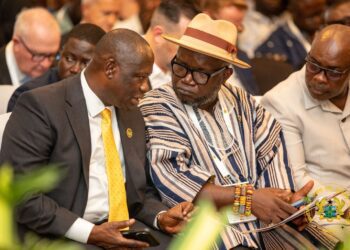
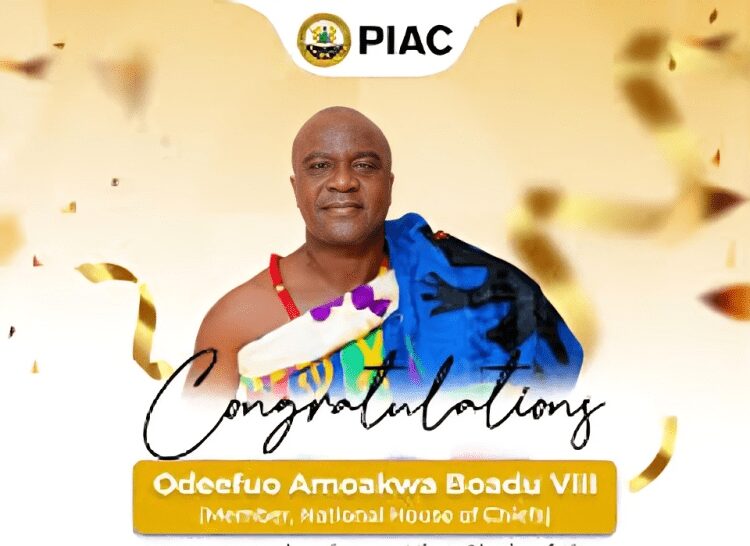
The warning was issued by Odeefuo Amoakwa Boadu VIII, Vice Chairman of PIAC, during a media engagement in Accra on the Committee’s 2025 Semi-Annual Report on the management and use of petroleum revenues.
While acknowledging the developmental value of the government’s infrastructure drive, he stressed that diverting petroleum proceeds from the energy sector undermines future investment and operational efficiency at a time when Ghana’s crude oil production is already in decline.
“Although the initiative is laudable, the situation is likely to affect investments in the sector as the country continues to experience declines in petroleum production.”
Odeefuo Amoakwa Boadu VIII, Vice Chairman of PIAC
Under the government’s new fiscal strategy, petroleum revenues channeled through the Annual Budget Funding Amount (ABFA) are being used primarily to finance flagship projects under the “Big Push” initiative.
The programme seeks to enhance national infrastructure, connectivity, and industrial capacity through large-scale investments in roads, bridges, ports, and energy installations.
However, PIAC’s latest findings indicate that this redirection of funds has come at a cost to oil and gas sector institutions, including the Ghana National Petroleum Corporation (GNPC), the main vehicle for state participation in petroleum operations.
According to the report, GNPC’s allocation for operations and capacity development fell from 30% to just 15% of its net Carried and Participating Interest (CAPI) during the first half of 2025, effectively halving the corporation’s share of petroleum revenues.
The cut, PIAC warned, could weaken GNPC’s technical and financial capabilities, limit exploration activities, and slow the pace of investment needed to sustain oil output from Ghana’s maturing offshore fields.
“We need to sustain production levels to maintain revenue flows.
“If we continue diverting funds without reinvestment in exploration and production, the long-term sustainability of the sector will be compromised.”
Odeefuo Amoakwa Boadu VIII, Vice Chairman of PIAC
PIAC’s Own Budget Shrinks
The Committee also disclosed that it has suffered a sharp decline in its own budget following the passage of the Petroleum Revenue Management (Amendment) Act, 2025 (Act 1138), which delinked PIAC’s funding from the ABFA.
The amendment means PIAC’s operational expenses are no longer charged to petroleum revenue allocations, leaving the oversight body financially constrained.
“With the coming into force of the Petroleum Revenue Management (Amendment) Act, 2025, PIAC’s budget is no longer to be charged to the ABFA.
“The amount of GH₵4.6 million approved for 2025 PIAC programmes and activities represents only 21.43 percent of its budget for the year, and 41.07 percent of approved funds for 2024.”
Odeefuo Amoakwa Boadu VIII, Vice Chairman of PIAC
The Vice Chairman added that the new government funding structure has redirected nearly all ABFA allocations into the “Big Push” programme.
“There is a new government with a project aiming at big infrastructure across the country and hence decided to take funds from the ABFA about 100 percent contribution from the ABFA, so it has taken away PIAC itself.
“It’s only five percent of ABFA that was disbursed to the District Assemblies Common Fund.”
Odeefuo Amoakwa Boadu VIII, Vice Chairman of PIAC
Impact on Oversight and Sector Performance

PIAC warned that the substantial budget cuts have hampered its ability to carry out its statutory monitoring and oversight functions effectively.
The Committee, established under the Petroleum Revenue Management Act, 2011 (Act 815), plays a crucial role in promoting transparency and accountability in the management of Ghana’s oil revenues.
Without adequate funding, PIAC said, its capacity to conduct field inspections, produce reports, and engage citizens on petroleum revenue governance could be severely limited, a development that risks weakening public oversight and transparency.
Given these declining inflows, PIAC acknowledged that fiscal constraints have tightened. Nonetheless, the Committee urged a more balanced approach that preserves investment in the petroleum sector while financing national infrastructure priorities.
Call for Broader Dialogue

Odeefuo Amoakwa Boadu VIII called for broader stakeholder consultations to review the decision to divert petroleum funds, arguing that Ghana must maintain a balance between immediate developmental needs and the long-term health of its extractive sector.
PIAC’s caution comes amid growing debate over how best to allocate petroleum revenues in an era of declining production.
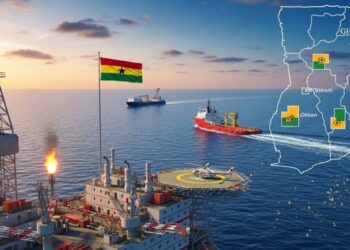
With crude output from the Jubilee, TEN, and Sankofa-Gye Nyame fields continuing to fall due to reservoir declines and maintenance shutdowns, the Committee fears that underfunding core energy institutions could exacerbate Ghana’s production slump and undermine future revenues.
PIAC reiterated its commitment to ensuring transparency, accountability, and public participation in the management of petroleum wealth, but warned that its effectiveness depends on the availability of adequate resources to perform its mandate.