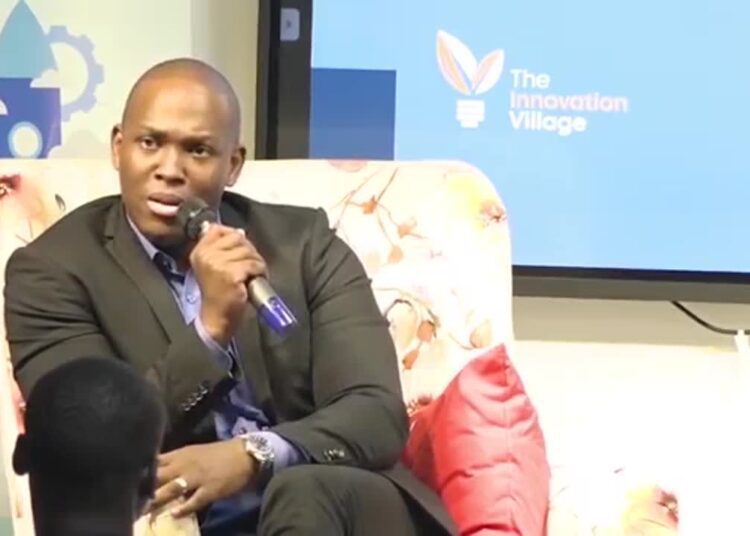
Ebenezer Amankwah-Minkah, Executive Director of the Center for Economic Research and Policy Analysis (CERPA), has opined that Ghana needs to include the informal sector in its growth and expansion plans, supported by infrastructure-driven initiatives to sustain the currency’s performance.
The Economist mentioned these during the 14th Ghana Economic Forum (GEF) held at Kempinski Hotel Gold Coast City, Accra, based on the theme “Currency Stability: A Reset for Sustainable Economic Growth.”
Ghana must be intentional in its approach to ensure that the Cedi’s current momentum is cushioned with the means to be poised with its sustenance, said Mr. Amankwah-Minkah. He added that investment in new infrastructure and inclusive growth serving as foundations can positively influence the stability of the Cedi and the economy.
“Currency stability must serve as a bridge to long-term transformation. Sustainability depends on how well we channel macroeconomic gains into building productive capacity, competitive industries, and resilient livelihoods.”
Ebenezer Amankwah-Minkah, Executive Director of CERPA
He explained that the impressive performance of the macroeconomic indicators, such as the Ghana Cedi appreciation and the fiscal stability, is not the destination but an avenue and opportunity to restore and build the real economy. He urged the government not to be complacent in its achievements.

He suggested that focusing on the development of strategic infrastructure in the energy, digital, and extractive sectors remains pivotal to boost investor confidence, expand the economy, ensure diversification, increase productivity, and create employment opportunities.
He asserted that the Cedi’s appreciation, if not anchored to any real infrastructure initiative, is a short-term achievement. What Ghana needs is a long-term stability and enduring growth.
“A stable cedi can only be maintained when anchored by real economic activity supported by reliable infrastructure. That is how we transition from temporary stability to enduring growth.”
Ebenezer Amankwah-Minkah, Executive Director of CERPA
Inclusion of Informal Sector
According to the Ghana Statistical Service (GSS), the informal sector provides employment opportunities to more than 86% of Ghana’s workforce. This, the Economist, urges the government to take advantage of. The government needs to transition the informal sector to the formal sector.

Without adding the informal sector to policy initiatives under the reset agenda, the country cannot achieve the right macroeconomic stability, he said. This transition, he added, needs to be deliberate. The informal sector is a strong force that can propel government initiative to finetune the orientation of Ghanaians to build the developed country that all Ghanaians want.
He aimed to change the perception that the informal sector is a push aside and insignificant group in the growth of the country. He stressed that the informal sector is the only economy most Ghanaians know. Therefore, if it is not happening in the informal sector, then they cannot see it happening. However, the transition requires regulation, sensitization, training, and a steady hand.
“The informal sector is not a side economy; it is the economy for most Ghanaians. Bringing it into the mainstream requires more than regulation – it demands access to finance, training, and protection.”
Ebenezer Amankwah-Minkah, Executive Director of CERPA
Mr. Amankwah-Minkah proposed a multi-dimensional approach to facilitate this process of maintaining stability and inspiring growth through infrastructure-led and informal transition to the formal sector.

According to him, the government should make credit affordable to enterprises, both small and micro-scale operations, to improve productivity outputs. He also urged that the informal traders be provided with digital platforms and relevant market information to help transition them to the formal supply chains.
Mr. Amankwah-Minkah again called for tax and registration systems to ensure compliance and a robust framework for the transition. He added that social protection programs such as pensions, insurance, and safety nets, be provided to the informal traders to ensure their welfare and security.
“When informal entrepreneurs can access finance, training, and social protection, they become the foundation of formal economic growth. Inclusion is not charity – it’s strategy.”
Ebenezer Amankwah-Minkah, Executive Director of CERPA
Productivity and Export Enhancement
The Executive Director of CERPA called on the government to prioritize export diversification, value addition, and standardization of all goods produced in the country. He also made the point that Ghana’s dependence on commodities, especially in their raw state, such as gold, cocoa, and agricultural products, affects Ghana’s revenue and competitiveness.
He urged that the reset of the government should be founded on this basis to build integrity and confidence in the economy. Producing high-valued goods will enhance the job creation and the needed expansion the country needs.

“Our economic reset must focus on producing high-value goods that meet global standards. This is how we build resilience, create quality jobs, and sustain currency gains over time.”
Ebenezer Amankwah-Minkah, Executive Director of CERPA
According to him, “stability should lead to transformation,” adding that CERPA’s “mission is to shape policy conversations that help economies move from recovery to resilience, and from growth to genuine prosperity.”