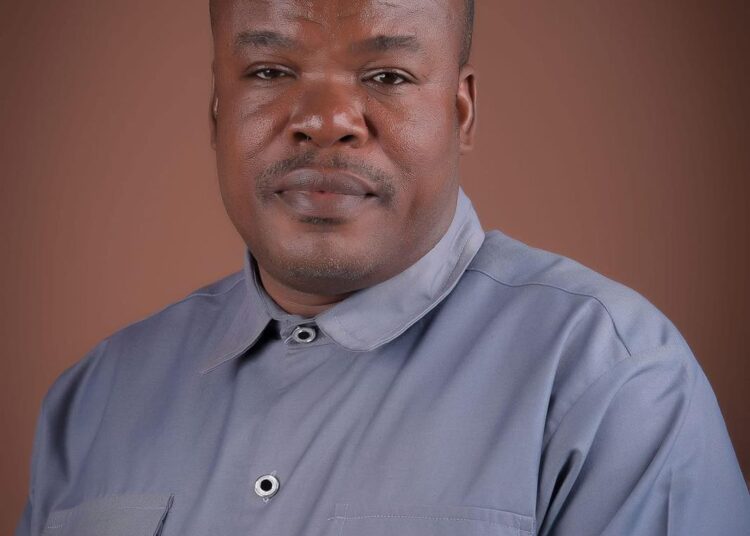
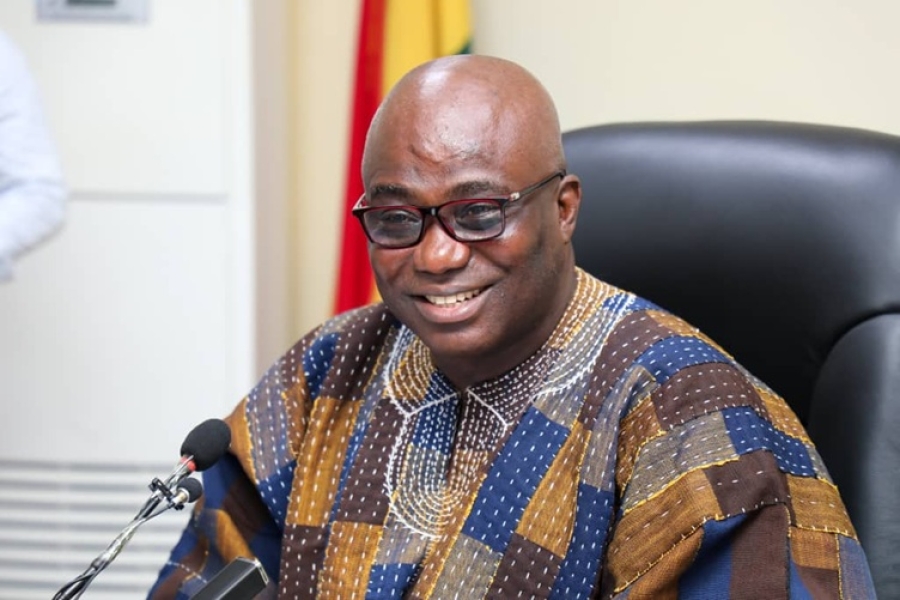
The National Coordinator of the Feed Ghana Programme, Bright Demordzi, has described Ghana’s current economic environment as stable and favourable, particularly for small-scale traders and the general public.
He noted that the price stability experienced in recent months is enabling Ghanaians to plan better and manage their businesses more effectively, observing that the absence of frequent price increases has brought relief to the public.
“Yes, on the economic front, people are very happy because when there is stability in terms of pricing, it helps people to plan and plan very well. That is helping small-scale traders and everybody. The general economic environment is not bad at all”
Bright Demordzi, National Coordinator of the Feed Ghana Programme
Despite the positive trend for consumers, Mr. Demordzi acknowledged that some farmers are uneasy about the impact of stable or low food prices on their incomes. According to him, several farmers believe that food prices often decline when the National Democratic Congress (NDC) is in power, a situation they claim reduces their profit margins.
“Farmers always compare the value of food items to the price of cement. They say that when the price of food goes down, the price of cement does not go down proportionally, and that affects the real value of their income”
Bright Demordzi, National Coordinator of the Feed Ghana Programme
To address these concerns, Mr. Demordzi revealed that the Feed Ghana Programme was introducing a new strategic stock system to stabilise prices and protect farmers’ earnings. He explained that the initiative marks the first time the National Food Buffer Stock Company has been positioned to undertake real strategic operations aimed at creating sustainable price mechanisms in the agricultural sector.
“As an agribusiness person, one thing that is very critical is price stability. If the prices of inputs are stable, farmers will be happy,” he stated, adding that the new measures were designed to strengthen market linkages and reduce post-harvest losses while ensuring that both farmers and consumers benefit from predictable pricing.
“When prices are low, we can buy and stock produce to stabilise prices, and when prices rise, we can release stock into the market to keep prices balanced,” he said.
Economic Transformation
Mr. Demordzi reaffirmed that agriculture remains the cornerstone of President John Dramani Mahama’s economic transformation agenda, noting that the Feed Ghana Programme serves as the main vehicle for implementing the government’s agricultural policies.
“In our manifesto, the NDC’s major focus on how to transform this country is that we’re going to use agriculture to transform the economy. So our major policy initiative is what we call the Agriculture for Economic Transformation Agenda.
“When you have a broad policy framework like that, you need a vehicle to translate that bigger vision into reality. So that vehicle – how we are going to do it to achieve using agriculture to transform our economy – is what we call the Feed Ghana policy”
Bright Demordzi, National Coordinator of the Feed Ghana Programme
He explained how the Feed Ghana Programme provides the operational structure through which the government’s agricultural vision is being realised. According to him, the programme focuses on building an enabling environment for farmers and agribusiness investors while introducing specific interventions to enhance productivity and market efficiency.
“The campaign means that we want to change the mentality of Ghanaians,” he also added, explaining that one of the programme’s goals is to change the general public’s attitude toward agriculture, encouraging not only individuals but also institutions to view farming as an essential pillar of national progress and economic growth.
Touching on recent concerns from rice farmers about an oversupply of paddy rice in some parts of the country, Mr. Demordzi assured that the government was working to address the situation. He admitted that the glut resulted from an unexpected surge in production following early interventions under the Feed Ghana initiative.
“We were not expecting that huge production. We did small interventions because we’ve not fully rolled out all our plans. And quickly, we have a huge production,” he explained. He revealed that measures were underway to buy the excess rice from the market to stabilise prices and prevent losses to farmers.
“We are now struggling to ensure that we buy the excess from the system. And we are on course. We are buying. And I think that in the next two to three weeks, this issue of the glut of the rice paddy will come down”
Bright Demordzi, National Coordinator of the Feed Ghana Programme

Mr. Demordzi reaffirmed the government’s determination to strengthen value chains and market planning mechanisms under the Feed Ghana Programme to avoid similar market disruptions in the future.
READ ALSO: IEA Calls for Overhaul of Ghana’s Mining Regime to Maximise National Benefits