
Nigeria’s oil and gas sector is witnessing a significant resurgence, with the Nigerian Upstream Petroleum Regulatory Commission (NUPRC) revealing that 43 new Field Development Plans (FDPs) approved this year could unlock 1.7 billion barrels of crude oil and 7.7 trillion cubic feet of natural gas.
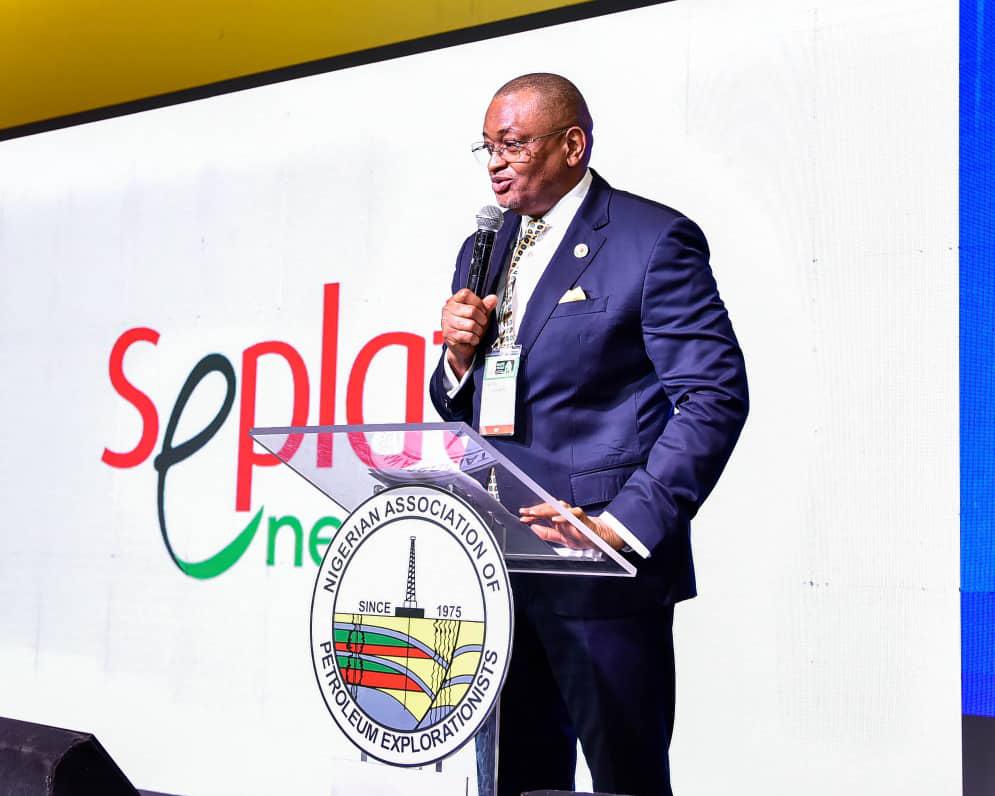
The Chief Executive Officer of the Commission, Gbenga Komolafe, disclosed this at the 43rd Annual International Conference and Exhibition of the Nigerian Association of Petroleum Explorationists (NAPE) in Lagos.
Represented by the Director of Subsurface Development at NUPRC, Emmanuel Mac-Jaja, Komolafe said the FDPs represented a resurgence of investor confidence in the upstream sector.
“In 2025 alone, 43 new Field Development Plans were approved, unlocking 1.7 billion barrels of oil and 7.7 trillion cubic feet of gas, backed by over $20 billion in committed capital.”
Emmanuel Mac-Jaja, Komolafe, Director of Subsurface Development at NUPRC
Komolafe further highlighted a string of major Final Investment Decisions (FIDs) that signal a wave of renewed capital inflows into the industry.
These include $5 billion for the Bonga North Project, $500 million for the Ubeta Gas Project, and $2 billion for Shell’s HI Gas Project—collectively unlocking nearly 2 trillion standard cubic feet of gas.
He added that indigenous participation in Nigeria’s oil and gas sector has deepened significantly, with local acquisition deals exceeding $5 billion this year alone.
This, he said, underscores a growing confidence in Nigerian-owned energy companies and their ability to compete globally.
According to him, Nigeria stands at a defining moment in global energy, “one of transition, transformation, and opportunity.”
He noted that while the global energy transition toward renewables is accelerating, oil and gas will remain indispensable for decades, particularly in developing economies where energy access remains limited.
Reforms Driving Upstream Growth
Komolafe outlined a series of reforms and innovations introduced by the NUPRC to revitalize the upstream sector.
He pointed to the deployment of advanced data systems using cutting-edge technologies such as stress field detection and the enhancement of the National Data Repository (NDR) to de-risk exploration and improve transparency.
He also mentioned the continuous acreage licensing framework, which provides predictability for investors, and the Project One Million Barrels initiative, a national push to restore and expand Nigeria’s daily oil output through rig reactivation and well optimization.
Deepwater expansion through cluster development and shared infrastructure, he said, is helping to reduce costs and accelerate first oil production, while frontier basin exploration is being boosted by the Petroleum Industry Act (PIA), allowing the government to explore new basins across the country.
Komolafe revealed that the number of active rigs in the country has increased fivefold from just eight in 2021 to more than 40 in 2025, reflecting renewed investor confidence and rising production activities.
Frontier Exploration Fund to Finance New Oil Search
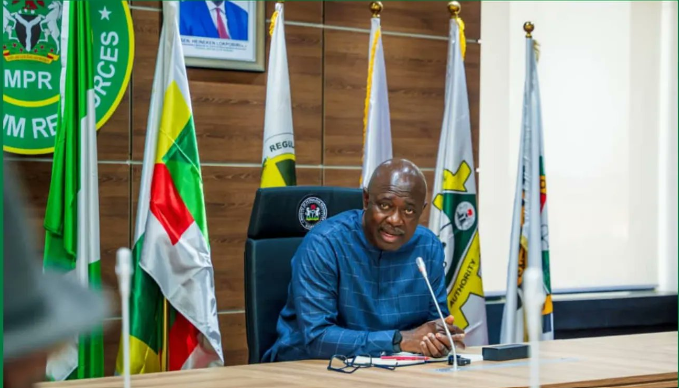
Meanwhile, in his keynote address, Minister of Petroleum Resources (Oil), Senator Heineken Lokpobiri, directed the NUPRC and the Nigerian National Petroleum Company Limited (NNPC) to immediately deploy proceeds from the 30 percent Frontier Exploration Fund (FEF) to finance new exploration projects across the country.
The Minister said the NNPC had reported accruals of ₦400.667 billion from the Frontier Fund in the first nine months of 2025.
As stipulated by the PIA, the fund, generated from 30 percent of NNPC’s profit oil and gas under the Production Sharing Contract (PSC) arrangements is intended to finance exploration in frontier basins such as Chad, Bida, Sokoto, Dahomey, and Benue.
Lokpobiri stressed that the fund must now be fully utilized for its intended purpose.
“Since I became minister, we haven’t placed much premium on using the Frontier Exploration Fund to finance exploration in basins that are largely unexplored.
“Those who are responsible for this fund must be held accountable to use these resources to finance exploration activities.”
Senator Heineken Lokpobiri, Minister of Petroleum Resources (Oil)
He also expressed frustration that both International Oil Companies (IOCs) and indigenous independents were holding onto licenses without developing them.
To address this, the government plans to implement the “Drill or Drop” provision of the PIA to reclaim inactive assets and reallocate them to operators with proven technical and financial capacity.
“For those who haven’t shown capacity, why are they still holding licenses? Even if renewed for another decade, they won’t do anything.
“So, I’ve decided not to renew such licenses but to give them to those who can invest for the benefit of Nigerians.”
Senator Heineken Lokpobiri, Minister of Petroleum Resources (Oil)
Lokpobiri reaffirmed President Bola Tinubu’s commitment to ensuring energy security under his Renewed Hope agenda. He noted that as Nigeria’s population approaches 450 million by 2050, securing sufficient energy supply will be crucial to sustaining growth.
READ ALSO: Ato Forson Promises Renewed Investment for Benso Oil Palm Plantation