National Anti-Illegal Mining Operations Secretariat (NAIMOS) has successfully dismantled a clandestine foreign mining network along the Bia River in the Western North Region.
According to the Environmental and Anti-Illegal Mining Advocate, Eratus Asare Donkor, the operation uncovered a vast illegal mining site shrouded in dense vegetation close to the Bia River within the Suaman Dadieso District.
Officers found signs that the operators had been forewarned, evidenced by the hurried concealment of excavators and removal of their control boards to avoid seizure. The environmental impact was immediately evident; sedimentation and toxic discharge had already begun degrading a river essential to nearby communities.
“The operation intensified at a suburb of Dadieso known locally as Niger, where intelligence unexpectedly surfaced from an abandoned mobile phone left behind by a fleeing suspect. Using the unlocked device, NAIMOS uncovered communications linked to a contact saved as “Boss Lii” on the WhatsApp platform. These exchanges pointed to direct coordination by foreign nationals.”
Eratus Asare Donkor

At a locality known as Niger, intelligence obtained from an abandoned mobile phone revealed critical links to foreign nationals orchestrating the activities.
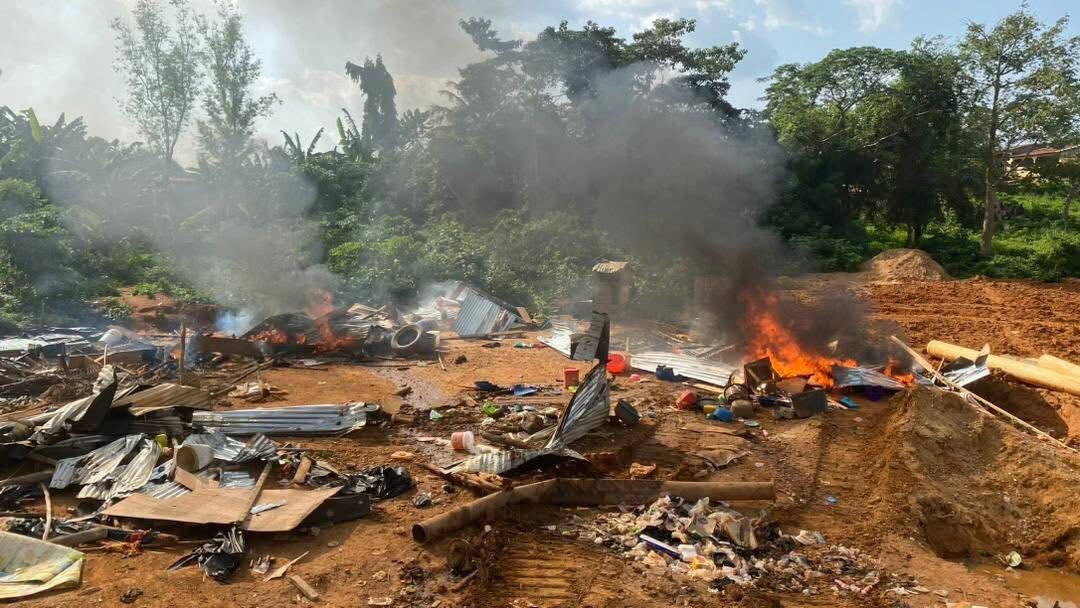
NAIMOS operatives identified nine Chinese nationals involved, leading to the dismantling of makeshift accommodations and mineral processing shelters, with several structures destroyed to prevent reoccupation.
Background and Strategic Role of NAIMOS

Established by government mandate, the National Anti-Illegal Mining Operations Secretariat (NAIMOS) serves as the operational arm in the fight against galamsey, illegal small-scale mining that ravaged Ghana’s environment for decades.


NAIMOS coordinates multi-agency task forces to conduct targeted raids, seize illicit equipment, and prosecute offenders in an effort to restore lawful and responsible mining practices.
NAIMOS’ mission is rooted in safeguarding water bodies, forest reserves, and agricultural land from the devastating environmental consequences of unlawful extraction methods.

Since its inception, the Secretariat has enhanced institutional collaboration, leveraging intelligence and technology to anticipate and dismantle illegal mining operations before irreversible damage occurs.
This latest operation demonstrates NAIMOS’ growing sophistication and commitment. “The remote command center ensured full coordination despite the vast terrain and persistent challenges,” noted a senior NAIMOS officer.
By seizing machinery, toxic substances like mercury, communication devices, and dismantling illegal shelters, the Secretariat weakened a foreign-led network that threatened one of the region and the country’s most critical waterways.
Operational Details and National Impact

The operation commenced late morning and extended well into the night, reflecting the rigorous conditions faced by the task force.
The discovery of the abandoned smartphone with communications involving a contact named “Boss Lii” was a breakthrough that directly implicated foreign nationals.
The detained Chinese suspects complement a broader pattern of foreign involvement in illicit mining, which complicates enforcement efforts but also underscores the cross-border nature of these illegal enterprises.
Post-operation, a four-member delegation from the Ghana Integrated Iron and Steel Development Corporation (GIISDEC) arrived to take custody of reclaimed scrap metal and heavy machinery to prevent recycling and resale. GIISDEC’s involvement is part of a national initiative to recover metals and reduce incentives for illegal mining.
The suspects were escorted to NAIMOS Headquarters for formal investigation, while the Dadieso Divisional Police secured associated residences to prevent further activity.

The robustness of the operation was further demonstrated when anonymous caller attempted to bribe the team with an offer of two million seven hundred thousand Ghana cedis (2,700,000) to release the detainees. The however, firmly rejected the offer, highlighting the task force’s integrity.
By dismantling this network, NAIMOS advances Ghana’s efforts to mitigate environmental degradation caused by illegal mining.
The organization’s holistic approach—combining enforcement, intelligence gathering, inter-agency collaboration, and community protection—is crucial to promoting responsible mining practices nationwide.
This operation also reflects growing pressure on illegal networks operating in river basins, signaling a shift from reactive to proactive interventions that safeguard ecosystems and livelihoods dependent on clean water sources.
The fight against galamsey continues to be a defining challenge for Ghana’s extractive sector and environmental policy. NAIMOS’ persistent efforts underline the government’s resolve to uphold legal mining operations while curbing destructive violations that jeopardize natural heritage and sustainable development.
READ MORE: Ghana’s Bureaucracy Taxing MSMEs Into Poverty: Explosive Report Uncovers Hidden Costs