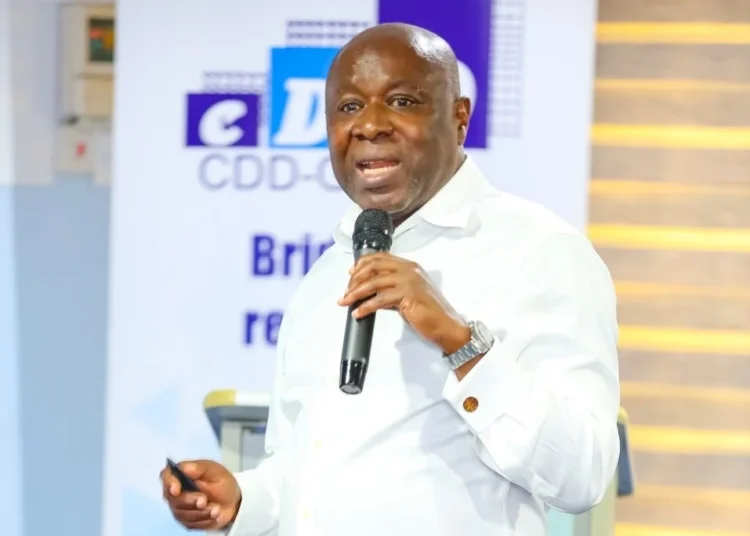
Dr. Hene Aku Kwapong, a financial analyst, fellow at the Ghana Center for Democratic Development (CDD Ghana), and board member of Ecobank, has disclosed the IMF’s focus on Ghana’s Domestic Gold Purchasing Program’s (DGPP) impact on the Bank of Ghana’s (BOG) financial standing.
He dismissed any political view on the IMF’s statement on the US$ 214 million dollars loss in Bank of Ghana’s gold purchase program with the Ghana Gold Board (GOLDBOD). According to Dr. Kwapong, the IMF’s comment is based on orthodox central banking principles. He emphasized that the IMF is only performing its mandate as the stabilizer of the global monetary system.
“What the IMF is doing here is not ideological nitpicking or technocratic box ticking. It is a fairly orthodox, and frankly predictable, exercise in central banking arithmetic.”
Dr. Hene Aku Kwapong
From its core mandate, financial and governmental policy that could wane the balance sheet of any Central Bank will naturally attract scrutiny from the Fund. Ghana, being a member of the IMF, also attracts such scrutiny to ensure an upright balance sheet and mitigation of any risk.
Shortfalls of Gold Reserve
The IMF earlier revealed that the transactional costs from the GOLDBOD and its operations incurred losses under the Bank of Ghana (BoG) Gold for Reserves program within the first nine months of 2025.
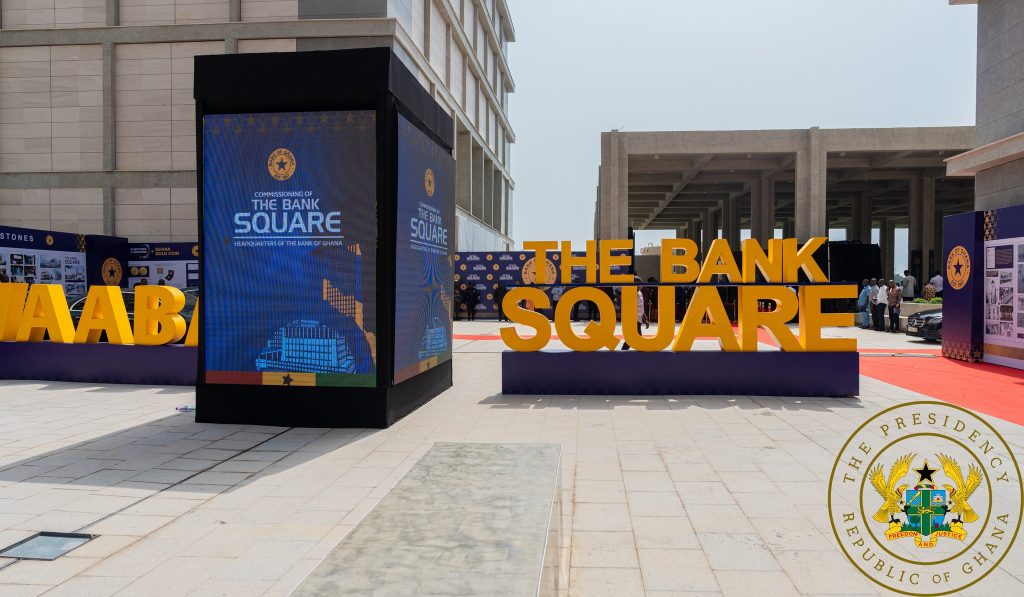
According to Dr. Kwapong, the true substance of the statement by the IMF seeks to verify the Bank of Ghana’s financial position, whether the DGPP is strengthening or weakening it.
He concurred with the risk associated with building reserves with gold, a commodity with a very volatile price on the global market, yet acknowledged gold as a legitimate asset. Using gold as a reserve also raises cash convertibility strains and liquidity challenges.
Dr. Kwapong stated categorically that “when a growing share of reserves is tied up in a single commodity, valuation risks rise and flexibility falls. This is not a moral judgment about gold. It is a portfolio argument that any risk manager would recognize.”
The IMF related to the profitability of the program and not directly the loss from the DGPP, insisting the Bank of Ghana is not a commercial bank, Dr Kwapong said. Incurring losses when promoting the government’s objectives weakens the credibility and capital of the institution.
Dr. Kwapong, again, insisted that the IMF’s view is forthright – “If the government wants to run a commodity purchasing scheme, the fiscal costs should be clearly reflected in the national budget.”

Transparency and accountability are defeated, and the Bank of Ghana’s independence erodes, if these ‘genuine’ costs sit quietly in the accounts of the Bank of Ghana.
“Allowing them [the fiscal cost of running the scheme] to be quietly absorbed by the central bank erodes capital, weakens credibility, and ultimately compromises monetary policy independence.”
Dr. Hene Aku Kwapong
Operational Risk Trap
The financial analyst revealed that the IMF’s mandate extends to examining systems or institutions that manage large-scale gold transactions related to their price volatility, liquidity pressures, and operational risks.
Dr Kwapong cautioned Ghana that many well-intended policies fail at this test of the managing institution’s strong capacity for the role. “Without proper hedging strategies, transparent accounting and strong internal controls, shocks from volatile global markets can quickly spill into a central bank’s finances,” he said.
The analyst was also concerned about the multiplicity role of the Bank of Ghana and possible conflict of interest in simultaneously “setting interest rates, managing liquidity, buying gold, and influencing foreign exchange flows,” adding that this creates a distorted market signals where private actors may be crowded out, “price discovery weakens, market depth suffers and policy transmission becomes noisy.”
“The underlying message is not that the DGPP is inherently misguided, but that without proper fiscal backing, risk management, and institutional boundaries, it risks turning the Bank of Ghana into something it should never be: a development agency with a printing press.”
Dr. Hene Aku Kwapong
He concluded that the IMF is not attacking the relevance or effectiveness of the DGPP but issuing a caution as a financial ‘watcher’ of the monetary system. Without clear fiscal backing, strong risk management, and firm institutional boundaries, the DGPP risks turning the Bank of Ghana into something it should not be, Dr. Kwapong boldly stated.
READ ALSO: TOR Restart Signals Renewed Energy Security but Hinges on Crude Supply – Expert