
Nigeria’s crude oil production dipped slightly in December 2025, reinforcing concerns about the country’s ability to meet its Organisation of Petroleum Exporting Countries (OPEC) production targets despite ongoing reforms in the upstream oil sector.
According to OPEC’s latest Monthly Oil Market Report (MOMR), Nigeria produced an average of 1.422 million barrels per day (bpd) in December, down from 1.436 million bpd in November.
The marginal decline may appear modest, but it extends a troubling pattern of underperformance that has now lasted for five consecutive months.
The data show that Africa’s largest oil producer has consistently fallen short of its OPEC-assigned quota since August 2025, underscoring persistent structural and operational challenges within the sector.
OPEC figures indicate that Nigeria last met its production quota in July 2025. From August through December, output remained below target, even as authorities stepped up efforts to address oil theft, infrastructure vandalism and underinvestment.
Quarterly production data from the report highlight a clear downward trend over the course of 2025. Output averaged 1.468 million bpd in the first quarter, rose slightly to 1.481 million bpd in the second quarter, before declining to 1.444 million bpd in the third quarter and falling further to about 1.42 million bpd in the final quarter of the year.
Industry analysts say the figures reflect deeper structural constraints that continue to limit Nigeria’s effective production capacity, including ageing infrastructure, deferred maintenance and security risks in key producing regions.
Diverging Data Sources
OPEC compiles its production statistics using two methods: direct communication from member countries and estimates from secondary sources such as independent energy intelligence agencies. In Nigeria’s case, the two sets of data present differing pictures of output performance.
While figures based on direct communication show a decline in production in December, secondary sources cited by OPEC suggest a more optimistic scenario.
According to these estimates, Nigeria produced about 1.5 million bpd in December, representing a 1.35 percent increase from the 1.48 million bpd recorded in November.
The divergence highlights ongoing transparency and measurement challenges in Nigeria’s oil sector, with analysts noting that market participants often rely more heavily on secondary-source data for benchmarking and forecasting.
Despite missing its quota, Nigeria maintained its position as Africa’s largest oil producer in December. Output remained ahead of Libya, which produced an estimated 1.37 million bpd during the same period.
However, the narrowing gap between the two producers has drawn attention, particularly as Libya has managed to stabilise output despite its own political and security challenges.
NNPC Pledges Improved Performance
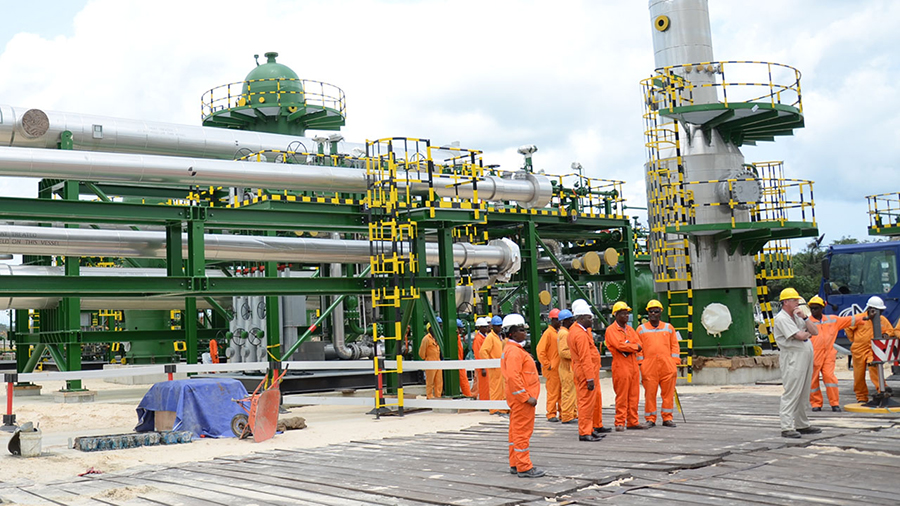
In response to the production challenges, the Nigerian National Petroleum Company Limited (NNPC) has reiterated its commitment to boosting output through closer collaboration with partners and improved operational efficiency.
“NNPC plans to intensify collaboration with our partners through year-end and into 2026 to ensure improved production performance, maximise infrastructure uptime, and maintain high facility maintenance standards across all our assets.”
Nigerian National Petroleum Company Limited (NNPC)
NNPC’s strategy is expected to focus on reducing downtime, accelerating repairs on critical pipelines and facilities, and sustaining recent gains made in curbing crude oil theft.
At the wider OPEC level, crude oil production among countries participating in the Declaration of Cooperation (DoC) also edged lower in December. According to secondary-source data, total DoC output averaged 42.83 million bpd, reflecting a month-on-month decline of 238,000 bpd.
The broader decline comes as OPEC and its allies continue to manage supply carefully in response to global demand uncertainties and efforts to stabilise oil prices.
Why Nigeria’s Output Matters

Crude oil remains Nigeria’s single largest source of foreign exchange earnings and a major contributor to government revenue. As a result, sustained underperformance against OPEC quotas has significant fiscal and macroeconomic implications.
Lower-than-allowed production limits Nigeria’s ability to fully capitalise on periods of higher global oil prices, at a time when the country is grappling with fiscal pressures, currency volatility and foreign exchange shortages.
The production gap also raises questions about Nigeria’s readiness to scale output if and when OPEC relaxes supply restrictions further. Analysts warn that without meaningful improvements in infrastructure reliability, security and investment flows, Nigeria may struggle to take advantage of future opportunities to increase output.
As Nigeria heads into 2026, expectations are pinned on whether upstream reforms, security interventions and increased collaboration with international oil companies will translate into tangible production gains. While official assurances signal renewed commitment, the latest OPEC data suggest that significant hurdles remain.
For Africa’s largest oil producer, closing the gap between ambition and actual output will be critical, not only to meeting OPEC targets, but also to stabilising government finances and strengthening the broader economy.
READ ALSO: NAGRAT Claims Gender Content In Manual Was No Accident, Alleges Cultural Sabotage