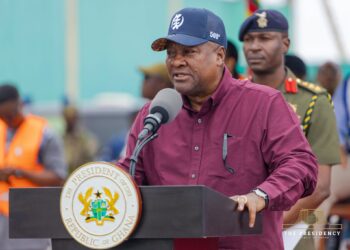
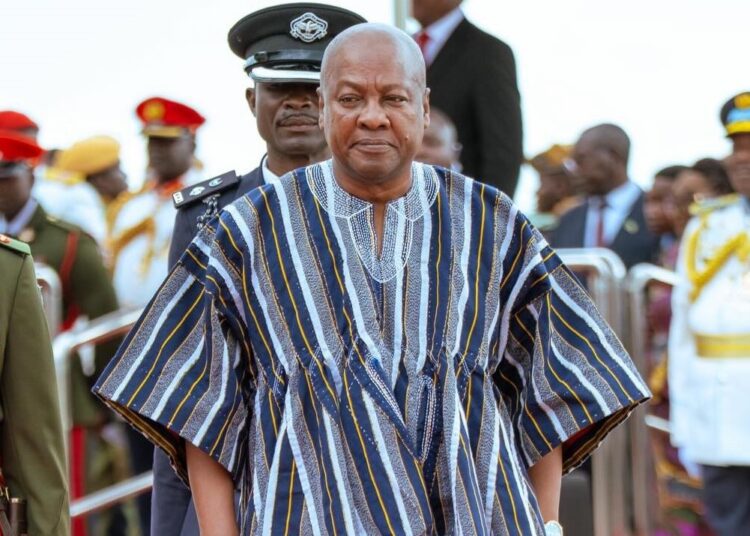
Ghana’s President HE John Dramani Mahama has reaffirmed his administration’s commitment to accountability and the rule of law, declaring that no public official will be shielded from the consequences of abusing public office.
He made this known while addressing Ghanaian nationals resident in Zambia during an interaction held as part of his three-day state visit to the southern African country.
Speaking candidly, President Mahama situated the renewed fight against corruption within the broader reset agenda that underpinned his return to office. He explained that governance reforms anchored on accountability were unavoidable, given the erosion of public confidence in democratic institutions in recent years.
According to him, the culture of impunity that had taken root in public life contributed significantly to widespread frustration among citizens and weakened trust in political leadership.
The President told the gathering that holding public office is a sacred trust that must be exercised in the interest of the people. He noted that one of the defining challenges confronting Ghana before the 2024 elections was the perception that politics had become a pathway to personal enrichment rather than public service.

In his words, scandals had become so frequent that citizens appeared to be numbed by them, further deepening cynicism about governance and leadership. President Mahama said the reset agenda therefore, placed strong emphasis on accountability, not as an act of vengeance but as a necessary corrective to restore confidence in democracy.
Accounting through Lawful Process
He explained that individuals who abused public trust in the past had to be investigated and, where appropriate, held to account through lawful processes. This, he stressed, was essential not only for justice but also to send a clear message to current and future office holders.
He was careful to note that the anti corruption drive would not be selective or motivated by political vendetta. Rather, it would be guided strictly by the law.
According to him, the responsibility of leadership sometimes requires taking difficult decisions that may not be personally satisfying but are demanded by national interest. He emphasized that accountability must apply equally to all, including members of his own administration.
The President told the audience that his approach was informed by the lessons of recent political history in Ghana and across the subregion. He observed that declining faith in democratic governance had contributed to political instability in parts of West Africa, where military takeovers had reversed years of constitutional rule.
Ghana, he said, narrowly avoided a similar fate because the 2024 elections reaffirmed the people’s belief that democratic change was still possible. President Mahama described the overwhelming mandate given to his administration as both an endorsement and a burden.

The two-thirds majority in Parliament, he said, was not a license for excess but a clear signal that citizens expected decisive action to clean up governance, revive the economy, and expand opportunities, especially for the youth. Failure to act decisively on corruption, he warned, would amount to a betrayal of that trust.
Addressing Ghanaians living abroad, the President said their interest in developments back home underscored the need for transparent leadership. He acknowledged that although technology now allows citizens to access information instantly, face to face engagements with the diaspora remained important.
Such interactions, he said, provided leaders with firsthand understanding of the concerns of citizens abroad while offering an opportunity to explain policy choices and national priorities.
Enforcing the Rule of Law
He stressed that the rule of law must be allowed to work without interference. “If you abuse public trust, the law is the law,” the President said, adding that accountability was not optional but an obligation imposed by the Constitution.
He noted that this principle applied regardless of political affiliation, status or personal relationships, and insisted that there would be no special treatment for anyone found culpable.
President Mahama also reflected on the broader purpose of the accountability drive, saying it was ultimately about safeguarding Ghana’s democratic future. By restoring integrity in public service, he argued, the country could rebuild confidence among citizens and international partners alike.

This, he said, was crucial for attracting investment, strengthening institutions and ensuring sustainable development. As the interaction ended, the President urged Ghanaians in Zambia to remain engaged with national affairs and to hold leaders accountable, including himself.
Democracy, he concluded, thrives when citizens demand honesty and leaders submit themselves to scrutiny. The reset agenda, he said, would only succeed if accountability remained at its core and if the abuse of public office was met with firm and impartial justice.
READ ALSO: US Seeks To Create Critical Minerals Trading Bloc