United Nations Secretary-General, Antonio Guterres has warned of a humanitarian “collapse” in Cuba if its energy needs go unmet.
This comes after the United States moved to block all oil from reaching the Caribbean island and threatened tariffs on any nations that step in to help.
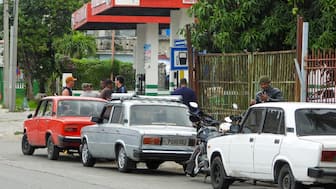
The warning came amid a severe fuel shortage in Cuba that has prompted hours of blackouts, even in the capital Havana, as well as a surge in prices for food and transportation.
Stephane Dujarric, a Spokesman for Guterres, told reporters in New York that the UN Chief was “extremely concerned about the humanitarian situation in Cuba,” which he said will “worsen if not collapse, if its oil needs go unmet.”
Dujarric also noted that for more than three decades, the UN General Assembly, too, has consistently called for an end to the trade embargo imposed by the US on Cuba. “The Secretary-General urges all parties to pursue dialogue and respect for international law,” he added.
Dujarric added that the United Nations is working with the Cuban government to see how the situation can be alleviated.
The US and Cuba have been foes since the Cuban revolution of 1959, when Fidel Castro took power, and his socialist government nationalised US-owned businesses. Washington responded with economic sanctions that were tightened into a full embargo in 1962.
The Caribbean island has long been in the grip of an economic crisis and had relied on Venezuela for its oil until US forces abducted Venezuelan President Nicolas Maduro in a raid on his residence in Caracas last month.
US President Donald Trump subsequently claimed control of Venezuelan oil and promised to starve Cuba of the commodity.
He has labelled Cuba “an unusual and extraordinary threat” to the US, and said that he wants to “make a deal” with Cuba’s leadership, without saying what an agreement might look like.
Cuba’s President Miguel Diaz-Canel slammed Trump’s tariff threat last week, saying that the US leader was planning “to suffocate” Cuba’s economy under a “false and baseless pretext.”
The country also declared an “international emergency” saying that Trump’s move constitutes “an unusual and extraordinary threat.”
According to The Financial Times, Mexico supplied some 44 percent of Cuba’s oil imports, and Venezuela supplied 33 percent until last month. It said that about 10 percent is also sourced from Russia and a smaller amount from Algeria.
The British newspaper also cited the Kpler data company as reporting on January 30 that Cuba only has enough oil to last 15 to 20 days at current levels of demand.
The US embassy in Cuba, meanwhile, warned Americans in the country on Tuesday to prepare for “significant disruption” from power outages and fuel shortages.
Cuba’s Deputy Foreign Minister Carlos Fernandez de Cossio told the Reuters news agency on Monday that Cuba and the US are in communication, although he noted the exchanges have not evolved into formal “dialogue.”
Mexico Using Avenues To Ensure Shipments To Cuba

Trump has also threatened tariffs on any other nation stepping in to help, prompting worry in Mexico, which is currently the island’s main supplier of oil.
Meanwhile, Mexican President Claudia Sheinbaum said that her country was using all diplomatic avenues to ensure crude shipments to Cuba. She, too, warned of a humanitarian crisis in Cuba but said that she did not want to put her own country “at risk in terms of tariffs.”
She told reporters, “We’re looking at the scope” of Trump’s threatened tariffs, “and we’re using all diplomatic channels.”
Sheinbaum added that Mexico would send humanitarian aid to Cuba this week and was seeking an agreement with Washington that would allow it to also send oil. “There is still no agreement on this,” she said.
READ ALSO: Mahama Hails Historic Education Reset to Ghanaians in Zambia