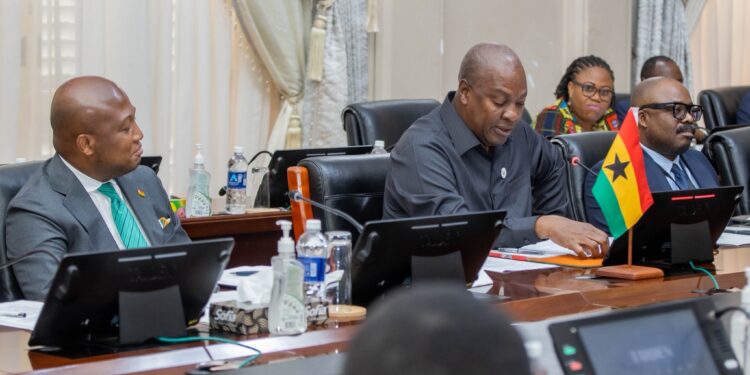
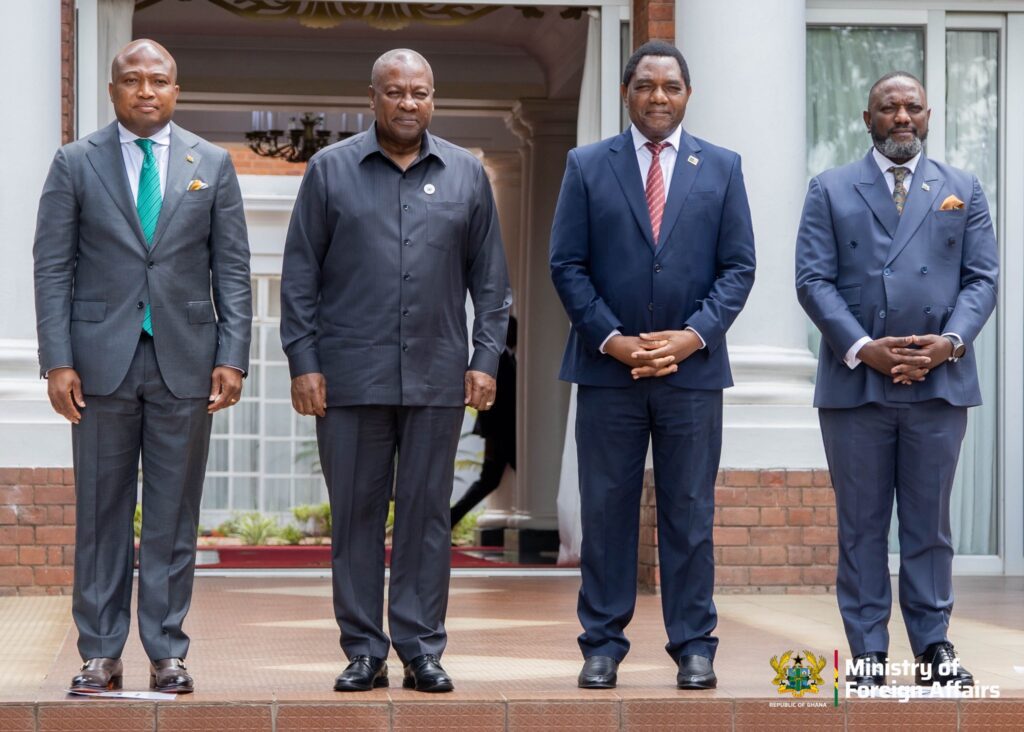
The bilateral relations between Ghana and Zambia have entered a transformative era following President John Dramani Mahama’s state visit to Lusaka, where a Comprehensive Partnership was inked to redefine the extractive landscapes of both nations.
At the heart of this diplomatic reset is a strategic technical assistance pact where Ghana will provide the blueprint and expertise for the establishment of a dedicated Minerals Commission and a Gold Board (GoldBod) in Zambia.
This initiative aims to transplant Ghana’s successful regulatory framework which recently saw gold exports surge from 63 to 104 tonnes within just ten months into the Zambian mining sector to enhance oversight and revenue mobilization.
“Ghana to offer technical assistance in the establishment of a Minerals Commission and Goldbod in Zambia. Natural Resource agreements to maximize value addition and environmentally friendly practices. From the special Nkrumah-Kaunda friendship, Ghana-Zambia relations keeps growing stronger, exciting and more formidable.”
Hon. Samuel Okudzeto Ablakwa, Foreign Affair Minister

This technical exchange is designed to help Zambia transition from a fragmented mining oversight system to a centralized, high-efficiency regulatory model.
By adopting the “GoldBod” concept, Zambia seeks to formalize its artisanal and small-scale mining (ASM) sectors, creating a “sole authority with exclusive rights to buy, assay, and export gold,” much like the Ghanaian model that earned over $10 billion in foreign exchange inflows last year.
The partnership extends beyond mere administrative structures to include “Natural Resource agreements” focused on maximizing value addition and implementing “environmentally friendly practices” to ensure that the extraction of critical minerals supports long-term national prosperity rather than just immediate export gains.
A Blueprints for Extractive Sovereignty
The decision to export the “Ghanaian Model” of mineral governance marks a significant shift toward Pan-African institutional benchmarking.
By assisting Zambia in setting up a Minerals Commission, Ghana is sharing a legacy of legislative stability and technical proficiency that has made it Africa’s leading gold producer.
This “technical assistance” will likely involve the deployment of experts to help Zambia draft a comprehensive legal framework similar to Ghana’s Minerals and Mining Act, which provides “clear, pragmatic guidelines for licensing and compliance.”
This collaboration ensures that Zambia can bypass the “chaotic and fragmented systems” that often plague mineral-rich nations, moving directly toward a sophisticated, data-driven governance structure.
Economic Synergies and Value Retention
The establishment of a Zambian GoldBod, modeled after Ghana’s 2025 reforms, is a strategic move to curb gold smuggling and “restore sovereignty” over precious metal exports.
For the bilateral relationship, this creates a unified front in the global market, allowing both nations to “standardize certification of products” and align their valuation methodologies.
As Zambia offers reciprocal technical assistance to Ghana in “solar energy regulation and scientifically improved seedling production,” the relationship evolves into a balanced exchange of specialized knowledge.
This synergy not only bolsters the “Western and Southern African market hubs” but also ensures that both countries “move beyond exporting raw materials” toward a future of domestic refining and value capture.
The Future of the Nkrumah-Kaunda Legacy
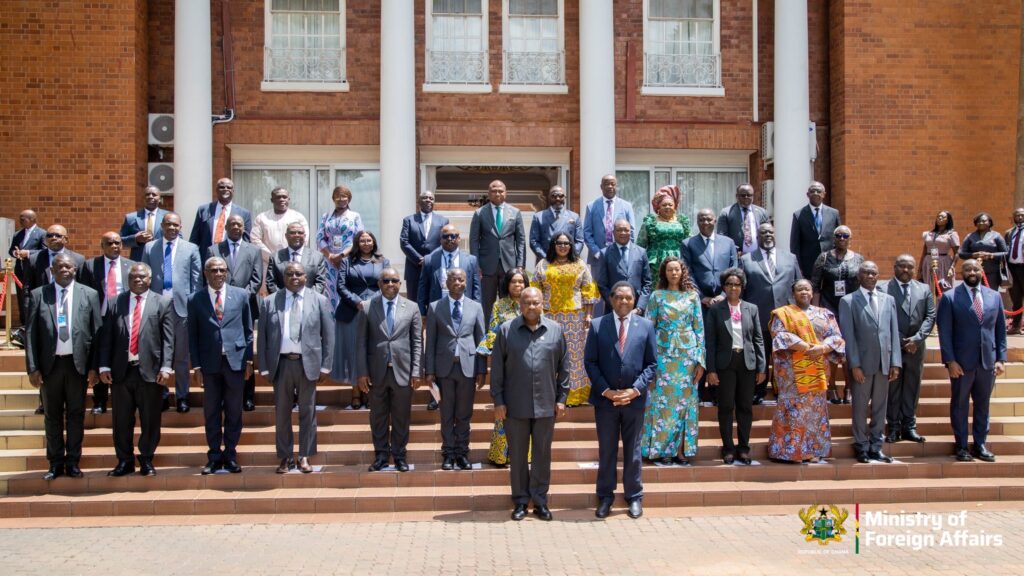
This partnership serves as a modern revival of the historic Nkrumah-Kaunda friendship, updated for the 24-hour mining economy of the 21st century.
By integrating the technical expertise of the Minerals Income Investment Fund (MIIF) and the Minerals Commission, Ghana and Zambia are building “additional frontiers” for economic defense.
The alignment of these two giants ensures that “every ounce of mineral extracted translates into measurable national value,” fostering a “strong and enduring partnership” that will serve as a template for other African nations seeking to reclaim their natural resource wealth through institutional excellence and regional cooperation.
READ ALSO: US Urged To Resist Pressure Over Iran’s Nuclear Issue