
The Chief Executive Officer of the Ghana Integrated Aluminium Development Corporation (GIADEC), Reindorf Twumasi Ankrah, has raised fresh concerns about the financial health of the Volta Aluminium Company (VALCO), disclosing that the state-owned smelter is burdened with debts exceeding $400 million while its assets are no longer sufficient to cover its liabilities.
According to Mr. Twumasi Ankrah, the company’s true debt position may be even worse than official records suggest, warning that the gap between liabilities and asset value continues to widen as infrastructure depreciates.
“The so-called assets of VALCO cannot even pay for the debts they owe,” he said, noting that records from 2022–2023 already show debts in excess of $400 million. “There’s a likelihood that the debt portfolio has increased since then.”
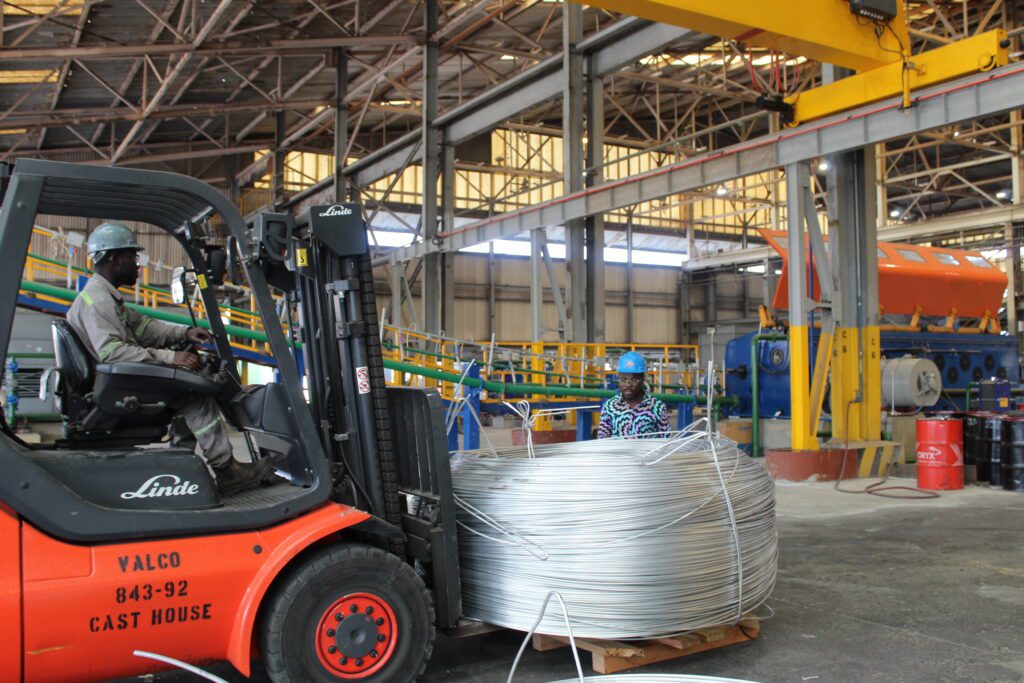
Beyond the growing debt burden, VALCO’s asset base has steadily eroded in recent years. Mr. Twumasi Ankrah revealed that the company’s total asset valuation fell from $113 million in 2022 to about $97 million in 2025, representing a $16 million decline over a three-year period.
The assets include landed properties and social infrastructure such as a clubhouse for senior staff and workers.
However, the GIADEC CEO stressed that these holdings are insignificant compared to the company’s mounting obligations, particularly debts owed to critical institutions like the Ghana Grid Company (GRIDCo) and the Ghana Revenue Authority (GRA).
He warned that the imbalance between assets and liabilities underscores the fragile state of the company’s finances and raises serious questions about long-term viability.
Operations Sustained by Government Support

Despite the bleak financial outlook, VALCO has continued operations largely due to government intervention. Mr. Twumasi Ankrah explained that successive administrations have been reluctant to shut down the smelter, given its strategic importance and historical significance to Ghana’s industrial development.
However, he was blunt in his assessment of the current situation, describing the company as “not a sustainable business” in its present form. According to him, continued operation without structural reforms only deepens losses and delays difficult but necessary decisions.
“When you look at the data, and they say book no lie, when you look at the numbers, since the government took over VALCO 100% in 2008, it started having challenges.”
Reindorf Twumasi Ankrah, Chief Executive Officer of GIADEC
He acknowledged that some of the difficulties were national in nature, including power supply and broader production constraints, but insisted that the decline has been sustained and structural.
VALCO was originally designed to produce 200,000 metric tonnes of aluminium annually. Today, output has dropped sharply to between 20 and 23 percent of installed capacity.
“That means we are doing just about 40,000 metric tonnes maximum a year,” Mr. Twumasi Ankrah explained, adding that productivity levels are now far below what the company inherited when the government assumed full control.
Obsolete Infrastructure Driving High Costs

A major contributor to VALCO’s operational inefficiency, according to the GIADEC CEO, is outdated infrastructure dating back to the 1960s. He said the company’s pot lines, critical components of aluminium smelting are obsolete and unable to support competitive production.
The inefficiency, he explained, translates into higher production costs and lower output, undermining the company’s ability to generate sufficient revenue.
Compounding the problem is the fact that only one out of VALCO’s five pot lines is currently operational. This, he noted, has created a scenario where the company is “paying more and producing less,” further entrenching annual losses.
Mr. Twumasi Ankrah disclosed that VALCO has consistently failed to meet its production and revenue targets over the years. The repeated shortfalls, he said, have weakened the company’s financial position and limited its capacity to reinvest in modernization or debt reduction.
According to him, the data clearly shows a pattern of recurring losses, reinforcing the need for a comprehensive reassessment of VALCO’s future under Ghana’s integrated aluminium development agenda.
Historical Context and the Way Forward
The GIADEC CEO also clarified that VALCO was not originally conceived as a state-owned enterprise.
He credited Ghana’s first President, Osagyefo Dr. Kwame Nkrumah, for successfully negotiating with an American firm to establish the aluminium smelter as part of the country’s early industrialisation drive.
As discussions continue about restructuring Ghana’s aluminium value chain, Mr. Twumasi Ankrah’s disclosures highlight the urgent need for policy clarity, investment in modern technology, and tough decisions on legacy assets if VALCO is to play a meaningful role in Ghana’s industrial future.
READ ALSO: Ghana To Pioneer Drone And AI Industrial Transformation