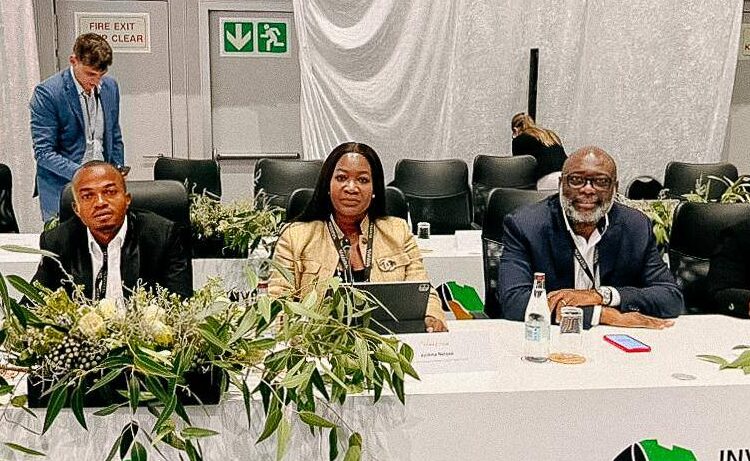
Mrs. Justina Nelson, the Chief Executive Officer of the Minerals Income Investment Fund (MIIF), has issued a strategic call for enhanced collaboration, smarter regulatory frameworks, and the deployment of catalytic African capital to drive the next generation of mining projects across the continent.
Speaking at a high-level CEO Roundtable during the Ministerial Symposium of the African mining, Mrs. Nelson emphasized that the continent’s ability to transition from resource potential to realized wealth hinges on a unified approach to financing and policy innovation.
“There is no shortage of capital globally. What Africa needs are de-risked, feasibility-ready projects that investors can confidently support.”
Mrs. Justina Nelson
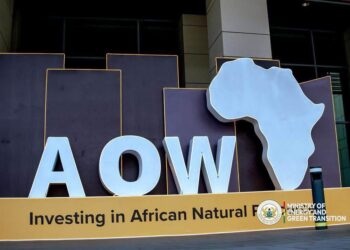
The roundtable, held at the Cape Town International Convention Centre (CTICC), operated under the theme “Financing a New Wave of Mining Projects in Africa – Innovation, Regulation & Collaboration,” bringing together a powerful assembly of policymakers, sovereign wealth fund leaders, and industry executives.
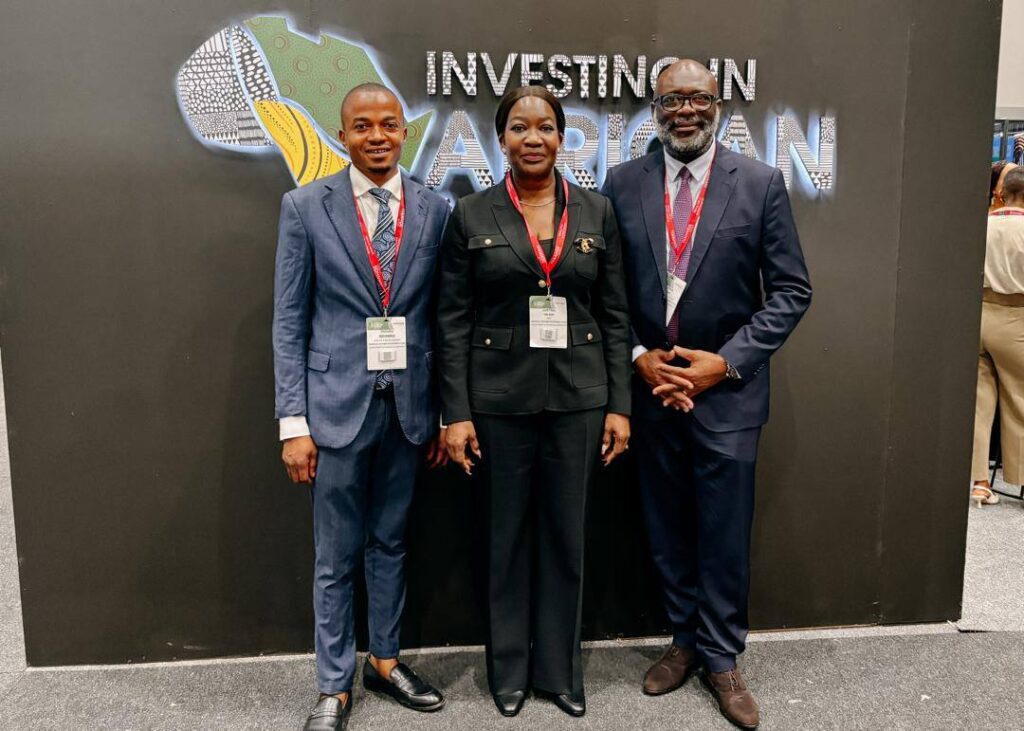
Mrs. Nelson, supported by a technical delegation including MIIF Governing Board member Hon. Yakubu Mohammed, MP for Ahafo Ano South, and Chief Technical Officer Mr. Kwabena Barning, argued that the primary hurdle is not a global scarcity of funds but a deficit of “bankable” opportunities.
By positioning African sovereign wealth funds as early-stage partners, she suggested that the continent could effectively “de-risk” greenfield projects, thereby “crowding in” the massive volumes of private investment required for large-scale extractive industrialization.
Overcoming Structural Barriers to Mine Financing
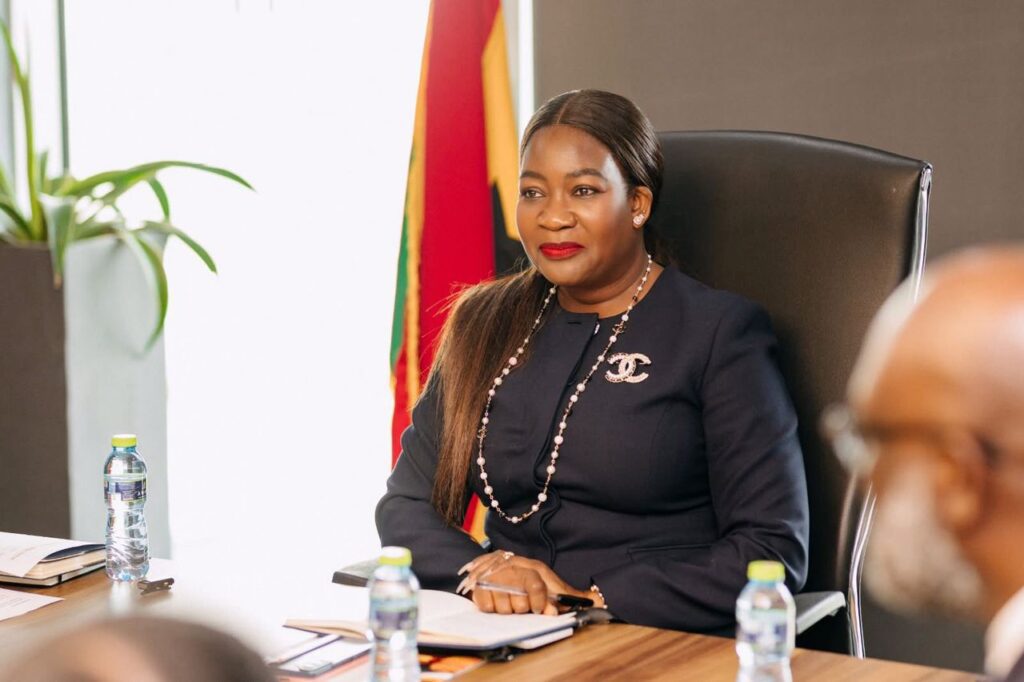
Mrs. Nelson’s address pinpointed the structural bottlenecks that have historically stifled early-stage mining exploration in Africa. She cited geopolitical risks, infrastructure deficits, and regulatory uncertainty as the primary culprits behind a weak project pipeline.
For many investors, the “pre-feasibility” stage of an African mining project is often viewed as too speculative due to these external variables.
To counter this, the Minerals Income Investment Fund (MIIF) CEO advocated for a pragmatic risk-sharing model. In this framework, African governments and domestic funds take “early positions” in projects, signaling stability and institutional backing to the global market.
Mr. Kwabena Barning, MIIF’s Chief Technical Officer, echoed these sentiments during technical sessions, noting that such catalytic capital allows projects to reach the bankability threshold faster.
This approach essentially utilizes state-linked funds to bridge the “valuation gap” that often stalls projects before they even break ground.
Economic Transformation for Ghana and the African Continent
The implications of Mrs. Nelson’s call extend far beyond investment portfolios; they represent a roadmap for domestic economic resilience.
For Ghana, the successful deployment of catalytic capital means moving away from a “passive royalty collection” model toward an “equity-participation” model.
By investing mineral income back into the sector as smart capital, Ghana can secure higher stakes in its own resources, ensuring that a larger share of the value chain from extraction to processing remains within the country.
On a continental level, this strategy aligns with the African Continental Free Trade Area (AfCFTA) goals of regional industrialization.
Mrs. Nelson highlighted that smarter regulation such as harmonizing mining codes across borders would create a “predictable investment climate” that attracts long-term, sustainable capital.
This shift is expected to trigger a multiplier effect: as project pipelines become more robust, infrastructure such as power and rail will naturally follow, lowering the cost of doing business and fostering integrated economic growth across the mineral-rich regions of Africa.
The Role of Smart Regulation and Technical Oversight

Hon. Yakubu Mohammed noted that the involvement of MIIF’s Governing Board ensures that investment strategies are aligned with national development priorities and legislative oversight.
By integrating “innovation” into the regulatory sphere, African nations can ensure that mining projects are not only profitable but also meet modern environmental, social, and governance (ESG) standards.
Mrs. Nelson concluded that the goal is to create a “virtuous cycle” where African capital validates African projects.
This proactive stance by Minerals Income Investment Fund (MIIF) serves as a blueprint for other sovereign wealth funds on the continent, proving that through “smarter regulation” and “strategic collaboration,” Africa can finally unlock the full economic potential of its vast sub-surface wealth for the benefit of its people.
READ ALSO: SEC Flags Illegal Mekanism Investment Scheme, Warns Public