

The Fisheries Commission has moved to fortify the nation’s blue economy by validating a landmark Artisanal and Inshore Fishing Gear Audit.
In a decisive stakeholder engagement held recently, top officials from the Ministry of Fisheries and Aquaculture Development (MoFAD) and technical experts gathered to review findings that will define the future of Ghana’s coastal livelihoods.
“Led by Prof. Benjamin Campion, Executive Director of the Commission, the session highlighted that the audit is the primary tool for operationalizing the Fisheries and Aquaculture Act 2025 (Act 1146), which was recently assented to by President John Dramani Mahama to save the nation’s collapsing small pelagic fish stocks”
Fisheries Commission
This audit is not merely an administrative exercise; it is a direct response to the “yellow card” warnings from the European Union and the devastating decline in catches reported by 94 percent of artisanal fishers.
By mapping the specific gear used by the canoe fleet and inshore vessels, the Commission is creating a data-driven enforcement regime to flush out illegal nets that capture juvenile fish, effectively starving the sea of its future.
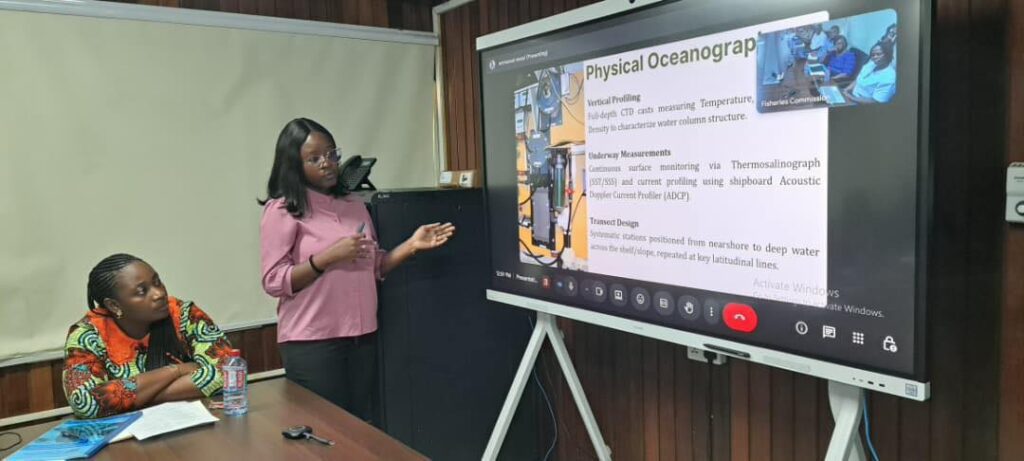
A cornerstone of the 2026 fisheries reset is the integration of high-level scientific data into daily management. During the meeting, stakeholders were briefed on the latest Nansen Survey results, which provided a sobering biological and oceanographic look at Ghana’s territorial waters.
The data from the R/V Dr. Fridtjof Nansen research vessel confirmed that without strict gear selectivity, the recovery of species like round sardinella and anchovies – the “people’s fish” – is impossible. For Deputy Executive Director Dr. Eric Cobbinah, this scientific backing is what transforms the gear audit from a suggestion into a mandatory conservation standard.
“He emphasized the importance of responsible fishing practices and data-driven decision-making in safeguarding the nation’s marine resources. He highlighted that the gear audit report forms a critical part of ongoing efforts to ensure sustainable fisheries management and regulatory compliance”
Fisheries Commission
By aligning the gear audit with these oceanographic findings, the Commission is ensuring that its “biological rest periods,” and closed seasons are not undermined by the use of “monofilament” or undersized mesh nets once the sea reopens.
12-Nautical-Mile Buffer
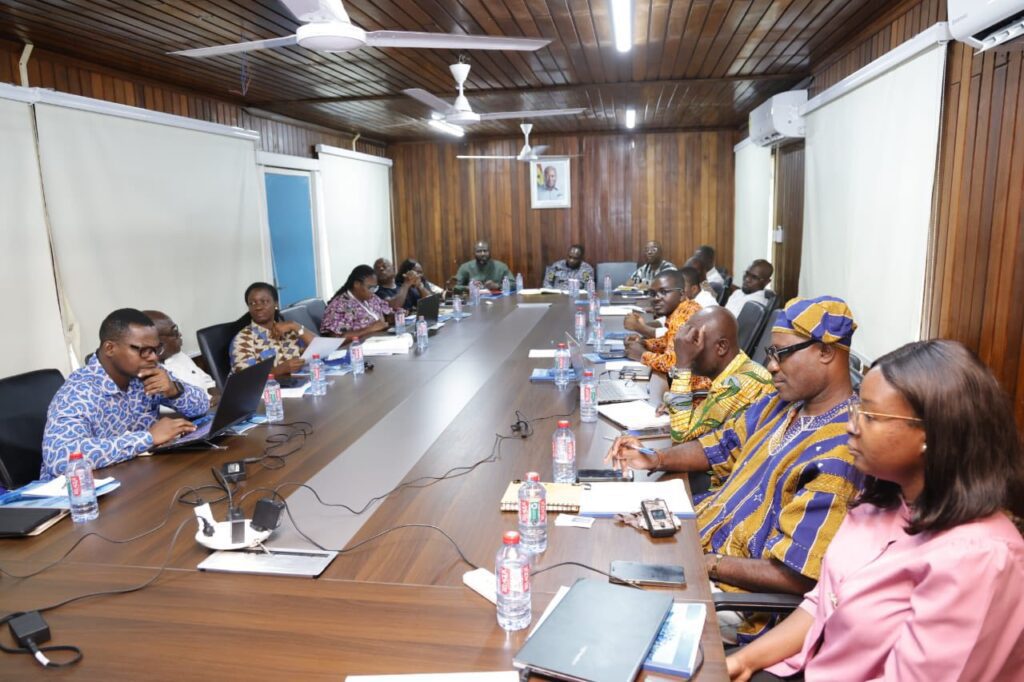
The most significant policy shift accompanying this audit is the expansion of the Inshore Exclusion Zone (IEZ) from six to twelve nautical miles.
According to the Commission, this newly doubled “buffer zone,” is reserved exclusively for artisanal fishers, and the gear audit is the primary mechanism to ensure that only approved, sustainable equipment is used within these protected waters.
The presence of the Ghana National Canoe Fishermen Council (GNCFC) and CEMLAWS Africa at the meeting underscored a new “co-management” approach where the fishers themselves become the first line of defense against illegal gear.
“The session featured detailed presentations on the Fishing Gear Audit, delivered by Mr. Ebenezer Ekuban, followed by engaging discussions among participants. The dialogue focused on findings, challenges within the artisanal and inshore sectors, and practical recommendations to improve monitoring and compliance”
Fisheries Commission
For MoFAD, this collaborative spirit is intended to reduce the historical friction between regulators and coastal communities, turning the audit into a shared roadmap for prosperity rather than a top-down mandate.

As the meeting concluded, the message from the Fisheries Commission was one of urgency. With the 2025 Fisheries Act now in force, the state has the legal teeth to impose harsher penalties on those who bypass gear regulations.
However, Prof. Benjamin Campion noted that enforcement is only one half of the equation; the other half is a cultural shift toward “collective responsibility.” The gear audit serves as the technical baseline for this shift, providing every landing beach in Ghana with a clear standard for what constitutes a legal catch.
Through this proactive audit, the Fisheries Commission is proving that it is no longer willing to leave the survival of the “Blue Economy,” to chance.