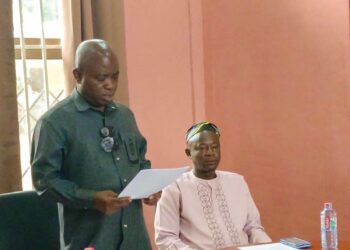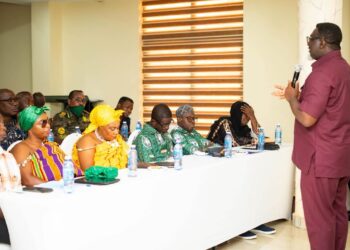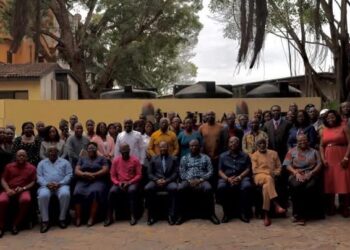
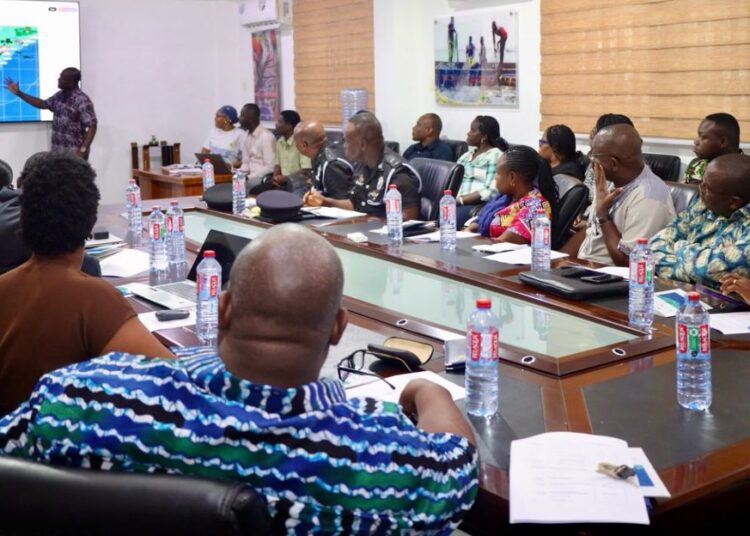
In a critical step toward securing Ghana’s maritime biodiversity, the Ministry of Fisheries and Aquaculture Development (MoFAD) and the Fisheries Commission convened a Communication Socialization Workshop in Accra.
Held in collaboration with the conservation NGO Hɛn Mpoano, the session focused on the implementation of the Greater Cape Three Points Marine Protected Area (GCTP MPA).
The workshop, themed “Building Shared Understanding and Unified Messaging,” targeted high-level Directors and Unit Heads to ensure that the government speaks with a singular, authoritative voice as it rolls out this landmark conservation framework.
“The GCTP MPA represents a vital shift in Ghana’s ‘Blue Economy’ strategy, moving from open-access exploitation to managed conservation. However, the success of such a zone depends entirely on the clarity of its objectives to the coastal communities whose livelihoods are most affected”
Ministry of Fisheries and Aquaculture Development
The Ministry noted that it is prioritizing a “socialization,” phase to avoid the friction often associated with top-down environmental mandates.

A unique feature of the workshop was the orientation of staff on the MPA Song Sheet – a standardized communication tool designed to harmonize messaging across all levels of the Ministry and the Premix Fuel Secretariat.
According to MoFAD, this “Song Sheet,” ensures that whether an officer is engaging a chief fisherman in the Western Region or a policy analyst in Accra, the rationale remains consistent: protecting biodiversity is the only way to safeguard long-term food security.
“The engagement aimed to deepen participants’ understanding of the MPA framework, policy rationale, conservation objectives, and implications for fisheries livelihoods.
“By clarifying institutional roles and responsibilities, the Ministry is preparing its staff to handle complex community concerns regarding fishing boundaries and the voluntary compliance measures expected from local fleets”
Ministry of Fisheries and Aquaculture Development
Balancing Conservation and Livelihoods
MoFAD observed that a primary challenge for the GCTP MPA is the perceived conflict between environmental protection and the immediate economic needs of fishers.

The workshop addressed this head-on, providing practical communication approaches for addressing community anxieties. The goal was to reframe the MPA not as a “no-go zone,” but as a “fish nursery,” that will eventually replenish the stocks in surrounding waters, benefiting the entire value chain.
The collaboration with Hɛn Mpoano brought a layer of technical expertise to the outreach strategy, ensuring that the scientific benefits of the Cape Three Points ecosystem are translated into the everyday language of the coastal populace.
The Ministry’s Public Relations Unit, alongside technical experts, emphasized that the implementation of the MPA must be built on a foundation of public trust.
Conflicting messages from different government units have historically undermined policy enforcement; by bringing the Premix Fuel Secretariat and the Fisheries Commission into the same room, the government is closing those gaps.
“This engagement is expected to strengthen coordinated outreach, promote consistent messaging, and build public trust as implementation of the GCTP MPA progresses”
Ministry of Fisheries and Aquaculture Development
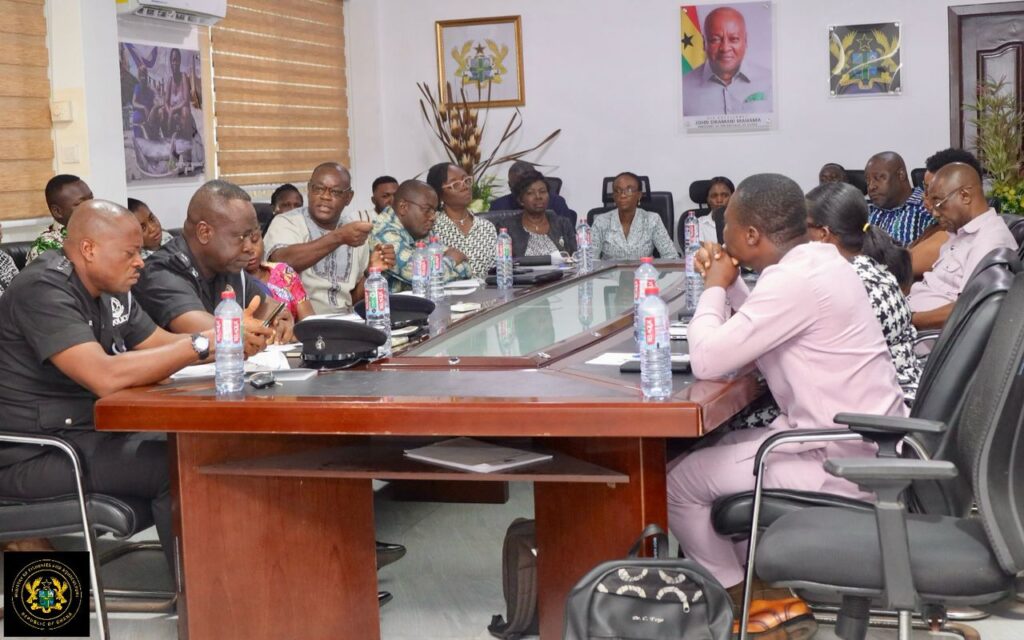
As the rollout continues, the Ministry remains committed to a “dialogue-first,” approach. The workshop concluded with a renewed focus on ensuring that the protection of marine biodiversity is viewed as a joint venture between the state and the artisanal fishing sector.
READ ALSO: Takeover of Naturally Expired Lease Not Opportunistic Intervention – Dr. Bansah