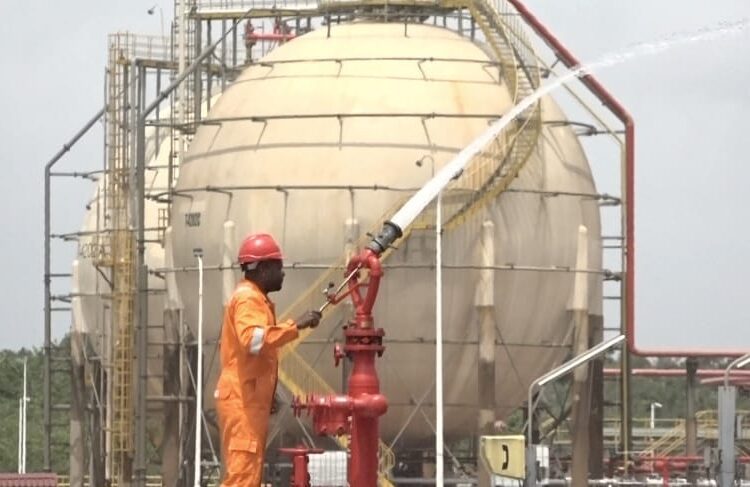
Civil society organisations (CSOs) operating in Ghana’s energy sector have called on government to accelerate the construction of a Second Gas Processing Plant at Atuabo, describing it as vital to ensuring sustainable power generation and long-term energy security.
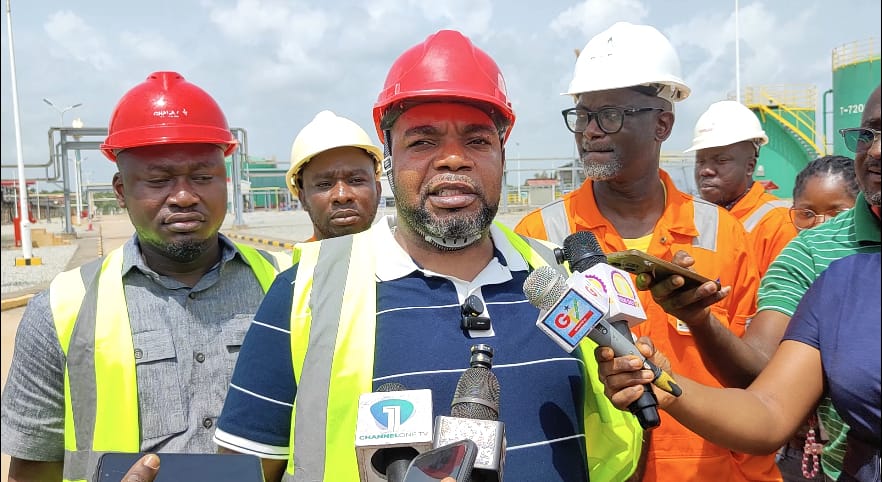
The appeal followed a guided tour of the existing gas processing facility at Atuabo in the Western Region, where representatives of several CSOs assessed current operations and future expansion prospects.
Among the delegation was Duncan Amoah, Executive Secretary of the Coalition of Petroleum Consumers (COPEC), who emphasised the strategic importance of expanding the country’s gas processing capacity.
“This facility has been a game changer, but we need GPP 2 to come on stream to significantly increase capacity.”
Duncan Amoah, Executive Secretary of the Coalition of Petroleum Consumers (COPEC)

The existing Atuabo Gas Processing Plant, operated by the Ghana National Gas Company, has played a central role in stabilising Ghana’s energy supply since its commissioning.
“Previously, Ghana depended on gas from Nigeria through the West Africa Gas Pipeline.
“Payment delays often led to valve closures and rolling power outages. Now, with local gas processing, thermal plants receive a consistent supply.”
Duncan Amoah, Executive Secretary of the Coalition of Petroleum Consumers (COPEC)
He added that domestic gas processing has significantly improved reliability for thermal power plants, ensuring that electricity generation is less exposed to external shocks.
LPG Self-Sufficiency as a Key Goal

A major argument advanced by the CSOs is that completing the second gas processing train would enable Ghana to achieve full Liquefied Petroleum Gas (LPG) self-sufficiency.
“Achieving full LPG self-sufficiency would mean we no longer have to rely on imports.
“Currently, we still bring in some supply from Europe, but completing Train 2 would enable us to meet 100 percent of domestic demand.”
Duncan Amoah, Executive Secretary of the Coalition of Petroleum Consumers (COPEC)
Expanding LPG production domestically, stakeholders argue, would reduce exposure to international price volatility and ease pressure on foreign exchange reserves.
The CSOs stressed that boosting local output would also enhance supply stability for households and industries that depend on LPG for cooking and other commercial activities.
Beyond LPG, the CSOs underscored that increasing domestic gas processing capacity is critical for maintaining stable electricity prices and supporting industrial growth.
They argued that reliable gas supply is essential for thermal plants, which form a significant part of Ghana’s power generation mix. Interruptions in gas supply often translate into higher generation costs, which can eventually affect consumers.
Mr Amoah commended the existing plant for helping to stabilise energy costs and provide a steady flow of gas to power producers.
He pointed out that with local gas processing firmly established, supply disruptions are less likely, even if ownership structures evolve within the sector.
Awaiting Cabinet Approval
On the status of the proposed expansion, Communications Director of the Ghana National Gas Company, Richard Kirk Mensah, disclosed that a government-constituted technical committee has completed its feasibility assessment of the second plant.
“We are just waiting for directives from cabinet to commence the construction of the second phase.”
Richard Kirk Mensah, Communications Director of the Ghana National Gas Company
The disclosure suggests that the project has advanced beyond preliminary evaluation and is now awaiting final executive approval.
Industry observers say timely action could position Ghana to consolidate gains made in domestic gas utilisation and secure a stronger foundation for future energy planning.
Mr Mensah, who led the CSO representatives through the facility, explained that the guided tour forms part of Ghana Gas’ 2026 corporate strategic plan.
He noted that the initiative is aimed at enhancing transparency and deepening stakeholder engagement in the energy sector.
Opening the facility to civil society groups, he said, would help them better understand operational realities and strengthen their ability to play a constructive watchdog role.
According to him, inclusive dialogue is essential to building public trust and ensuring that major infrastructure projects receive broad-based support.
The engagement reflects growing recognition that collaboration between government agencies, state-owned enterprises and civil society is crucial in shaping sustainable energy policy.
For CSOs, the issue is not merely about expanding infrastructure but about safeguarding the country’s energy future.
With the technical assessment completed and cabinet approval pending, attention now turns to government’s next move.
Should the project receive the green light, it could mark a significant step toward strengthening Ghana’s energy independence, containing costs and supporting long-term economic growth.
READ ALSO: GRA Interdicts Five Officers over ¢85m Border Evasion Scheme