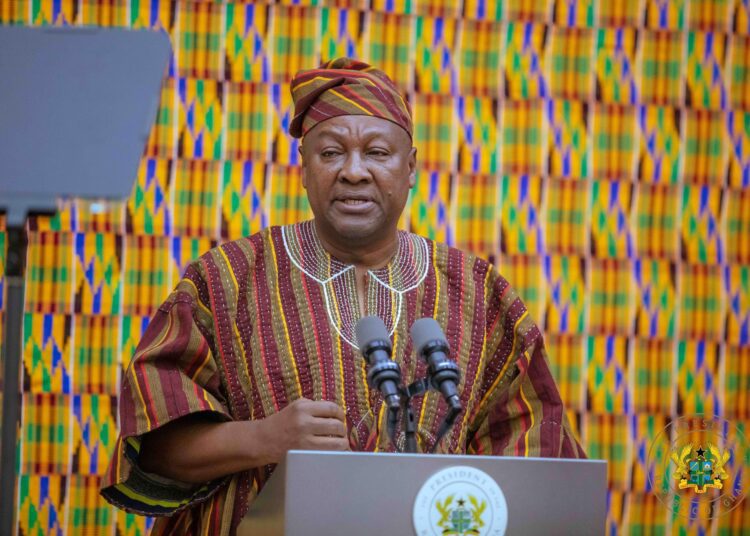
President John Dramani Mahama has announced that Ghana has fully repaid the $500 million World Bank guarantee, including interest, as of December 31, 2025.
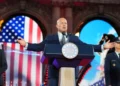
The announcement, delivered during the 2026 State of the Nation Address in Parliament on Friday, February 27, signals a major boost to the country’s fiscal credibility and global standing.
The President described the development as a defining moment in Ghana’s economic recovery journey, stressing that the full repayment restores the facility and reinforces international confidence in the country’s financial commitments.
“As of December 31st, 2025, the government has fully repaid and restored the entire $500 million World Bank guarantee, including interests. This has reinstated the facility in full and reaffirmed Ghana’s standing as a credible and reliable partner on the global stage.”
President John Dramani Mahama
Restoring International Confidence
The $500 million World Bank guarantee had served as an important financial backstop, supporting Ghana’s access to international funding at a time when global markets were cautious about emerging economies. Its full repayment, according to the President, demonstrates Ghana’s renewed fiscal discipline and responsible debt management.
By clearing the obligation entirely, Ghana sends a strong signal to development partners, investors, and multilateral institutions that it remains committed to meeting its financial obligations. This step is expected to enhance the country’s ability to negotiate future facilities on favorable terms and attract new investments.
Analysts say such moves are critical in rebuilding trust, particularly in a global economic environment where sovereign risk assessments heavily influence capital flows. Ghana’s repayment of the guarantee reflects improved revenue performance, tighter expenditure controls, and stronger macroeconomic management.
Economic Milestone Surpassing $100 Billion
Beyond the repayment, President Mahama highlighted broader economic achievements that underscore Ghana’s resilience. He revealed that the country has surpassed the $100 billion mark for the first time in its history, positioning it among Africa’s largest economies.
Crossing the $100 billion threshold is more than symbolic. It reflects expanded economic activity across sectors including services, industry, agriculture, and technology. The milestone signals increasing productivity and improved economic output, reinforcing Ghana’s position within the regional and continental economic landscape.
The President framed this achievement as evidence that the government’s economic reforms and stabilization measures are yielding tangible results. For investors and development partners, such growth metrics enhance Ghana’s appeal as a viable and growing market.
Strengthening the Cedi
A key highlight of the address was the remarkable performance of the national currency. President Mahama reported significant appreciation of the cedi against major international currencies, a development that has eased pressure on businesses and consumers.
According to the President, the cedi appreciated by 40.7 percent against the US dollar, 30.9 percent against the British pound, and 24 percent against the Euro. “We did not just arrest currency instability; we strengthened the cedi to put up a good fight against other currencies,” Mahama said.
The appreciation of the cedi marks a sharp turnaround from previous periods of volatility that strained importers, increased inflationary pressures, and weakened purchasing power. A stronger currency contributes to lower import costs, improved investor sentiment, and greater macroeconomic stability.
Financial analysts suggest that disciplined monetary policy, improved foreign exchange reserves, and strengthened fiscal coordination played crucial roles in achieving this outcome.
Fiscal Discipline and Economic Resilience
The full repayment of the World Bank guarantee underscores Ghana’s strengthened fiscal management and economic resilience. By meeting this obligation, the government demonstrates a commitment to sustainable debt practices and prudent financial stewardship.
Fiscal discipline remains central to long term economic stability. The government’s approach appears to combine revenue mobilization, expenditure rationalization, and structural reforms aimed at broadening the tax base while supporting productive sectors.
The President’s address painted a picture of an economy on the path to recovery and consolidation. He linked the repayment to broader efforts aimed at restoring confidence, stabilizing key economic indicators, and maintaining strong relationships with international partners.
Ghana’s improved standing may also translate into better credit assessments and lower borrowing costs in future transactions. For businesses and households, this could mean more stable economic conditions and improved access to financing over time.
A Renewed Global Standing
President Mahama emphasized that clearing the $500 million guarantee is not merely a financial transaction but a reaffirmation of Ghana’s credibility on the global stage. The move demonstrates that the country honors its commitments and remains a dependable partner in international finance and development cooperation.
The restoration of the facility in full strengthens Ghana’s negotiating position in future engagements with multilateral institutions and international investors. It also reinforces the message that the country is moving forward with renewed discipline and strategic focus.
As Ghana builds on this momentum, the government’s challenge will be to sustain growth, maintain currency stability, and continue strengthening public finances. The repayment of the World Bank guarantee stands as a significant milestone in that journey, reflecting both progress achieved and the commitment to maintaining economic stability.
With improved macroeconomic indicators and renewed global confidence, Ghana appears poised to consolidate its recovery and chart a more resilient path forward.
READ ALSO: President Mahama Defends Cocoa Price Reforms in 2026 SONA