
In a decisive move to reclaim its dominance in the competitive beverage market, GIHOC Distilleries Company Limited has unveiled a massive investment in its distribution infrastructure – a new fleet of vehicles at the company’s headquarters.
Officially commissioned by the Minister for Trade, Agribusiness and Industry, Hon. Elizabeth Ofosu-Adjare, the ceremony was not merely a logistical update but a high-level endorsement of a “strategic turnaround,” aimed at transforming one of Ghana’s most iconic state-owned enterprises (SOEs) into a lean, profit-driven industrial powerhouse.
The Ministry of Trade Agribusiness and Industry (MoTAI) noted that for years, GIHOC has battled the twin challenges of aging infrastructure and stiff competition from private local and international distillers.
“The acquisition of this new fleet is designed to shatter the structural bottlenecks that have historically limited the company’s ability to reach emerging markets and maintain timely delivery schedules. Speaking as the Special Guest of Honour, Hon. Elizabeth Ofosu-Adjare framed the investment within the context of the government’s broader industrial transformation agenda”
MoTAI
She noted that for public enterprises to survive in the modern business environment, they must move away from a culture of “state dependency and embrace the efficiency of the private sector.” The Minister emphasized that strengthening the last mile of delivery is the most effective way to improve customer satisfaction and expand national reach.

However, the Hon. Ofosu-Adjare also issued a stern reminder regarding the stewardship of state assets. She cautioned that the Ministry’s continued support is contingent upon the company’s ability to turn these physical assets into tangible financial results.
“Investment in assets must translate into measurable performance outcomes,” she added, stressing that there must be productivity and financial sustainability within state-owned enterprises.
Removing Structural Constraints
The Chief Executive Officer of GIHOC, Mr. Jones Borteye Applerh, described the commissioning as a “strategic milestone.” He was candid about the company’s previous struggles, noting that logistics constraints had frequently hampered the sales team’s ability to respond to market demands.
By modernizing the fleet, GIHOC is essentially unlocking its sales force.
“The new fleet will significantly improve delivery reliability, enhance trade visibility, and enable the company to respond more swiftly to customer demands across the country. Improved mobility for sales and distribution teams would directly support revenue growth”
Mr. Jones Borteye Applerh, CEO of GIHOC

The CEO underscored that this move is part of a holistic modernization drive. Beyond the vehicles, the company is focusing on operational discipline and a data-driven approach to sales, ensuring that every kilometer traveled by the new fleet contributes directly to the bottom line.
A Governance Statement on Profitability
MoTAI observed that perhaps the most poignant remarks came from the Board Chairman, Mr. Henry Annor Boakye-Yiadom, who characterized the fleet commissioning as a “governance statement.”
He argued that the Board’s mandate is not just to oversee but to enable Management to build a resilient and competitive institution. For the Board, the new vehicles represent a practical tool to dismantle the historical barriers that have kept GIHOC from realizing its full commercial potential.
He reminded everyone that sustainable profitability cannot be achieved without strengthening key pillars including distribution and delivery reliability. He also reminded the staff that the vehicles alone would not save the company; rather, it is the “integration of these assets into a disciplined system of performance measurement that will drive the turnaround.”
As a state-owned commercial entity, GIHOC carries an economic and unique symbolic weight in Ghana’s industrial history. The current turnaround strategy is aimed at ensuring the company evolves into a strong industrial brand and a reliable contributor to national revenue.
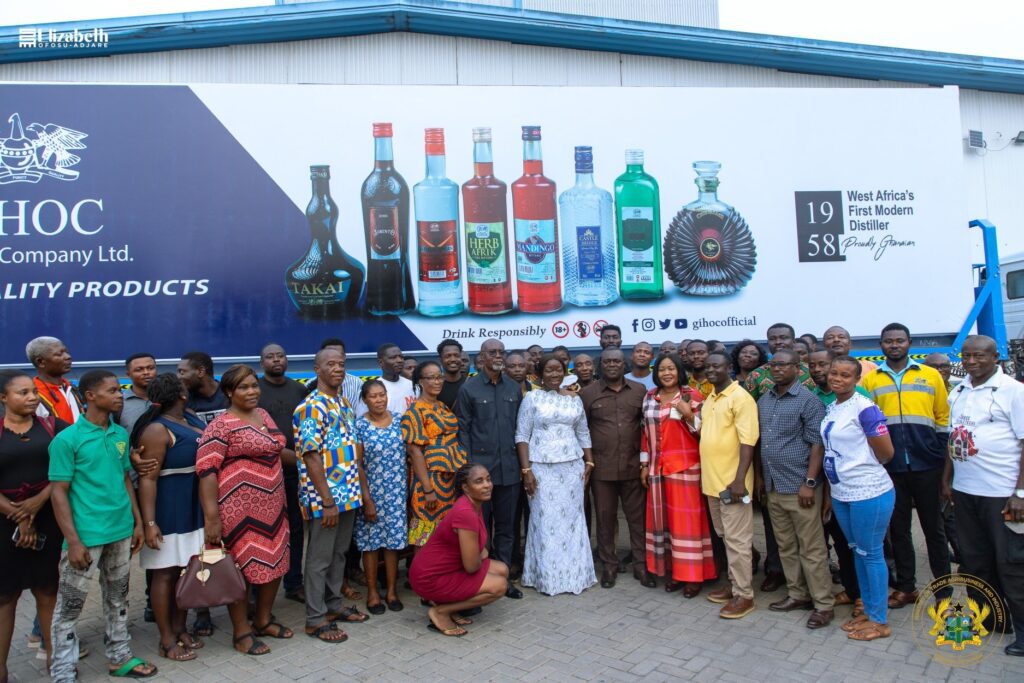
The Board Chairman concluded by reassuring stakeholders that the path to full financial restoration is now firmly established through good governance and rigorous financial discipline.
With the new fleet now hitting the roads, the eyes of the industry will be on GIHOC to see if this logistical boost can indeed translate into the market dominance and sustained profitability that the government and the Board have promised.
READ ALSO: Government Approves Four-Month Plan to Clear Nurses, Midwives Arrears