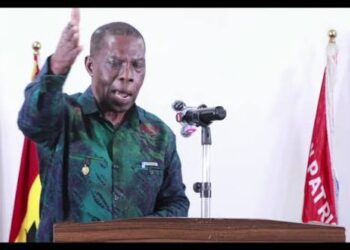
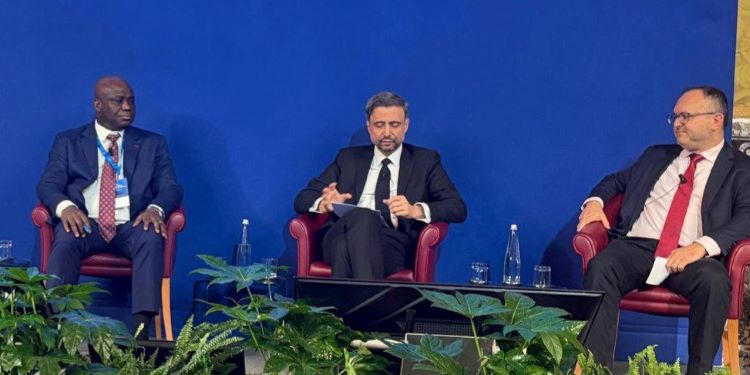
In a decisive move to anchor the nation’s Agriculture sector within the global investment landscape, the Minister for Food and Agriculture, Hon. Eric Opoku, represented Ghana at a high-level global policy dialogue in Rome, Italy, where he aligned Ghana’s Agriculture for Economic Transformation Agenda (AETA) with the “Mattei Plan.”
For Hon. Opoku, this engagement with Italy’s strategic roadmap for African development, marked a critical step in securing the international capital and technical expertise required to transform Ghana’s food systems into a primary engine for youth employment and Industrialization.
“I participated in the global policy dialogue in Rome focused on job creation in Africa through the Mattei Plan, a forum, which is a collaboration with the World Bank Group and Banca d’Italia, aimed to enhance core infrastructure and the business environment to boost African employment”
Hon. Eric Opoku, Minister for Food and Agriculture
The Minister’s participation in Rome highlighted a shift in Ghana’s diplomatic strategy, moving toward “Investment Diplomacy,” that prioritizes core infrastructure. By aligning the country’s Agriculture for Economic Transformation Agenda with Italy’s Plan, the state is positioning itself to benefit from the country’s multi-billion-euro commitment to African energy, water, and agricultural infrastructure.
Hon. Opoku emphasized that for Ghana to achieve its 2026 growth targets, the sector must transition from survivalist farming to a sophisticated, large-scale agribusiness model.
At the heart of his presentation was the urgent need to modernize the production chain. While smallholder farmers have historically been the backbone of the economy, the Administration has identified that subsistence methods alone cannot meet the 2026 demand for food sovereignty or industrial raw materials.

The Minister outlined a vision where the state facilitates the transition to large-scale commercial farming, capable of sustaining thousands of stable, high-value jobs for the Ghanaian youth. He argued that Agriculture must be viewed as a “professional career path rather than a default occupation for the rural poor.”
To achieve this, the Ministry of Food and Agriculture (MoFA) is focusing on “Agricultural Enclaves “ – designated zones where land is pooled, cleared, and equipped with modern amenities to attract private sector investors and young entrepreneurs.
This shift is expected to trigger a surge in productivity, allowing Ghana to not only feed its citizens but also to become a net exporter of processed food products to the European and regional markets.
Roads, Irrigation and FSCs
According to the Minister, a significant portion of the Rome dialogue focused on the “Business Environment,” which, in the Ghanaian context, is inseparable from physical infrastructure.
Hon. Opoku detailed the government’s commitment to constructing 1,000 kilometers of agricultural roads specifically designed to link production zones to major urban markets and export hubs. These “Farm-to-Market” corridors are essential for reducing post-harvest losses, which currently claim a significant percentage of national output.
Furthermore, the expansion of Irrigation systems remains a top priority for the 2026 fiscal year. By reducing the sector’s reliance on erratic rainfall, the Ministry aims to enable year-round farming, effectively doubling the annual earning potential of Ghanaian farmers.
Coupled with the strengthening of the National Food Buffer Stock through the construction of modern silos and cold-storage facilities, these interventions are designed to stabilize food prices and ensure a resilient supply chain even in the face of global climate volatility.
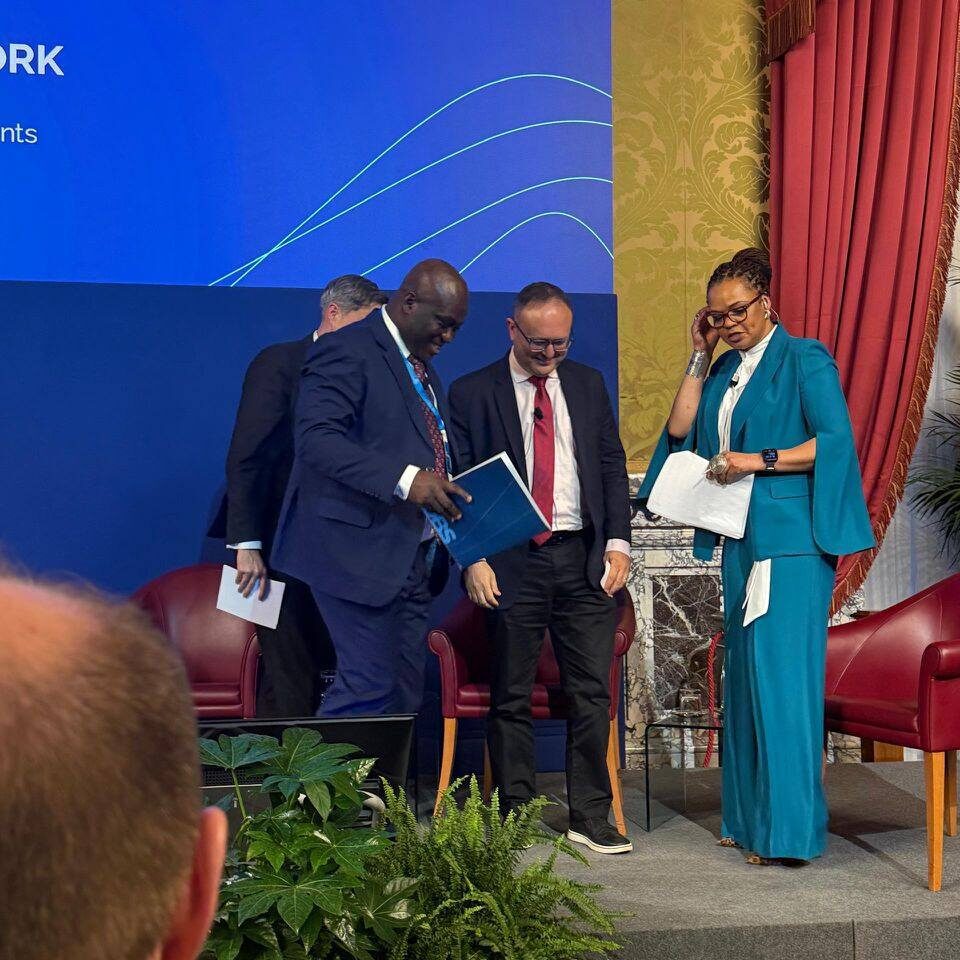
Additionally, to bridge the technology gap, Hon. Opoku reaffirmed the government’s commitment to the establishment of Farmer Service Centers (FSCs) across the country. These centers are designed to be “One-Stop Shops,” for mechanization, providing farmers with affordable access to tractors, harvesters, and drone-based spraying services.
This model removes the massive upfront capital burden from the individual farmer, allowing them to “pay-as-you-go” for the high-tech tools needed to increase their yields.
Honorable Eric Opoku also touched upon the critical issue of Financial Accessibility. He noted that in collaboration with the World Bank and Banca d’Italia, the Ministry is exploring “De-risking Mechanisms,” that encourage commercial banks to lend to the Agriculture sector at lower interest rates.
By providing government guarantees and insurance products through the FSCs, the Administration is making it easier for young graduates to secure the credit needed to start their own agribusiness ventures.
Multi-Sectoral Approach
The Minister concluded his remarks by emphasizing that Agriculture cannot be transformed in isolation.
“With the Agriculture for Economic Transformation Agenda, the above and many others when implemented will transform food systems as a multi-sectoral effort, requiring coordinated action across infrastructure, energy, agriculture, and industrial development”
Hon. Eric Opoku, Minister for Food and Agriculture
For instance, the expansion of irrigation requires stable energy, and the processing of raw crops requires the establishment of factories near the production enclaves. This holistic approach is what the Mattei Plan aims to support.
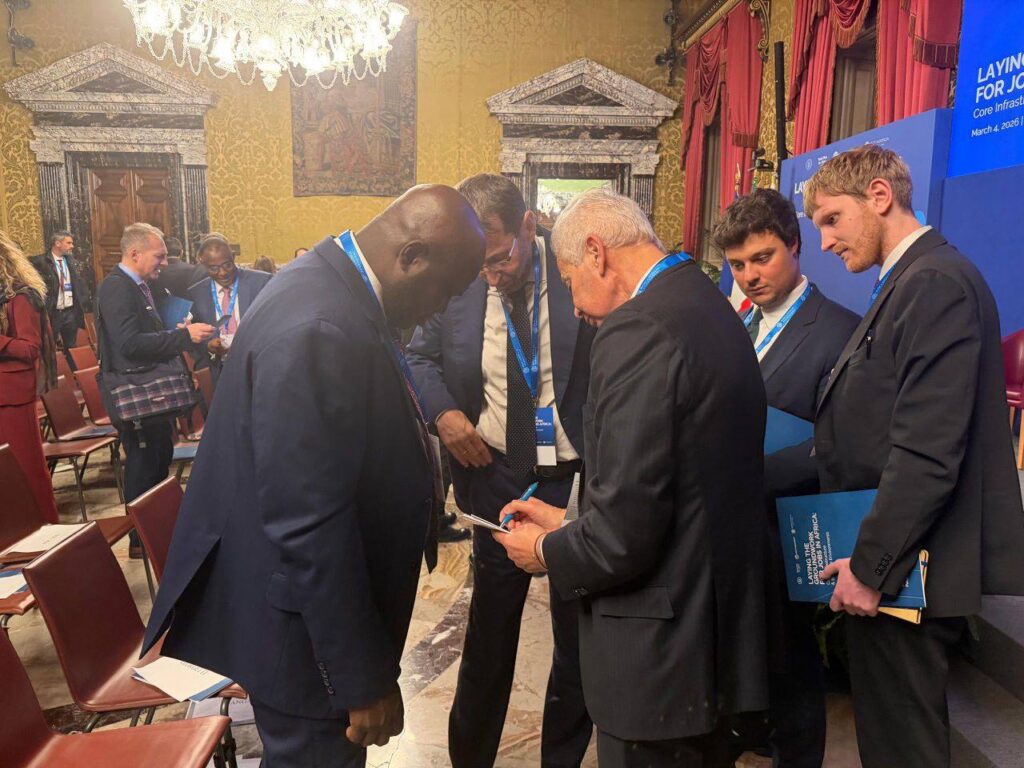
By integrating Italian technical know-how in food processing and machinery with Ghana’s vast arable land and youthful workforce, the Administration is building a sustainable economic engine.
The Rome dialogue has set the stage for a new era of “Agro-Industrial” cooperation, where the farm is no longer just a source of food, but the starting point of a massive industrial value chain that drives national prosperity.
As Hon. Eric Opoku returns to Accra, the focus shifts to the implementation of the Rome agreements.
With the first 1,000 km of roads already under design and the Mattei Plan’s investment framework taking shape, the 2026 vision for a mechanized, job-rich, and industrially-aligned Agriculture sector is moving from policy dialogue to tangible reality on the ground.
READ ALSO: South East Water Slapped With £22m Fine