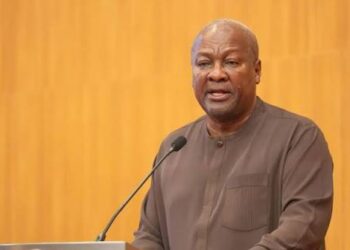

Concerns are mounting over Ghana’s fuel reserves, as the Chamber of Petroleum Consumers (COPEC) has described the country’s current fuel stockpile as dangerously low despite assurances from regulators that supply remains stable.
The Executive Secretary of COPEC, Duncan Amoah, says the nation’s existing reserves leave Ghana highly exposed to potential disruptions in global oil supply chains, particularly as geopolitical tensions in the Middle East continue to escalate.
Speaking in an interview, Mr. Amoah warned that the country’s current reserve levels fall far short of what is required for a secure and resilient energy system.
“I am not particularly enthused by the five weeks of storage we have. It is abysmal, and I’ll put this on record,” he said, stressing that Ghana must urgently strengthen its fuel stockpiles to cushion the economy against external shocks.
The comments come shortly after the National Petroleum Authority (NPA) sought to calm public concerns over fuel availability. According to the regulator, Ghana currently holds more than five weeks of petroleum products in reserve, which it considers sufficient to meet national demand.
The Director of Economic Regulation and Planning at the NPA, Abass Ibrahim Tasunti, said the country remains adequately supplied despite growing uncertainty in the global energy market.
Tasunti noted that existing stocks across the country’s petroleum infrastructure should be enough to prevent immediate shortages, even as global tensions continue to influence oil markets.
However, COPEC believes the benchmark used by the regulator is inadequate for a country heavily dependent on imported fuel.
COPEC Warns of Supply Risks

Amoah argued that five weeks of fuel reserves is far below acceptable international standards for energy security. He cautioned that the situation becomes even more worrying when viewed against current geopolitical developments.
“If tensions in the Middle East drag on for several months, countries with limited reserves will be the most vulnerable.”
Duncan Amoah, Executive Secretary of COPEC
He warned that Ghana could face serious supply challenges if disruptions occur while the country maintains such minimal stock levels.
To prevent such a scenario, Amoah called on the Minister for Energy and Green Transition, John Abdulai Jinapor, to move quickly to secure additional petroleum stocks.
He explained that proactive procurement and stockpiling would provide a safety buffer against possible supply disruptions and stabilize the domestic market.
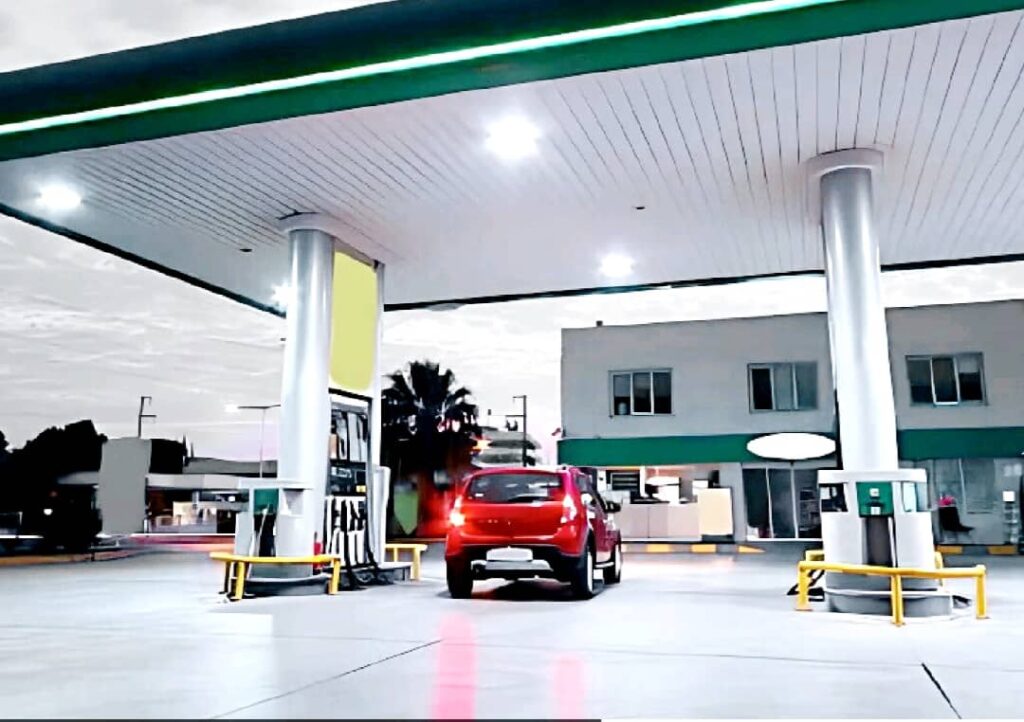
According to COPEC, Ghana already has the infrastructure needed to maintain far larger reserves than it currently holds. Amoah pointed to existing storage facilities across the country, which he said could support a much bigger strategic stockpile if fully utilized.
He cited the Tema Oil Refinery (TOR) as a key asset, noting that the facility alone has a storage capacity approaching one million metric tonnes.
If fully stocked, he said TOR could hold enough petroleum products to supply the country for between two and three months.
In addition to TOR, the Bulk Oil Storage and Transportation Company (BOST) also contributes significantly to the nation’s storage capacity. Amoah estimated that BOST’s depots can accommodate between 700,000 and 800,000 metric tonnes of petroleum products.
Private-sector facilities also play an important role. Storage depots operated by companies such as Tema Fuel Company (TFC), along with other installations across the Tema petroleum enclave, could further expand the country’s reserve capacity.
Potential for Four to Six Months of Fuel Supply
When combined, Amoah believes Ghana’s existing infrastructure could support a much larger strategic fuel reserve than what is currently being maintained. “If you decide to stock up, Ghana could maintain between four to six months of supply at a minimum,” he said.
By comparison, he noted that the current five-week stock level effectively represents only about one month of coverage, leaving little margin for error.
The debate over Ghana fuel reserves highlights broader concerns about energy security and the country’s ability to manage supply shocks in a volatile global oil market.
Energy analysts say strategic petroleum reserves are a critical component of national economic stability, particularly for countries that rely heavily on imported refined petroleum products.
For Ghana, strengthening reserves could help stabilize fuel prices, protect industries dependent on petroleum products, and ensure uninterrupted supply for transport and electricity generation.
As global energy markets continue to respond to geopolitical uncertainty, calls for Ghana to expand its fuel reserves are likely to intensify, with policymakers facing growing pressure to adopt a more robust long-term energy security strategy.
READ ALSO: Women Development Bank at Final Stage of Rollout – President Mahama