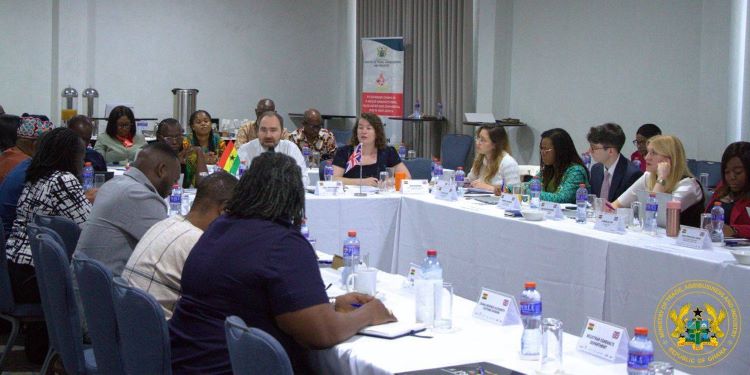
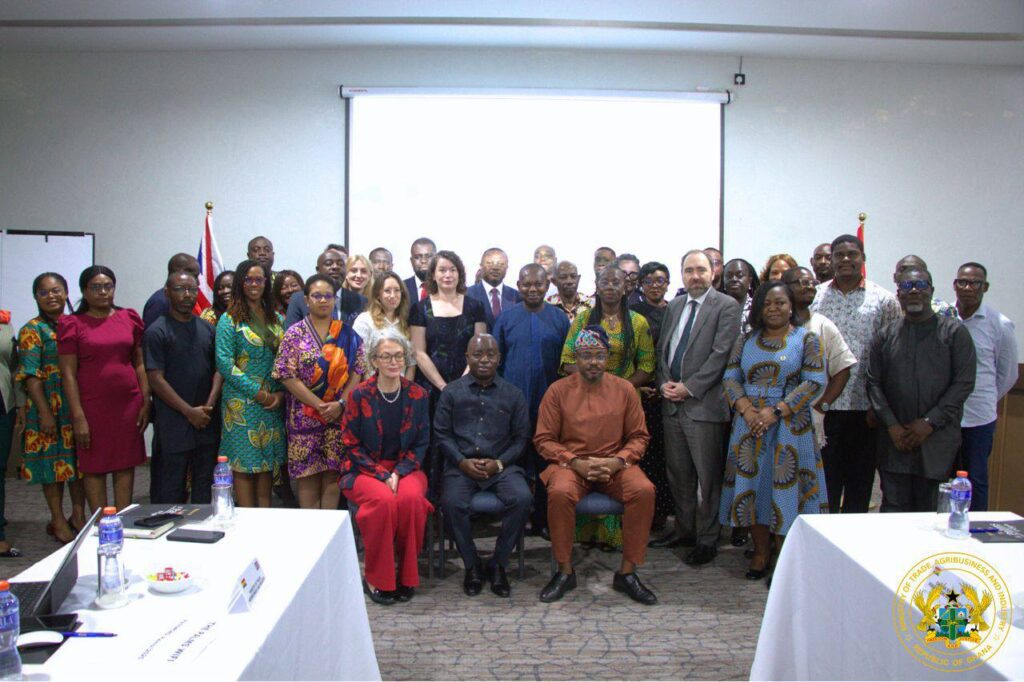
The Ghana-UK Trade Partnership Agreement (TPA) has reached a critical five-year milestone this week as officials from both nations convened at the Ministry of Trade, Agribusiness and Industry (MoTAI). This Joint Technical Committee meeting served as a performance review of the bilateral pact, coming exactly five years after its inception.
According to MoTAI, with trade volumes surging by nearly 10% over the past year, the summit focused on transitioning the agreement from a basic commodity exchange into a sophisticated, “future-oriented” partnership capable of weathering global economic shifts.
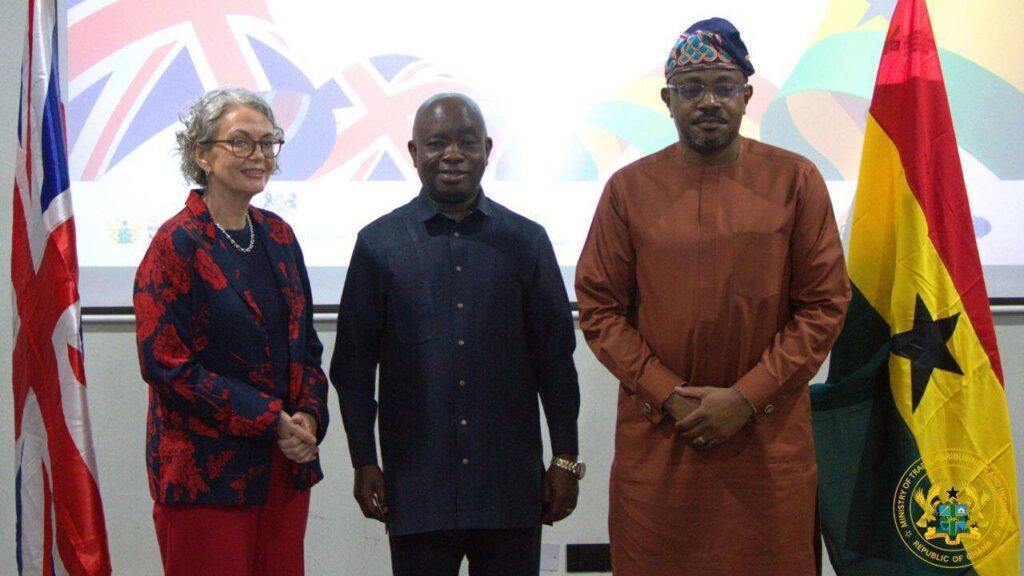
For the Ministry, the timing of this review is symbolic, with Deputy Minister Hon. Sampson Ahi, noting that the anniversary aligns with the momentum of Ghana’s recent 69th Independence Day celebrations.
“The meeting, held in Accra, brought together government officials, development partners and trade institutions from both countries, alongside representatives from the Economic Community of West African States (ECOWAS), to review progress, address outstanding issues and chart a path for enhanced cooperation”
Ministry of Trade, Agribusiness and Industry
However, beyond the symbolism lies a hard economic reality: while trade is growing, the balance currently favors the United Kingdom. The Ghanaian delegation used the Accra summit to demand a more diversified flow of goods, urging a shift toward non-traditional exports and processed agribusiness products.
The Ministry revealed that a major breakthrough of the session was the mutual commitment to finalize the “Rules of Procedure for Dispute Settlement.” Both nations agreed to establish a formal arbitration panel, a move that effectively provides “legal teeth,” to the TPA.
By creating a transparent mechanism to resolve trade friction, the two governments plan to de-risk the environment for private investors. They noted that this institutional strengthening is a prerequisite for the long-term sustainability of the pact, and would ensure that technical disagreements do not stall the momentum of bilateral investment.
MoTAI added that, on the technical front, the Ghana Revenue Authority (GRA) is currently spearheading the implementation of the 2024 – 2025 tariff liberalization schedule, to lower barriers for essential industrial machinery entering Ghana while easing the path for Ghanaian finished goods heading to British ports.
To ensure no exporter is left behind, the committee announced a dedicated technical meeting focused on “Rules of Origin.” This session will specifically help Ghanaian firms transition to origin declarations – a move that simplifies the paperwork required to claim duty-free status in the UK.
Regional Impact
The dialogue also signaled a pivot toward the “invisible” side of trade: Services.
UK Co-Chair Paul Whittingham identified services as the primary engine for growth as the agreement moves toward its tenth anniversary. These included digital trade, professional consulting, and financial services – sectors that are increasingly vital as Ghana positions itself as a regional service hub.
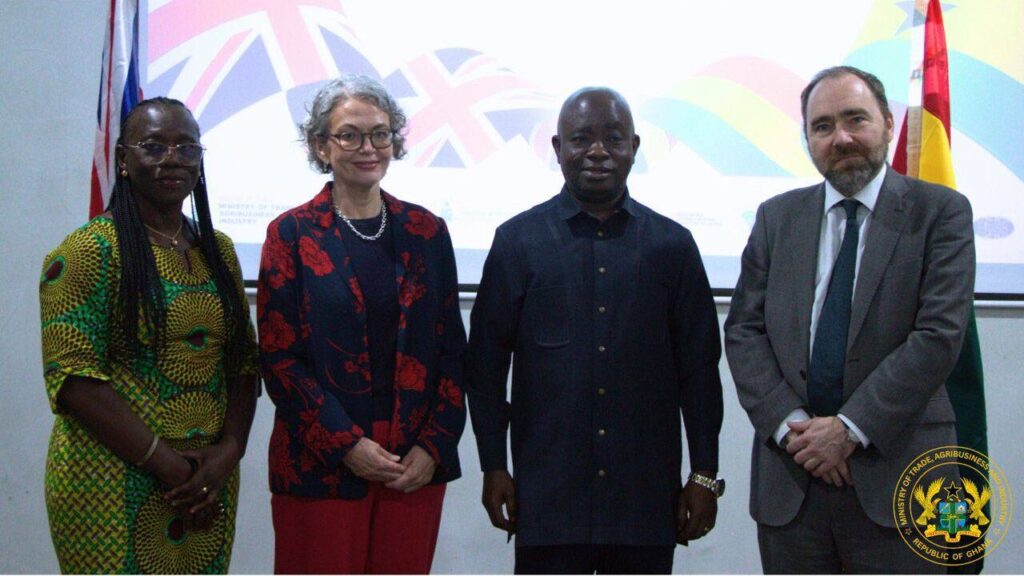
The meeting also carried a weight that extended beyond the two nations. Kolawole A. Sofola, representing the ECOWAS Commission, highlighted that the Ghana-UK TPA serves as a regional model.
Navigating this bilateral relationship provides a blueprint for how other West African nations can structure trade with external partners without compromising regional integration.
Furthermore, the UK reiterated its support for Ghana’s implementation of the African Continental Free Trade Area (AfCFTA), ensuring that the TPA and the continental trade agenda work in tandem.
“Co-Chair of the meeting from the UK side, Paul Whittingham, beyond capturing the growing importance of services trade, highlighted the centrality of partnership in advancing the agreement, stressing the importance of building a future-oriented trade relationship”
Ministry of Trade, Agribusiness and Industry
A recurring theme throughout the summit was the need for evidence-based decision-making, as the both sides confirmed that they will organize technical sessions to enhance access to Trade Data.
This initiative aims to provide businesses and policymakers with the granular information needed to identify market gaps and novel products that are currently under-traded. Through opening the books on market trends and consumer demand, the governments hope to spur economic diversification in sectors like high-value agriculture and specialized manufacturing.
The British High Commission’s Development Director, Terri Sarch, underscored that the TPA is now a “cornerstone” of Ghana’s economic recovery. With the agreement having survived the initial five-year stress test, the focus now shifts to frequent, committee-level engagements to fast-track implementation.
For MoTAI, the goal is to move from reflection to rapid execution, ensuring that the nearly 10% growth recorded this year becomes the new baseline for the next half-decade.
READ ALSO: Brazil Backs Ghana’s Move to Declare Slavery as Gravest Crime