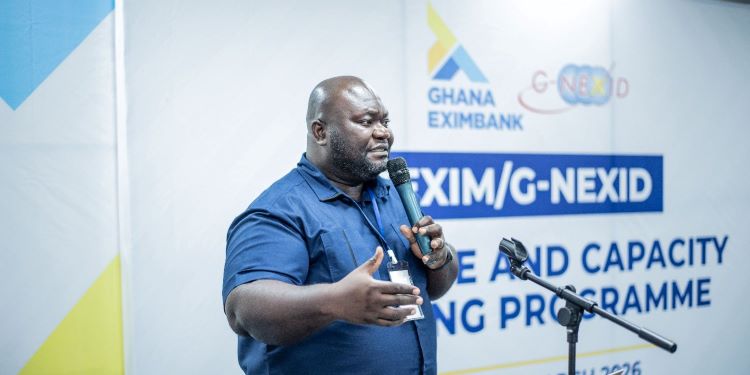
Mr. Charles Opoku Mensah, the Head of Aftercare and Investor Grievance at the Ghana Investment Promotion Centre (GIPC), has spearheaded a strategic investment drive at the 6th G-NEXID Exchange Programme in Accra, showcasing a curated “pipeline” of Ghanaian industrial and infrastructure projects.
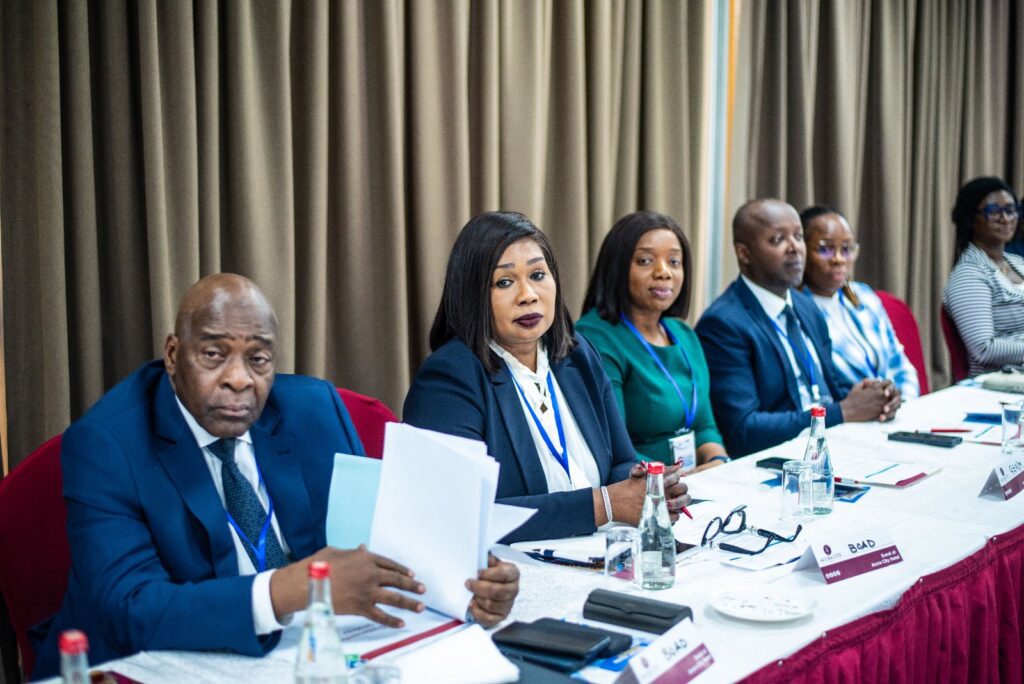
Hosted by the Ghana Export-Import Bank (GEXIM), the two-day summit brought together key stakeholders from the Global Network of Export-Import Banks and Development Finance Institutions (G-NEXID) to advance trade and investment frameworks across Africa and beyond.
“Representing GIPC’s CEO Simon Madjie, Mr. Charles Opoku Mensah utilized the high-level platform to present to a global network of development finance institutions on advancing trade and investment across Africa and beyond. He highlighted Ghana’s investment opportunities and the Centre’s role in facilitating strategic partnerships”
Ghana Investment Promotion Centre
The participation of the GIPC in the G-NEXID forum marked a deliberate effort toward “Aftercare-led” investment promotion, focusing on the resolution of investor grievances and the expansion of existing projects. The Centre signaled that Ghana is not merely interested in the initial capital entry, but in the long-term sustainability and scalability of foreign direct investment (FDI).
Mr. Mensah emphasized that the aftercare mandate is now a primary competitive advantage for Ghana, providing a safety net for institutional investors navigating the complexities of the West African market.
The G-NEXID network is a critical piece of the global financial architecture, specifically fostering cooperation among South-South development banks.

During the exchange, the GIPC highlighted the importance of co-financing as a tool for de-risking large-scale projects in Ghana. It noted that aligning GEXIM’s local expertise with the international liquidity of foreign export-import banks, creates a “hybrid financing model,” that allows for more ambitious industrialization targets.
Mr. Mensah’s presentation focused on the “project pipeline,” a list of ready-to-fund initiatives in sectors ranging from agribusiness to renewable energy. The GIPC’s role at the summit was to act as the technical bridge between these local projects and the international financiers who have the mandate to support extra-African trade.
The discussions centered on how innovative financial solutions, such as export credit guarantees and sovereign-backed investment vehicles, can be used to accelerate the delivery of these projects.
Investor Grievance Mechanism
As the Head of Aftercare and Investor Grievance, Charles Opoku Mensah used the platform to reassure the G-NEXID delegation that Ghana has institutionalized the protection of investments.
With investors increasingly looking for stability markers in the current global economic climate – clear signals that their capital will not be trapped or eroded by regulatory shifts – Mr. Mensah outlined the GIPC’s proactive approach to identifying and resolving operational bottlenecks before they escalate into formal disputes.
The GIPC noted that the “Aftercare” philosophy was essential for the “extra-African trade,” goals discussed at the summit. If an investor from a G-NEXID member country experiences success in Ghana, they are more likely to reinvest and attract other members of the network.
The Centre’s commitment to facilitating strategic partnerships involves a continuous feedback loop between the state and the private sector, ensuring that the investment climate remains responsive to the needs of the modern multinational corporation.

The 6th G-NEXID programme provided a vital platform for knowledge sharing on how to navigate the African Continental Free Trade Area (AfCFTA). The GIPC argued that Ghana’s position as the host of the AfCFTA Secretariat makes it the logical entry point for development finance into West Africa.
The discussions explored how “intra-African trade,” can be boosted by synchronizing the lending criteria of various African export-import banks, creating a unified financial front that supports regional value chains.
However, the summit also looked outward, as Extra-African trade – trade with partners in Asia, Europe, and the Americas – remains a significant component of Ghana’s economic strategy. The GIPC highlighted that by improving the investment-readiness of local firms through G-NEXID support, Ghanaian exporters can gain the scale necessary to compete in these global markets.
The innovative solutions discussed included steps towards digital trade platforms and cross-border payment systems that reduce the friction of international commerce.
The second day of the programme was dedicated to the showcasing of specific pipeline projects, with the GIPC presenting detailed briefs on initiatives that represent billions of dollars in potential economic activity, and require “strategic partnerships,” to reach completion.
By putting these opportunities directly in front of the G-NEXID members, the GIPC is “shortening the distance between proposal and financial close.” Mr. Mensah reiterated that the Centre’s role is to facilitate these connections at every level, from securing land titles to navigating tax incentives.
The choice of the Ghana Export-Import Bank (GEXIM) as the host for the 6th G-NEXID programme underscores the bank’s growing influence in the South-South development space, and its partnership with the GIPC ensures that local industrial growth is aligned with international investment.
According to the Centre, the synergy between its promotion mandate and GEXIM’s financing mandate creates a “total solution,” for investors looking at Ghana.
READ ALSO: Vice President Urges Stronger Exam Integrity