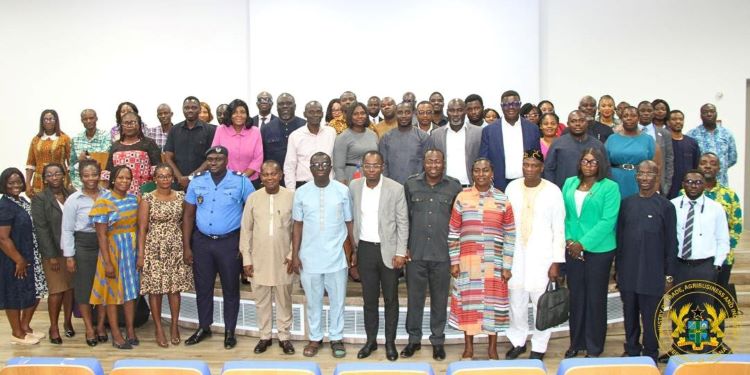
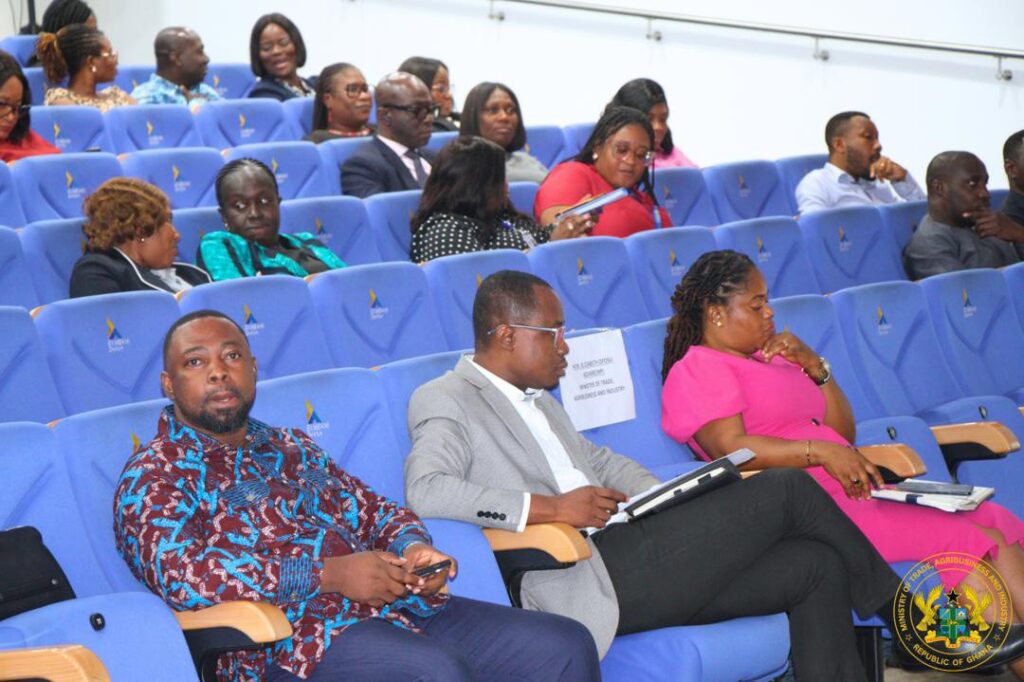
The Ministry of Trade, Agribusiness, and Industry (MoTAI) has officially inaugurated the National Trade Policy Review Committee to re-engineer Ghana’s commercial architecture for a volatile global era.
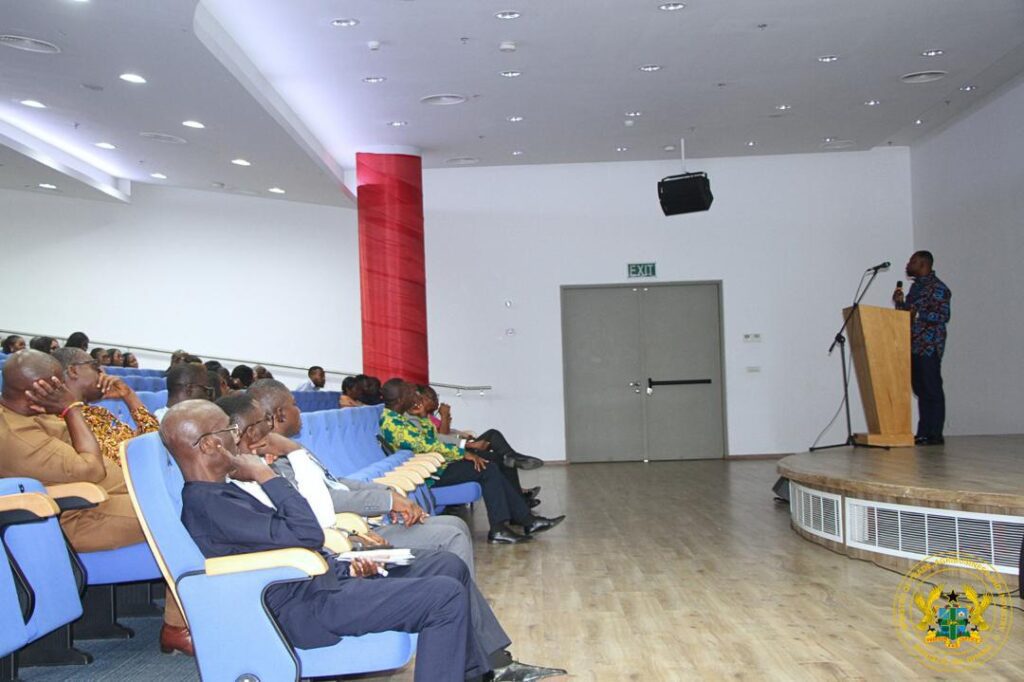
Speaking on behalf of the Minister for Trade, Agribusiness, and Industry, Hon. Elizabeth Ofosu-Adjare, at the inauguration ceremony, Mr. Bernard Ayensu, Director of Policy Planning, Monitoring, and Evaluation (PPME), articulated a vision that transcends mere administrative updates.
“Trade is a major driver of economic growth. The review is essential in addressing challenges such as fragmenting global trade and commodity dependence. The committee will review existing trade policies and recommend strategies to support local industries, increase exports, and create jobs for Ghanaians”
Ministry of Trade, Agribusiness, and Industry
The committee was tasked with the radicalisation of Ghana’s trade posture, moving the nation away from its historical commodity dependence and toward a “2030-Ready” industrial framework.
In a world characterized by shifting geopolitical alliances and the “business as usual” model of trade having reached its expiration date, the government is effectively building a regulatory shield to protect domestic manufacturing while simultaneously sharpening its offensive capabilities within the African Continental Free Trade Area (AfCFTA).
For too long, Ghana’s trade policies have been reactive, responding to external shocks rather than shaping domestic outcomes. The inauguration of this committee marks a transition toward a proactive, industrial-first trade regime.
MoTAI noted that the committee will recommend strategies to rationalize the levy regime – a move that the private sector has long identified as the primary obstacle to industrial scaling. The goal is to lower the production cost of Ghanaian products to make them more competitive both at home and abroad by streamlining the complex web of taxes and fees at the ports.
Developing a 2030-ready digital trade framework, however, is the most forward-looking component of the committee. As global commerce increasingly migrates to digital platforms, the absence of a comprehensive national framework for e-commerce, digital services, and paperless logistics has been a significant drag on Ghana’s growth.
The committee’s work will involve formalizing the digital economy, ensuring that Ghanaian startups and MSMEs can seamlessly integrate into global value chains. This digital pivot is intended to complement Ghana’s status as the host of the AfCFTA Secretariat, turning a geographic advantage into a first-mover economic reality.
Fiscal Sanitization and Compliance
The Committee’s work also involves a significant amount of regulatory and fiscal sanitization, since in the current international trade environment, non-compliance with global standards – particularly regarding environmental and industrial subsidies – can lead to punitive sanctions or exclusion from key markets.
MoTAI tasked the Committee with aligning Ghana’s subsidies with international norms as a pre-emptive strike to protect the nation’s export access. This is trade diplomacy masquerading as policy review, ensuring that Ghana remains a “clean” and attractive partner for global trade blocs.
Furthermore, the current levy regime, often criticized as “extractive,” has acted as a de facto tax on manufacturing competitiveness – and the mandate is to review and recommend a leaner, more efficient levy structure to sacrifice short-term port revenue for the long-term gains of industrial expansion.
This is a supply-side industrial policy designed to turn the “Ghanaian Reset” into a tangible reality for the thousands of traders and manufacturers who form the backbone of the economy.
“The committee is expected to engage with traders, manufacturers, farmers, and the private sector before submitting its final report, ensuring that the new trade policy is grounded in the lived realities of the Ghanaian business community”
Ministry of Trade, Agribusiness, and Industry
The final layer of the MoTAI strategy is the focus on “gender-responsive, MSME-inclusive trade initiatives,” which acknowledges the sociological reality of Ghanaian trade, since the majority of retail and small-scale manufacturing is driven by women and small businesses.
Baking inclusivity into the trade policy from the ground up ensures that the Committee’s work doesn’t just benefit industrial titans but also provides a ladder for the informal sector to transition into the formal economy. For MoTAI, this is about broadening the base of the industrialized Ghana vision, ensuring that the benefits of export-led growth are distributed across the social spectrum.
The road ahead for the National Trade Policy Review Committee is ambitious, as they are moving against the tide of a “fragmenting global trade” environment where protectionism is on the rise and global supply chains are being re-shored.
Ghana’s response is a strategic realignment – a policy framework that is robust enough to protect local industry but agile enough to seize the digital and regional opportunities of the next decade. As Mr. Bernard Ayensu concluded, the goal was clear: a trade regime that creates jobs, builds industries, and secures Ghana’s economic sovereignty well into 2030 and beyond.
The successful execution of this review will be measured by the committee’s ability to translate high-level strategy into actionable legislation. The report, once submitted, will serve as the blueprint for Ghana’s commercial future.
READ ALSO: Minerals Commission Reaffirms Commitment to Sustainable Mineral Resource Management