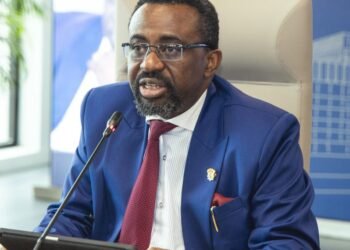
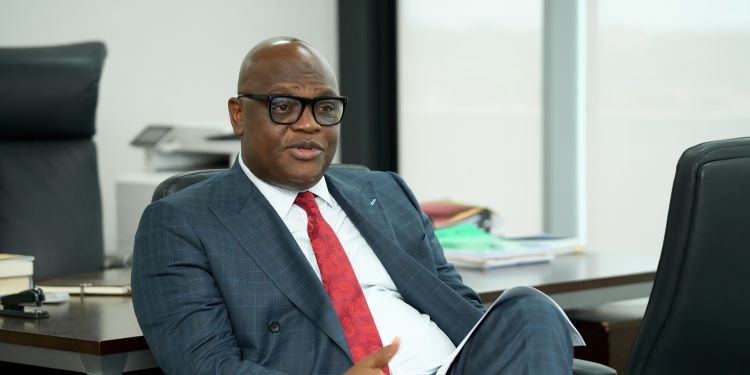
The Chief Executive Officer (CEO) of the Ghana Investment Promotion Centre (GIPC), Mr. Simon Madjie, has provided a technical snapshot of a thriving business climate anchored by approximately $2.6 billion in committed investments, as the landscape witnesses a deliberate and strategic pivot toward large-scale capital retention and sector-specific growth.
Speaking on the sidelines of the recent Mövenpick Accra Business Forum, Mr. Madjie noted that this capital, spread across 255 active projects, marks a significant milestone in the government’s 2025 – 2026 growth agenda, signaling that the era of indiscriminate “globetrotting” for investors has been replaced by a highly targeted, data-driven acquisition strategy.
“I commend the Mövenpick Hotel for initiating this forum. Our expectation is that we will witness enhanced collaborations between Ghanaians and foreign investors, reaffirming that Ghana is open for business and supporting the government’s growth agenda. These figures reflect growing confidence in our economy.
“I would also like to commend my colleagues at the Petroleum Commission and the Free Zones Authority for their support in driving these investments”
Mr. Simon Madjie, GIPC CEO
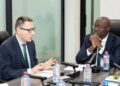
The forum, held under the theme “Building Confidence in Ghana’s Business Climate: Taxation, Forex & Investment Outlook,” served as an interrogation of the country’s macro-economic fundamentals. For the domestic and international private sector actors, the message from the GIPC was clear: investment stability has been safeguarded.
Mr. Madjie’s insights highlighted a coordinated institutional front, where the GIPC, the Petroleum Commission, and the Free Zones Authority are operating as a unified engine to drive industrial and energy-sector inflows. The most potent indicator of this rising investor trust is found in the petroleum sector.
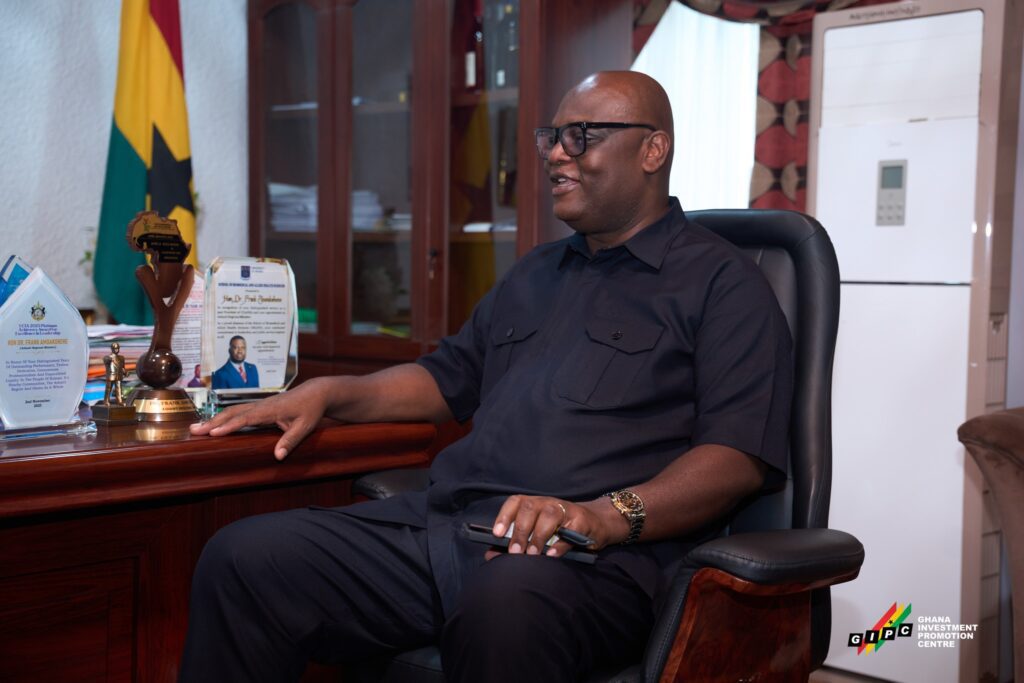
According to the GIPC, partners have already announced massive commitments totaling $2 billion specifically for the drilling of 20 new wells. This surge in exploration activity is the result of intensive negotiations led by the Ministry of Energy and Green Transition and the Petroleum Commission.
The goal is to position Ghana not just as a participant in the global energy market, but as a prime destination for long-term exploration and extraction. Mr. Madjie noted that the determination of the President of the Petroleum Commission to finalize these promising negotiations is expected to yield “tangible results,” in the immediate term.
A Deliberate Strategy
Mr. Madjie was emphatic that the $2.6 billion projected for the current cycle is the product of a deliberate strategy rather than haphazard international tours. This technical hunting approach prioritizes sectors that offer the highest degree of value addition and economic stability, particularly within the free zones and general industrial manufacturing sectors.
Through focusing on specific industrial corridors, the government is attempting to build a firm investment floor that can withstand global market shocks. This strategy is also a psychological play aimed at existing capital holders.
The GIPC CEO issued a direct reassurance to the investment community, urging them not to withdraw their capital in the face of temporary global volatility, the underlying argument being that Ghana’s “fundamentals” have been stabilized to the point where investors can anticipate “meaningful returns by maintaining their positions in the local economy.”
The Mövenpick forum did not shy away from the friction points of Taxation and Forex, which remain top-of-mind for any serious enterprise operating in West Africa.

The dialogue between the GIPC and private sector stakeholders emphasized that capital retention is now just as critical as “new attraction,” and to keep that capital within Ghanaian borders, the government is leaning on a narrative of regulatory continuity and fiscal discipline.
The GIPC’s snapshot suggests that the projects currently on the books are a testament to a return of stability, and platforms for collaboration between Ghanaians and foreign investors, like the forum, foster a climate where participation evolves into deep-rooted partnerships.
The government’s growth agenda is now inextricably linked to these partnerships, particularly as they relate to the petroleum sector’s expansion and the industrialization of the free zones. As the Mövenpick Accra Business Forum concluded, the takeaway for the investment community was one of cautious optimism backed by hard data.
The GIPC displayed a successful transition from a promotional agency to a strategic facilitator, managing a portfolio worth billions, while keeping a sharp eye on the Petroleum and Free Zones sectors. The $2.6 billion currently committed is not just a number – it is a roadmap for how the Ghanaian economy intends to scale through the rest of 2026.
The insights shared by Mr. Simon Madjie underscored a fundamental truth about confidence being the most valuable currency and proved that the government is willing to negotiate and protect the interests of those who commit to its economic vision.
According to the GIPC boss, the path forward is no longer about finding “any” investment; it is about securing the “right” investment to ensure that Ghana remains a prime location for global exploration and industrial excellence.
READ ALSO: Ato Forson Seals Ghana’s 11th Debt Deal with India Exim