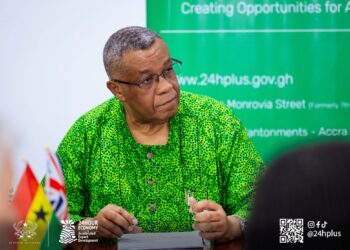

The Minister for Fisheries and Aquaculture, Hon. Emelia Arthur, in a decisive move to sanitize Ghana’s aquaculture sector, has launched a blistering crackdown on operational negligence, hitting Fujian Farms with a heavy administrative fine and a threat of total shutdown.
According to the Ministry of Fisheries and Aquaculture Development (MoFAD), the intervention, following a rigorous facility inspection in the Asuogyaman District, serves as a high-velocity warning to industry players that the government will no longer tolerate breaches of environmental and safety standards.
“At Fujian Farms, inspectors identified multiple violations, including the absence of basic biosecurity protocols, poor sanitation across key operational areas, and inadequate waste management systems. Officials warn that these lapses pose significant risks to public health, environmental safety, and the sustainability of the aquaculture sector”
Ministry of Fisheries and Aquaculture Development
The Minister’s visit to the Asutsuare area was a tactical enforcement drive to assess the health of Ghana’s fish production systems. Accompanied by the District Chief Executive for Asuogyaman, Godwin Bobobee, and a high-powered delegation from the Fisheries Commission, Hon. Arthur descended on two major facilities – Fujian Farms and Tropo Farms.
While one was held up as a model of excellence, the other became a case study in regulatory failure – exposing a trail of “serious breaches” that the Minister warned could jeopardize the entire aquaculture ecosystem if left unaddressed.
MoFAD noted that the findings at Fujian Farms were nothing short of alarming. Inspectors from the Fisheries Commission identified a cascade of violations that touched on every critical aspect of modern aquaculture management, from the absence of basic biosecurity protocols to a complete breakdown in waste management.

The facility appeared to be operating far outside the legal framework established by the Fisheries and Aquaculture Act, 2025 (Act 1146).
The risks identified were not merely administrative; they were biological and environmental, with the presence of unhygienic fish handling conditions and the unsafe disposal of dead fish creating a potent cocktail of risks that threatened to contaminate not just the farm’s stock, but the surrounding water bodies.
Beyond the biological threats, the Minister’s team discovered a startling disregard for worker safety, as employees were found operating without appropriate protective gear – a direct violation of labor and safety regulations.
Furthermore, erosion was found to be affecting the broodstock section, “compromising water quality and the long-term viability of the farm’s breeding operations.”
Sanctions and Ultimatums
In light of these violations, Hon. Emelia Arthur did not mince words when addressing the management of Fujian Farms.
In a swift application of her executive powers, she imposed an administrative penalty of GHS 240,000 on the facility. This fine serves as a punitive measure for the existing lapses and a deterrent for other operators who might be tempted to cut corners.
However, the financial penalty was only the beginning of the penalty hammer that fell on the Asutsuare-based farm, as the Minister also issued a rigid four-week ultimatum for the facility to undergo a complete overhaul and align its operations with the Fisheries Regulations, 2010 (L.I. 1968).
The stakes could not be higher: if the reforms are not met to the satisfaction of the Ministry, the facility faces permanent closure. To ensure that this is not a “paper-only” reform, MoFAD has deployed a ten-member task force to the site to maintain a constant presence, overseeing every aspect of the farm’s operations to ensure strict adherence to the new corrective measures.

Additionally, Fujian Farms has been ordered to “freeze the stocking of new fingerlings immediately,” effectively halting their growth cycle until the environment is deemed safe for production.
The inspection tour provided a stark contrast that highlighted exactly what the Ministry expects from the private sector.
While Fujian Farms faced the Minister’s wrath, Tropo Farms received glowing commendations. She praised the latter for its disciplined adherence to operational and environmental standards, noting that its structured systems and strong biosecurity protocols are exactly what Ghana needs to achieve food security.
This comparison was intentional to demonstrate that the government’s standards are not “impossible” or “unreasonable,” but are already being met by responsible industry leaders.
This tale of two farms underscores the Ministry’s broader strategy to reward excellence while aggressively pruning out negligence. For Tropo Farms, the commendation serves as a badge of honor that enhances their brand as a reliable supplier in the domestic and international fish markets.
Zero-Tolerance
The Ministry indicated that the recent crackdown at Asutsuare is merely the opening salvo in what is expected to be a nationwide enforcement blitz, with “accountability, sustainability, and food safety,” being the new non-negotiable pillars of the industry.
For MoFAD, the zero-tolerance stance is a response to the growing need to protect Ghana’s aquatic resources from degradation and to ensure that the fish landing on the plates of Ghanaians is produced in a safe, hygienic environment.

The Ministry’s directive for Fujian Farms to submit a comprehensive corrective action plan within three days shows the urgency of the situation, proving that there is no longer room for slow-moving bureaucracy or “business as usual,” excuses.
“The Ministry has reiterated that similar inspections will be extended to aquaculture facilities across the country to safeguard public health, protect the environment, and promote sustainable growth in Ghana’s fisheries sector”
Ministry of Fisheries and Aquaculture Development
As the ten-member task force begins its oversight and the four-week clock ticks down for Fujian Farms, the entire aquaculture industry is watching. Hon. Emelia Arthur’s final message was for industry stakeholders to play by the rules, or lose the right to operate.
In the quest to build a resilient fisheries sector, the Minister has proven that she is more than willing to use the full rigours of the law to ensure that Ghana’s blue economy remains healthy, safe, and sustainable for generations to come.
READ ALSO: Government Launches EjumaPa Platform to Transform Ghana’s Informal Sector