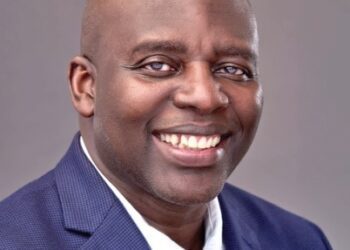

A fresh legal perspective has intensified debate over prosecutorial authority in Ghana, as Professor Stephen Kwaku Asare criticised the Attorney General’s position in the ongoing constitutional case involving the Office of the Special Prosecutor.
The case, Adamtey v. Attorney General, raises a fundamental question about who holds prosecutorial power and how it should be exercised within Ghana’s constitutional framework.
“This commentary argues that both the Plaintiff’s position and the Attorney-General’s draft statement of case rest on an unduly literal reading of Article 88. That reading is inconsistent with the Constitution’s structure, its purpose, and the practical demands of modern governance”.
CDD-Ghana Fellow and legal scholar, Professor Stephen Kwaku Asare
According to him, this narrow interpretation risks distorting the broader purpose of the Constitution and undermining the practical realities of governance in a modern state. What he finds particularly striking is the position taken by the Attorney General in a draft statement of case dated April 8, 2026.
The state, he noted, appears to concede a key aspect of the plaintiff’s argument by suggesting that the structure of the Office of the Special Prosecutor under Act 959 may be constitutionally questionable.



He described this as a rare and consequential move that raises broader implications for the legal framework governing prosecutions.
The Logic of Exclusivity and Its Limits
At the center of the dispute is Adamtey’s argument that Article 88 vests exclusive prosecutorial authority in the Attorney General. Under this interpretation, all prosecutions must either be conducted directly by that office or by individuals acting strictly under its control and authorisation.
Any attempt by Parliament to establish an independent prosecutorial body, such as the Office of the Special Prosecutor, would therefore be unconstitutional unless supported by a formal constitutional amendment.

Professor Asare acknowledged that this argument is logically coherent and doctrinally appealing. However, he contends that it represents what he describes as a monopoly theory of prosecution, one that treats constitutional language as rigid and absolute without considering its broader context.
In his view, such an approach fails to account for the Constitution’s structure and its allowance for institutional arrangements. The Attorney General’s draft statement of case, he argues, aligns closely with this interpretation.
It advances several propositions, including that prosecutorial power is exclusively vested in the Attorney General, that Parliament cannot compel the exercise of executive authority, and that such power cannot be delegated to a juridical entity.
Rethinking Article 88 Interpretation
Professor Asare challenged the foundation of this argument by pointing to the full text of Article 88. While clause 88(3) assigns responsibility for prosecutions to the Attorney General, clause 88(4) allows prosecutions to be conducted by persons authorised by the Attorney General in accordance with any law.
In his analysis, this provision is critical. It demonstrates that the Constitution does not prohibit delegation but instead provides a framework for it. Parliament, he argues, is empowered to design legal mechanisms through which prosecutorial authority can be exercised in a structured manner.
He further explained that the centralisation of prosecutorial power in the Attorney General was intended to ensure accountability, not to prevent institutional innovation.
The elimination of private prosecutions in earlier constitutional systems did not close the door to the creation of public institutions designed to enhance the administration of justice.
For Professor Asare, exclusivity under Article 88 refers to ultimate responsibility rather than exclusive personal execution. This distinction, he argues, is essential to understanding how the Constitution accommodates modern governance.
Dispute Over the OSP Act Provisions
A key point of contention in the case is Section 4(2) of the Office of the Special Prosecutor Act. The Attorney General argues that the provision compels him to authorise prosecutions, thereby undermining his constitutional discretion.
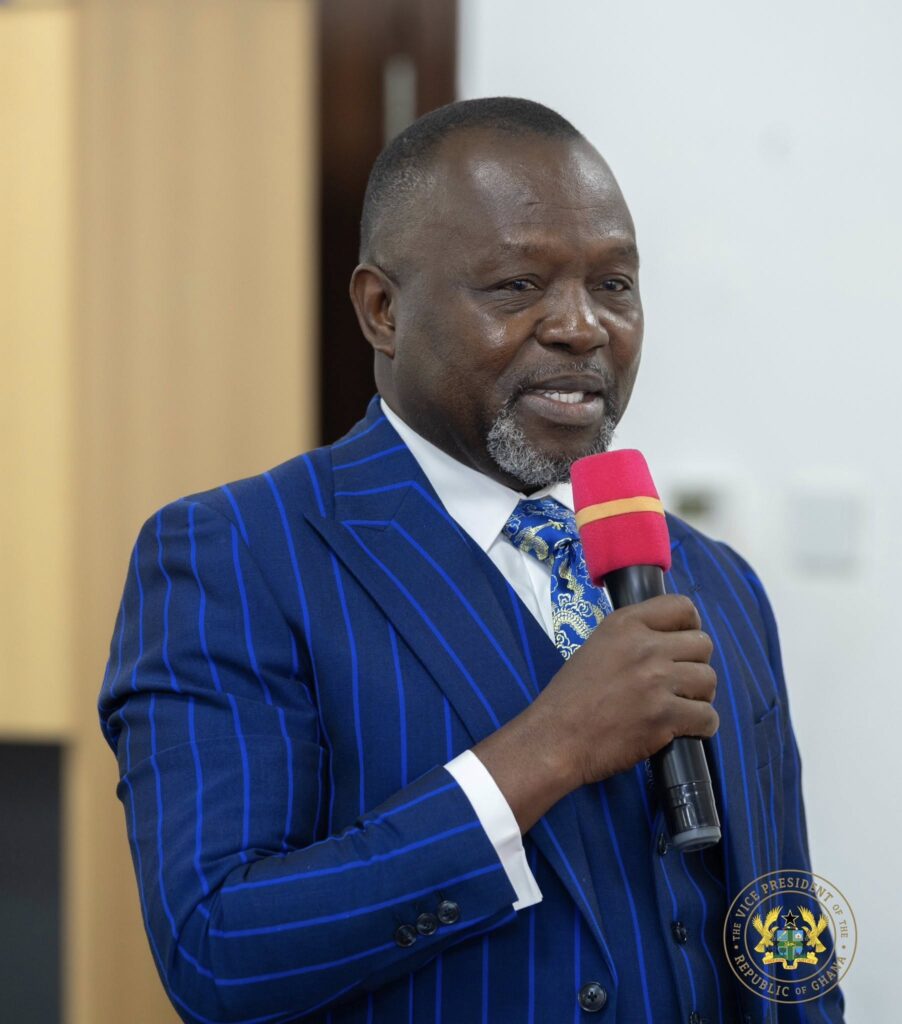
Professor Asare rejected this interpretation, describing it as an overstatement. He explains that the provision is expressly subject to Article 88(4), which allows authorisation in accordance with any law. In his view, Section 4(2) establishes a structured framework for authorisation rather than dictating specific prosecutorial decisions.
He noted that this framework replaces ad hoc, case by case approval with a consistent legal mechanism. This, he argues, does not eliminate discretion but organises it in a more predictable and efficient manner.
The Attorney General retains key powers, including the ability to discontinue prosecutions and overall responsibility for cases conducted in the name of the Republic.
Delegation and Institutional Governance
The issue of delegation also forms a central part of the debate. The Attorney General contends that prosecutorial authority cannot be delegated to a juridical person such as the Office of the Special Prosecutor.
Professor Asare described this argument as untenable. He points out that the Constitution does not distinguish between natural and juridical persons in the context of authorisation.
Moreover, modern governance relies heavily on institutional delegation, with prosecutorial functions routinely carried out by various agencies operating within legal frameworks. He also addressed concerns about the appointment of the Special Prosecutor by the President rather than the Attorney General.

According to him, this argument confuses the concept of appointment with the source of authority. He explains that constitutional authority is derived from the law, not from the identity of the appointing authority.
Broader Implications for Governance
Professor Asare highlighted what he describes as a structural contradiction in the Attorney General’s position. He notes that the Office of the Special Prosecutor has conducted prosecutions for several years without individual authorisation in each case.
If the Attorney General’s interpretation is correct, it could render a significant number of past prosecutions constitutionally defective. He suggested that courts are generally reluctant to adopt interpretations that produce such widespread invalidity unless absolutely necessary.
This, he argued, further weakens the case for a strict literal reading of Article 88. Beyond the immediate legal issues, the case carries broader implications for governance and accountability.
A strict interpretation of prosecutorial exclusivity could limit the ability to establish independent bodies to handle politically sensitive corruption cases. It could also centralise prosecutorial power in a way that may raise concerns about conflicts of interest.
Call for a Balanced Constitutional Approach
In conclusion, Professor Asare advocated for a purposive and objective reading of the Constitution, one that recognises both the authority of the Attorney General and the role of Parliament in structuring how that authority is exercised.

He argued that the Constitution accommodates institutional design and does not prohibit the creation of specialised bodies like the Office of the Special Prosecutor.
“The issue is not whether the Attorney General holds prosecutorial authority. The issue is how that authority is exercised in a modern constitutional state.”
CDD-Ghana Fellow and legal scholar, Professor Stephen Kwaku Asare
As the Supreme Court considers the case, its eventual ruling is expected to have far reaching consequences for Ghana’s legal and governance framework. The decision will determine whether the Constitution supports a flexible, institution based approach to prosecution or enforces a more centralised model of control.
READ ALSO: Energy Minister Directed to Ensure Fuel Price Reduction to Cushion Consumers