The International Monetary Fund has issued a strong warning to central banks across the world including Ghana, urging them to remain vigilant as geopolitical tensions threaten to reignite inflationary pressures.
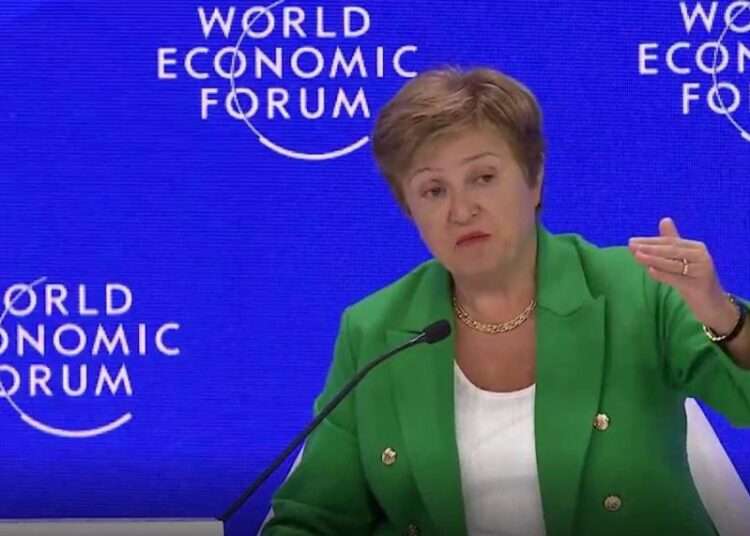
Speaking ahead of the upcoming Spring Meetings with the World Bank Group in Washington, IMF Managing Director Kristalina Georgieva cautioned that the ongoing conflict in the Middle East could destabilize global economic recovery.
According to Ms Georgieva, the war has already begun to disrupt critical transportation networks and trade flows, particularly through shortages of refined petroleum products. These disruptions are contributing to a broader supply shock that risks derailing what had been a relatively optimistic outlook for global growth.
War impact deepens global supply shocks
The IMF chief described the situation as a “large, global and asymmetric supply shock” that is spreading across economies at varying levels of intensity. She noted that the conflict has not only affected energy markets but has also had a ripple effect on food systems and logistics chains.
One of the most concerning outcomes of the crisis is its impact on global food security. Ms Georgieva revealed that transport disruptions linked to the war have pushed at least 45 million additional people into food insecurity. This brings the total number of people facing hunger worldwide to more than 360 million, underscoring the human cost of the ongoing conflict.
She explained that the global economy could face further shocks through three main channels, namely price increases, supply shortages and broader economic disruptions. These factors combined could ignite a new wave of inflation and tighten financial conditions globally.
Central Banks Urged to Act Decisively
Amid these developments, the IMF is calling on central banks to maintain a careful balance in their policy responses. While excessive tightening could harm economic recovery, failing to act in time could allow inflation to spiral out of control.
“We have been here before in the ’70s and earlier this decade,” she said.
Ms Georgieva emphasized that monetary authorities should not tighten policy unnecessarily, but must remain committed to preserving price stability. She stressed the importance of monitoring inflation expectations closely and acting decisively when needed.
“Now, if inflation expectations threaten to break anchor and ignite a costly inflation spiral, then central banks should step in firmly with rate hikes,” she said.
Her remarks highlight the delicate task facing policymakers as they navigate between supporting growth and containing inflation in an increasingly uncertain global environment.
Fiscal Discipline Remains Critical
In addition to monetary policy, the IMF chief also addressed the role of fiscal policy in managing the crisis. She noted that many countries have so far avoided broad-based tax cuts and untargeted energy subsidies, a move she described as appropriate under current conditions.
Ms Georgieva urged govenments to maintain targeted and temporary fiscal support measures rather than resorting to large-scale spending that could worsen inflationary pressures. She warned that with benchmark yield curves already rising and debt service costs increasing, deficit-financed stimulus could place additional strain on monetary policy.
The IMF is advocating for a coordinated approach that aligns fiscal and monetary strategies, ensuring that efforts to stabilize economies do not inadvertently create new risks.
Warning Against Protectionist Measures
A key part of Ms Georgieva’s message was a call for global cooperation. She warned against the use of export controls, price controls and other unilateral measures that could further disrupt global markets.
“Policymakers can help in multiple ways, and certainly they must be careful not to make things worse. So here I appeal to all countries to reject go-it-alone actions export controls, price controls, and so on that can further upset global conditions: don’t pour gasoline on the fire.”
Her appeal underscores the importance of coordinated global action in addressing shared economic challenges, particularly during times of crisis.
Growing demand for financial support
Meanwhile, the IMF expects an increase in demand for balance-of-payments support as countries grapple with the spillover effects of the war. The Fund estimates that financing needs could rise to between 20 billion dollars and 50 billion dollars in the near term.
Ms Georgieva indicated that the lower end of this range could be achieved if a ceasefire is reached, highlighting the economic benefits of resolving the conflict swiftly.
She also reminded policymakers that while external shocks may be beyond their control, the strength of domestic institutions and economic fundamentals remains a critical line of defense.
Long-term priorities must not be ignored
Despite the immediate challenges posed by the war, the IMF chief urged governments not to lose sight of long-term structural priorities. These include advancements in technology, demographic shifts, geopolitical dynamics, trade integration and climate resilience.
According to Ms Georgieva, addressing these issues will be essential for building more resilient economies capable of withstanding future shocks.
The upcoming Spring Meetings are expected to focus on helping countries navigate what she described as the “fog of uncertainty” while also advocating for lasting peace in the Middle East and beyond.
As global tensions continue to mount, the IMF’s warning serves as a timely reminder of the fragile balance underpinning the world economy. With inflation risks rising and supply chains under pressure, the actions taken by central banks and governments in the coming months will play a decisive role in shaping the global economic outlook.
The call for vigilance, coordination and discipline reflects the urgency of the moment, as policymakers work to prevent a repeat of past inflation crises while safeguarding economic stability.
READ ALSO: Africa’s $1tn Wealth Trapped by Market Chaos- BoG Deputy Governor