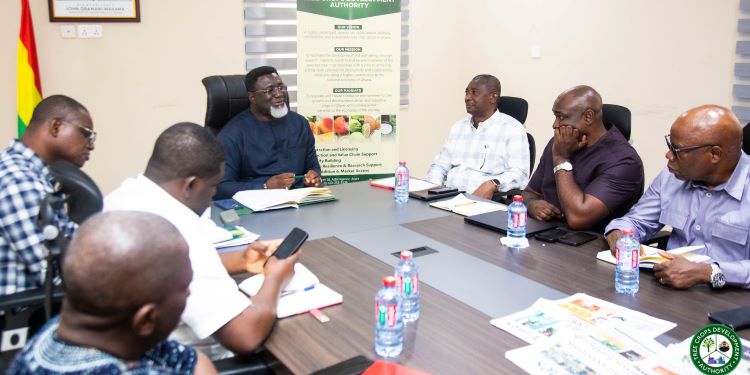
The industrial landscape of Ghana’s tree crop sector is undergoing a rigorous administrative tightening as the Tree Crops Development Authority (TCDA) moves to institutionalize oversight over the natural rubber industry.
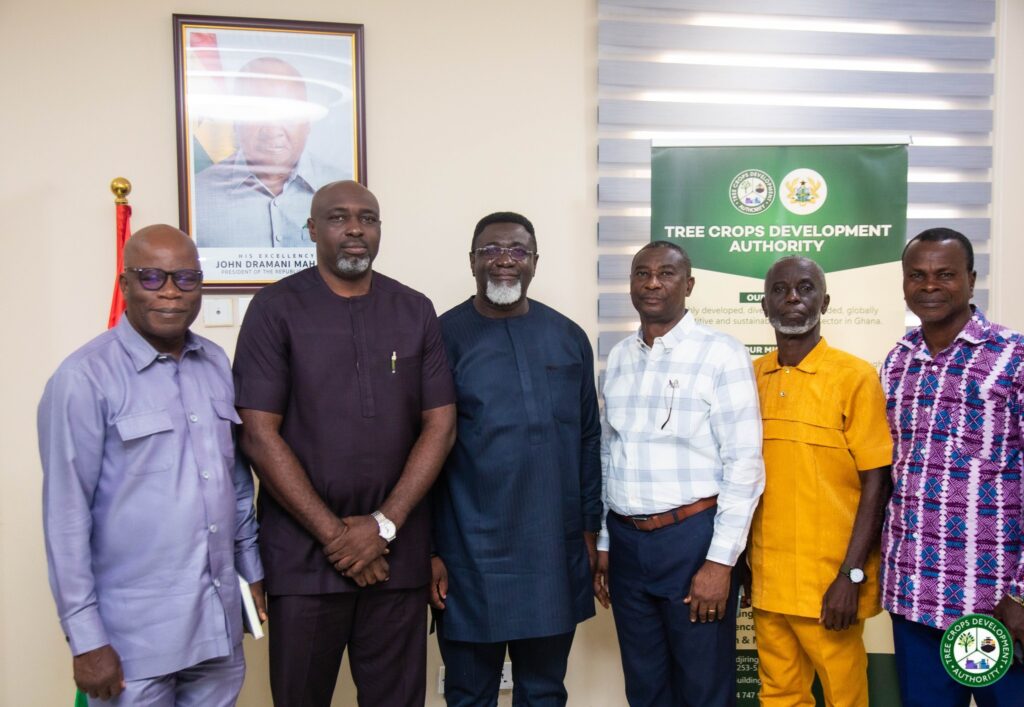
In a high-stakes consultative meeting held earlier today, the leadership of the TCDA, spearheaded by Chief Executive Officer Dr. Andy Osei Okrah, convened with the Association of Natural Rubber Actors of Ghana (ANRAG) to forge a unified front against systemic inefficiencies.
The engagement, which included ANRAG President Mr. Emmanuel A. Owusu and Secretary Mr. Perry Acheampong, signaled a transition from fragmented trade to a regulated, data-driven ecosystem established to protect local industrial interests.
“The meeting centered on a deeper understanding of the Tree Crops Conveyance Certificate System (CCS) and how it will aid in data collection and address the issue of theft in the industry.
“Other issues discussed included key measures that TCDA and the Association can implement and execute to streamline the sector, ensuring benefits for all actors and improving the availability of raw materials for local processing industries within the rubber value chain”
Tree Crops Development Authority
For the TCDA, the Conveyance Certificate System (CCS) doubles an administrative requirement and a tactical intervention aimed at resolving the long-standing crisis of product theft and the lack of granular industry data that has historically hampered policy planning and investor confidence in the rubber sector.
This regulatory mechanism, launched in a recent nationwide sensitization campaign, is poised to become the digital backbone of rubber movement within the country.

For years, the natural rubber industry in Ghana has been plagued by “leakages” in the supply chain. The theft of raw rubber lumps from plantations has not only resulted in significant financial losses for large-scale producers like Ghana Rubber Estates Limited (GREL) but has also fueled an unregulated gray market that undermines official pricing and tax structures.
The introduction of the Conveyance Certificate System is the state’s direct response to this insecurity, as it requires a verified certificate for the transport and trade of rubber products, thus creating a paper trail that forces every actor in the value chain to account for the origin of their materials.
According to the TCDA, this system effectively devalues stolen goods, as unauthorized sellers will find it increasingly difficult to move products through the newly established regulatory checkpoints.
Tool for Industrial Growth
During the meeting, both the TCDA and ANRAG leadership emphasized that securing the physical product is the first step toward securing the economic future of the actors involved. Beyond the immediate security benefits, the CCS serves a critical function in national economic planning: the generation of real-time data.
The rubber sector, having operated with significant information gaps regarding total output, regional yield variations, and the flow of raw materials, has made it difficult for the government to design targeted support programs or for local processing plants to forecast their raw material needs.
Under the new partnership, the TCDA and ANRAG are prioritizing the integration of data collection into every stage of the rubber value chain. This institutionalized reporting will allow the Authority to identify bottlenecks in real-time and provide the evidence base needed to attract foreign direct investment into downstream rubber processing.
By turning rubber on the road into data on the screen, Ghana hopes to position itself as a transparent and reliable partner in the global rubber market. The TCDA-ANRAG meeting reinforced a recurring theme of the 2026 industrial agenda; the protection of local processing industries.
As Ghana seeks to move up the global value chain, ensuring a consistent and affordable supply of raw rubber to domestic factories is paramount. Currently, a significant portion of raw material is diverted or exported in its primary state, leaving local manufacturers with insufficient supply to operate at full capacity.
The strategic measures discussed by Dr. Andy Osei Okrah and the ANRAG leadership focused on streamlining the sector to ensure that local processing firms – the primary drivers of industrial employment – are prioritized to refine the logistics of the rubber value chain and reduce the friction that currently makes it difficult for local processors to compete with international exporters for the same raw materials.
This move is expected to trigger a surge in the domestic manufacturing of tires, industrial components, and other rubber-based products, keeping the bulk of the economic value within Ghanaian borders.
The success of the TCDA’s mandate depends heavily on the buy-in of private sector actors. The presence of Perry Acheampong, who serves as both ANRAG Secretary and Corporate Affairs Manager of GREL, highlights the collaborative nature of this reform.
GREL, as a dominant force in the local rubber landscape, provides the operational expertise that the TCDA needs to ensure that the CCS and other regulatory measures are practical rather than just theoretical.
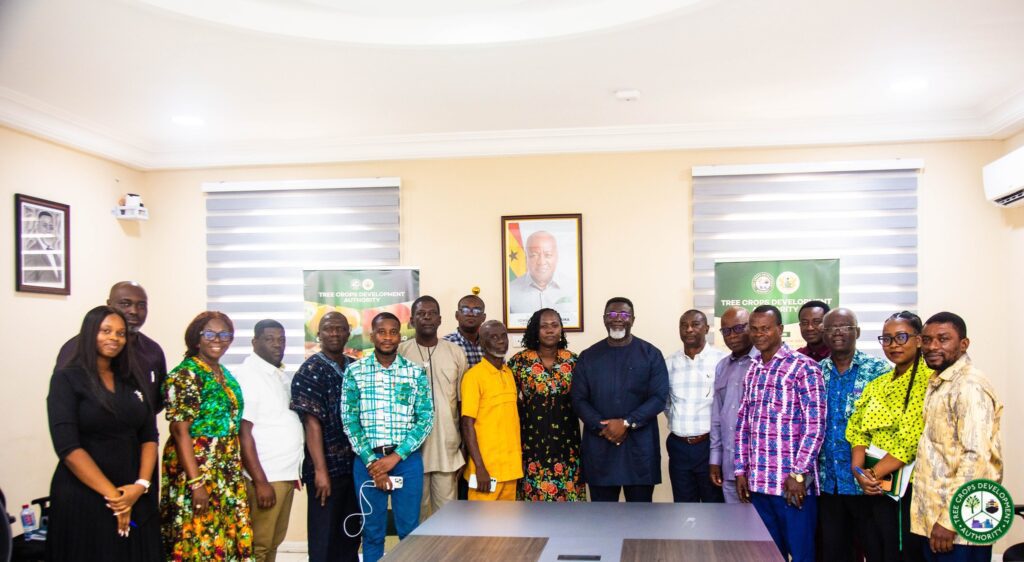
All sides agreed that streamlining the sector involves more than just certificates; it requires a complete rethink of how the Association of Natural Rubber Actors of Ghana interact with the state regulator.
The meeting established a framework for continuous dialogue, ensuring that the implementation of the CCS does not become a bureaucratic hurdle that slows down trade.
Instead, it is being presented as a service to the industry – a mechanism that provides legal protection, market intelligence, and logistical support to everyone from the smallholder farmer to the large-scale industrialist.
READ ALSO: Krobo MCEs Demand MP Retract Ethnic Remarks And Apologize