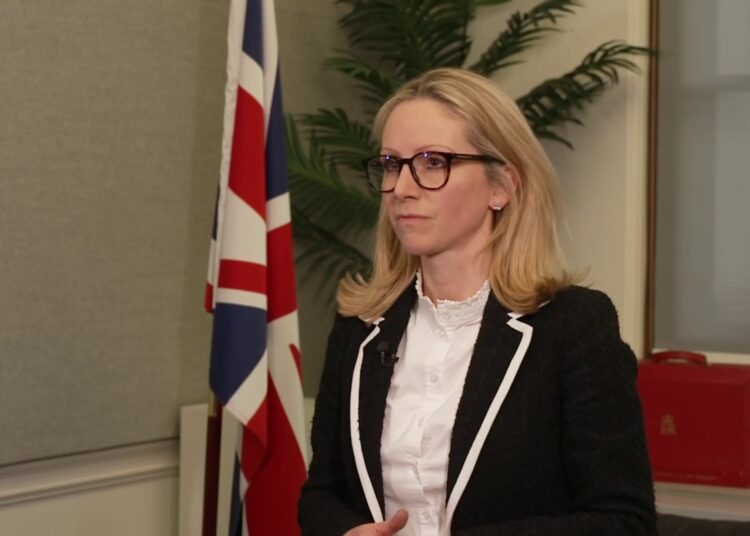
UK has taken the lead in protecting developing countries from the debt crisis, with the government unveiling a new set of proposals aimed at assisting developing countries in responding more quickly to debt crises, as part of a larger push to strengthen global financial stability and protect both vulnerable economies and British businesses from the growing impact of economic shocks.
The program, launched by the London Coalition on Sustainable Sovereign Debt, presents practical solutions aimed at reducing the delays and uncertainties that frequently exacerbate the sovereign debt crisis.
According to the government, these delays have historically exacerbated economic damage in developing countries while increasing risks for investors and firms operating in emerging markets.
The measures are part of the government’s broader economic plan, known as “securonomics,” which aims to strengthen resilience to global turbulence. As economic shocks become more common, speedier and more predictable responses to debt crises are viewed as critical to reducing disruption, conserving development gains, and maintaining international market trust.
Economic Secretary to the Treasury, Lucy Rigby, said that, by working with private creditors and international partners, “we are harnessing the UK’s world-leading role as an emerging markets hub to support greater stability and resilience for developing economies.“
“We’re tackling the increasing number of worldwide economic shocks by strengthening the global financial system, safeguarding development gains, and protecting British business.”
Lucy Rigby
Moreover, the London Coalition Secretariat has just produced two frameworks that are crucial to the initiative: the Pause Clause Proposal and Term Sheet and the Implementation Guide for Restructuring Private Sector Sovereign Loans.
Together, they are meant to give clear, practical approaches for addressing debt distress, allowing governments to navigate crises without lengthy uncertainty. The Pause Clause Proposal will allow countries experiencing large external shocks to temporarily suspend debt repayments in a systematic and time-bound manner, drawing on precedents set by Barbados and Grenada. This approach is intended to provide immediate financial relief while maintaining transparency, allowing markets to continue to effectively assess risk.
Additionally, the Implementation Guide provides a voluntary framework for private lenders to improve coordination and streamline negotiations during debt restructuring processes.
The rising frequency of global economic upheavals has put additional strain on existing financial systems, highlighting flaws in how sovereign debt crises are handled.
As a result, the UK government is framing these ideas as a realistic solution to long-standing inefficiencies, while also cementing London’s status as a major hub for emerging market financing.
New Tools Aim to Speed Up Debt Crisis Responses

The UK-backed effort focuses on more realistic, market-driven solutions for managing sovereign debt crises, particularly in emerging nations where delays can have serious economic and social effects.
UK government formed the London Coalition on Sustainable Sovereign Debt in 2025, bringing together private creditors, investors, representatives from developing countries, and other stakeholders to develop instruments for use in real-world talks.
Co-Chair of the London Coalition and Former Chairman of Standard Chartered Bank, José Viñals explained that, “emerging markets and developing economies are being hit by more frequent and severe shocks, but debt restructurings are still too slow and unpredictable,” adding, “it increases the economic damage.”
“The Coalition is focused on practical fixes – like a new guide for restructuring private loans and crisis pause clauses. These practical, voluntary tools, can make negotiations faster and more orderly when it matters most.”
José Viñals
One of the important developments is the implementation of crisis “pause clauses,” which allow countries to temporarily suspend debt payments in the event of significant external shocks. The strategy is based on the UK’s experience with Natural Disaster Clauses in export finance and applies similar principles to sovereign bonds, allowing governments to stabilise their economies without immediately defaulting on obligations.
Meanwhile, the Implementation Guide tackles the difficult task of managing different private creditors during restructuring negotiations. It strives to eliminate delays, improve communication, and provide more predictable outcomes, thus decreasing the economic damage caused by extended debt distress.
Both frameworks were designed after significant consultation with a diverse group of stakeholders, including developing nation governments, investors, rating agencies, and other market participants. This collaborative approach aims to guarantee that the tools are both practical and generally accepted, hence boosting their usefulness in real-world circumstances.
The overarching goal is to translate consensus ideals into tangible solutions that can be implemented swiftly during crises. The project aims to minimise uncertainty, help economic recovery, and boost trust in global financial systems by increasing the speed and clarity of debt restructuring processes.
At the same time, the plan strengthens London’s position as a major hub for emerging market financing.
READ ALSO : Starmer Backed as Mandelson Controversy Intensifies