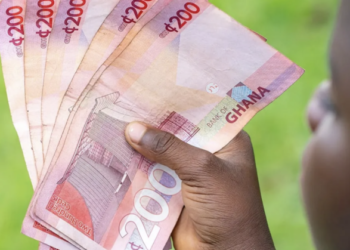
Ghana’s domestic debt stock has climbed to GH¢333.8 billion as of December 2025, reflecting a notable increase from GH¢309.8 billion recorded a year earlier.
This development comes at a time when the country is pursuing fiscal consolidation and implementing reforms aimed at restoring macroeconomic stability.
According to the latest report by the Bank of Ghana, the rise in domestic debt occurred despite a decline in the domestic debt-to-Gross Domestic Product ratio. This suggests that while borrowing increased in absolute terms, the economy expanded at a pace that helped contain the relative burden of the debt.
The increase in domestic debt highlights the government’s continued reliance on local borrowing to finance its obligations and manage liquidity pressures. Authorities have indicated that part of this strategy is to build buffers that will enable the country to meet both short-term and medium-term financial commitments.
Short-Term Instruments Drive Borrowing
A key factor behind the rise in domestic debt is the increased issuance of short-term instruments. Treasury bills and other short-dated securities have become central to the government’s borrowing strategy, offering quicker access to funds while managing refinancing risks.
The reliance on short-term instruments, however, raises important considerations for policymakers. While such instruments provide flexibility, they also come with rollover risks and can expose the government to interest rate fluctuations. Analysts believe that maintaining a balanced debt structure will be critical to sustaining fiscal stability over the long term.
The data suggests that Ghana’s domestic debt market remains active, with strong participation from financial institutions and investors seeking relatively secure returns in a recovering economic environment.

External Debt Sees Mixed Trends
In contrast to the rise in domestic debt, Ghana’s external debt presented a mixed picture in 2025. In foreign currency terms, external debt increased, reflecting new loan disbursements during the year. However, when measured in local currency, the external debt stock declined significantly from GH¢416.8 billion in December 2024 to GH¢307.2 billion in December 2025.
This sharp reduction was largely driven by the strong performance of the Ghana cedi, which appreciated against major international currencies. The currency gains reduced the local currency value of foreign-denominated debt, providing some relief to the country’s overall debt burden.
Additionally, principal repayments on Eurobonds and multilateral loans contributed to the decline. The combined effect of currency appreciation and debt servicing led to a reduction in external debt stock equivalent to GH¢125.2 billion, representing about 9 percent of estimated GDP.
Total Public Debt Declines Sharply
Despite the rise in domestic debt, Ghana’s overall public debt stock recorded a significant decline. Provisional figures show that central government and guaranteed debt stood at GH¢640.99 billion, equivalent to 45.3 percent of GDP at the end of December 2025. This marks a substantial drop from GH¢726.7 billion, or 61.8 percent of GDP, recorded in December 2024.
The reduction in total public debt reflects improvements across both domestic and external components when measured relative to GDP. It also signals progress in Ghana’s broader fiscal consolidation efforts, which have been supported by prudent borrowing practices and enhanced revenue mobilization.
The Bank of Ghana noted that the decline in the debt-to-GDP ratio is a positive indicator of the country’s improving debt sustainability outlook.
Role of the Cedi and Fiscal Discipline
One of the most significant drivers of Ghana’s improved debt profile in 2025 was the appreciation of the local currency. The stronger cedi reduced the cost of servicing external debt and lowered the overall debt stock when converted into local currency terms.
In addition to currency gains, increased amortisation and disciplined fiscal management played a crucial role. The government’s efforts to control expenditure, enhance revenue collection, and maintain a higher primary surplus contributed to the observed decline in total debt levels.
Reduced borrowing costs also supported the fiscal adjustment process. As investor confidence improved, the government was able to secure financing under more favorable terms, further easing the debt burden.
Balancing Growth and Debt Sustainability
The latest debt figures suggest that while domestic borrowing has increased, it has been accompanied by a broader decline in overall public debt, suggesting that policy measures are yielding results.
Going forward, experts emphasize the need for a diversified borrowing strategy that minimizes risks associated with excessive reliance on short-term instruments. Strengthening the domestic revenue base and sustaining economic growth will also be essential in maintaining the downward trajectory of the debt-to-GDP ratio.
The government’s commitment to fiscal discipline, coupled with favorable macroeconomic conditions, will be key to consolidating the gains made in 2025. As Ghana continues its economic recovery, managing the evolving debt dynamics will remain a central priority for policymakers.
Outlook for 2026 and Beyond
Ghana’s debt outlook will depend on several factors, including exchange rate stability, global financial conditions, and domestic fiscal performance. Continued appreciation of the cedi could further ease external debt pressures, while sustained economic growth would help reduce the relative burden of domestic debt.
However, uncertainties in the global economy and potential shifts in investor sentiment pose risks that must be carefully managed. Policymakers will need to remain vigilant and adaptable to ensure that Ghana’s debt remains on a sustainable path.
The developments in 2025 provide cautious optimism that the country is making progress in restoring fiscal balance. The challenge now lies in sustaining these gains while addressing the structural issues that have historically contributed to high debt levels.
READ ALSO: CalBank’s Strong NPL Recovery Overshadowed By Sharp Loan Book Decline