The start of May 2026 has brought a definitive shift in the economic landscape for thousands of farmers across Ghana’s southern and central belts, with the Tree Crops Development Authority (TCDA) officially releasing its monthly price index for Fresh Fruit Bunches (FFB) of oil palm and raw rubber cup-lumps.
The move serves as the heartbeat of the sector’s commercial activity. For an industry that thrives on the predictability of the international market, these figures are not just numbers on a ledger; they are the primary tools for wealth creation and the stabilizer for an expansive agricultural value chain.
“Our goal is simple: to create real value across the value chain by maintaining competitive pricing, strengthening relationships with our farmers and partners, and supporting steady growth within Ghana’s tree crops industry. Every step we take is focused on building a more resilient and sustainable future for the long term”
Tree Crops Development Authority
By pegging local returns to global benchmarks, the TCDA is providing a shield against the volatility that often plagues primary producers in emerging markets. The authority noted that its mandate is rooted in a philosophy of transparency and steady growth.
In an era where commodity prices can fluctuate wildly within a single trading week, the TCDA’s commitment to a fixed monthly announcement provides the breathing room necessary for both farmers and processors to plan their investments.
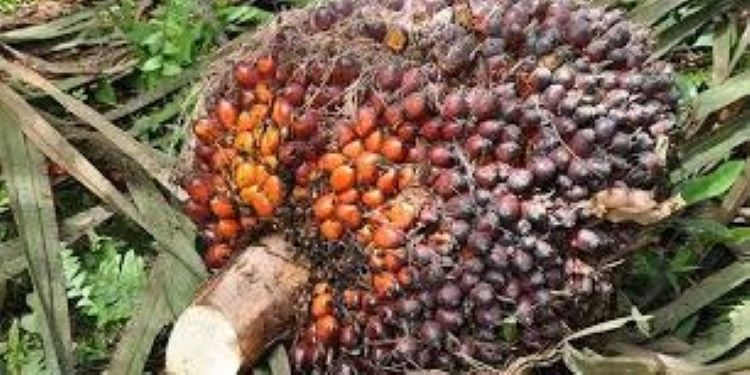
For May 2026, the focus remains on maintaining the delicate balance between competitive global pricing and the rising operational costs faced by the Ghanaian farmer, as the price for Oil Palm Fresh Fruit Bunches stands at GHS 1,724.53 per ton.

This valuation is the result of a rigorous calculation that bridges the gap between the farms of the Western Region and the global markets of Southeast Asia and Europe. The TCDA relies on two primary international benchmarks: Crude Palm Oil (CPOP) priced at $1,119.75 per ton and Crude Palm Kernel Oil (CPKOP) at $2,315.79 per ton.
These figures, captured during the reference window of March 26 to April 25, 2026, reflect the global demand for vegetable oils and industrial fats. Utilizing these specific international markers ensures that the Ghanaian farmer is a direct participant in global price surges.
When the demand for palm kernel oil increases in the cosmetics or food processing industries abroad, that value is mechanically transmitted back to the local gate price. This indexed approach removes the guesswork from the trade, ensuring that neither the farmer nor the miller is unfairly disadvantaged by local market inefficiencies.
The Singapore Connection
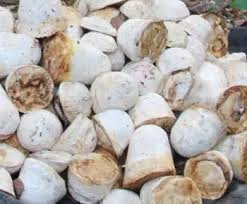
In the rubber sector, the pricing logic follows a similar path toward international integration. For May, Raw Rubber Cup-Lumps are priced at GHS 8.1933 per kg.
This figure is tethered to the Singapore Commodity Exchange (SICOM TSR 20), which is the global gold standard for technically specified rubber. During the April tracking period, the average SICOM price stood at $2.0393 per kg.
The use of the SICOM index is a strategic choice, as it provides a level of credibility that allows Ghanaian rubber to be traded with confidence on the international stage.
When a local producer knows that their cup-lump price is a direct reflection of the trading floors in Singapore, it incentivizes the production of high-quality, standardized rubber. For the TCDA, this alignment is essential for attracting large-scale industrial buyers who require a consistent and transparent supply chain.
A critical component of this month’s pricing is the exchange rate provided by the Bank of Ghana (BoG). With the rate fixed at GHC 11.0285 to $1.00 for this calculation, the TCDA is effectively localizing global wealth.
The exchange rate acts as the final gear in the pricing formula, translating dollar-denominated global commodity prices into the cedi-denominated payments that hit the farmers’ bank accounts. This transparent use of the BoG rate is a vital protection against the arbitrary pricing often found in unregulated markets.
In many jurisdictions, middlemen often use currency fluctuations as an excuse to depress producer prices.
However, by publishing the exact exchange rate used in the formula, the TCDA empowers every stakeholder to verify the math. It ensures that when the cedi strengthens or weakens, the impact on the agricultural sector is managed with surgical precision rather than opportunistic speculation.
Long-Term Resilience
Beyond the immediate financial returns, the TCDA is focused on the long-term play. The May pricing update is a single step in a broader march toward making Ghana a global powerhouse in tree crops.
This vision requires more than just fair prices; it requires a culture of sustainability and resilience, and maintaining these competitive rates encourages farmers to stay in the sector, replant aging groves, and adopt modern agronomic practices.
The TCDA recognizes that the “tree crop industry” is a slow-burn sector. Unlike seasonal grains, oil palm and rubber require years of investment before they reach peak productivity.

Therefore, the pricing announcements serve as a guarantee of institutional support. They signal to the banking sector that tree crops are a bankable asset, backed by an authority that understands the link between global market intelligence and local economic stability.
The May 2026 pricing update from the Tree Crops Development Authority is a testament to the power of indexed economic policy, removing the mystery from commodity valuation to foster an environment where trust is the primary currency.
Whether it is the GHS 1,724.53 per ton for palm or the GHS 8.1933 per kg for rubber, these figures represent a fair deal for the men and women who form the backbone of Ghana’s rural economy.
As the month progresses, the impact of these prices will be felt in the increased liquidity within farming communities and the steady flow of raw materials into Ghana’s processing plants. The TCDA has provided the roadmap; it is now up to the value chain participants to execute.
READ ALSO: Modi’s BJP Wins West Bengal Election