A Paediatric Pulmonologist at the Komfo Anokye Teaching Hospital, Dr. Sandra Kwarteng Owusu, has called for a nationwide collective effort to improve childhood immunization in Ghana, stressing that protecting children against preventable diseases should not be left solely to healthcare professionals and government institutions.
Speaking in an exclusive interview with The Vaultz News during activities marking World Immunization Week, Dr. Owusu emphasized that every sector of society has a role to play in ensuring children receive life saving vaccines on schedule.
“So, ensuring that young children are vaccinated is our collective responsibility. It is my responsibility. It is your responsibility. You are on the airwaves. You can use your medium to help.
“All opinion leaders, queen mothers, chiefs, community leaders, assemblymen, imams, priests, priestesses, all of them can help.”
Dr Sandra Kwarteng Owusu, a Paediatric Pulmonologist at the Komfo Anokye Teaching Hospital
Dr. Owusu noted that public education and community involvement remain essential in addressing gaps in immunization coverage across the country, particularly in underserved communities where access to healthcare services remains limited.
She stressed that influential members of society can help change attitudes toward vaccines by encouraging parents and caregivers to take children to vaccination centers.
Schools and Religious Institutions Can Support Immunization
Dr. Owusu proposed that schools, churches, and mosques should become active partners in promoting child vaccination nationwide. According to her, institutions that interact closely with families can help reinforce the importance of immunization and encourage compliance with vaccination schedules.

“I think there should be a week, maybe nationwide, where every child coming to church must bring their immunization records; Every child entering the mosque must inspect their immunization record. Every child going to school, we must inspect their immunization record.”
Dr Sandra Kwarteng Owusu, a Paediatric Pulmonologist at the Komfo Anokye Teaching Hospital
She explained that teachers and religious leaders are trusted voices within communities and can therefore help combat misinformation surrounding vaccines. “Everywhere that children appear, we can drum home the fact that vaccines are safe. They are important,” she stressed.
Dr. Owusu emphasized that vaccination protects not only children but entire communities, noting that infectious diseases can spread widely when children remain unprotected.
Using an Akan proverb to illustrate the point, she explained that diseases commonly associated with children can eventually affect adults if outbreaks occur unchecked.
According to her, protecting children through vaccination ultimately safeguards society as a whole. “So we are not only protecting young children, we are protecting ourselves too,” she stressed.
Caregivers Must Prioritize Childhood Vaccination
Dr. Owusu highlighted the important role parents and caregivers play in ensuring children receive vaccines during infancy. She explained that infants depend entirely on adults to access healthcare services, making family support crucial in achieving successful immunization coverage.
According to her, grandparents and extended family members can also positively influence mothers to follow vaccination schedules. Dr. Owusu stressed that vaccine uptake can improve significantly if families collectively support mothers and caregivers in prioritizing child health.
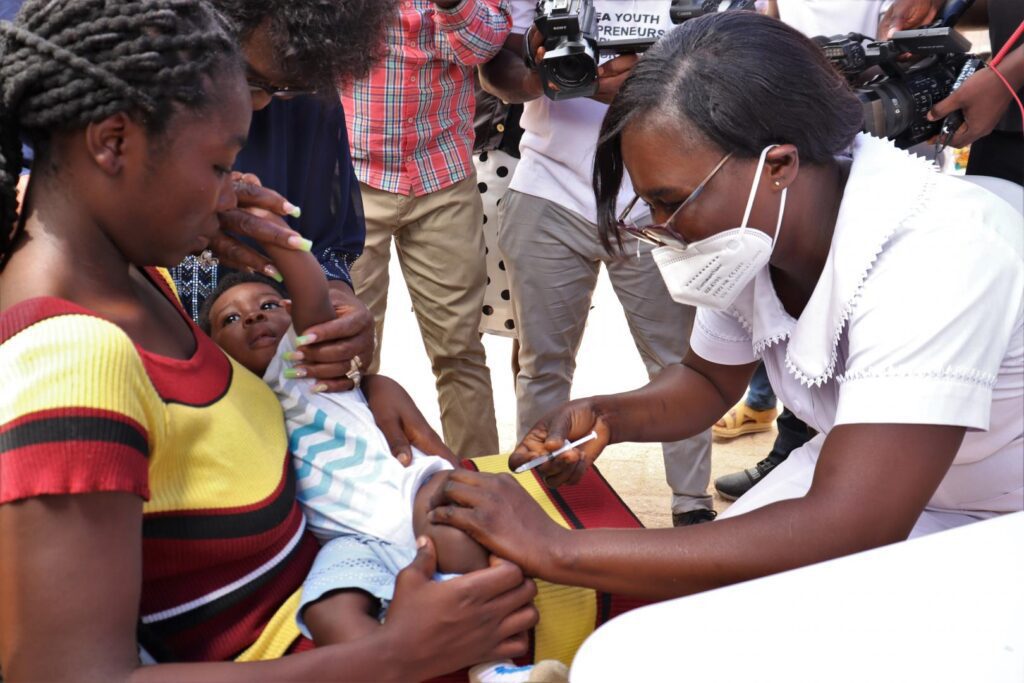
She further urged parents to keep proper health records for children and regularly visit vaccination centers to confirm which vaccines are due. “Please take your child to the nearest vaccination center,” she appealed. “Go with the child’s health records, what we call the Road to Health chart.”
She advised caregivers to allow health professionals to review children’s records to ensure all vaccines are administered according to schedule. “Show it to them. Let them confirm what your child needs,” she said. “And please ensure that your child gets all the vaccines as planned or scheduled.”
Government Efforts Commended
At the policy level, Dr. Owusu acknowledged efforts made by the Ghanaian government to maintain routine immunization programmes and improve vaccine outreach across the country.
“I think governments have done fairly well,” she stated, adding, “Ghana immunizations, we do well, but it is not to say that we should lower our guard.” According to her, the country’s National Immunization Days continue to play an important role in reaching children who may have missed vaccines under the routine Expanded Programme on Immunization.
She explained that during these campaigns, healthcare workers travel extensively to identify and vaccinate children in underserved communities. “These are opportunities created by the government to mop up in case any child missed out,” she explained.
Dr. Owusu praised community health nurses and frontline health workers who work under difficult conditions to deliver vaccines to remote areas across Ghana.
“I salute all of them; They work really hard, especially those who traverse the nation to the very underserved areas, crossing water bodies and all to reach all manner of children.
“They go to the churches, they go to the mosque, they go to the markets, they go to schools everywhere to ensure that any child who may have slipped through the net and did not receive their vaccine gets it”.
Dr Sandra Kwarteng Owusu, a Paediatric Pulmonologist at the Komfo Anokye Teaching Hospital
Challenges in Underserved Communities
Despite the progress made, Dr. Owusu acknowledged that several communities across Ghana still face challenges accessing vaccines due to geographical barriers and limited infrastructure.

According to her, some districts remain difficult to reach because of poor road networks and water bodies that separate communities from healthcare facilities. She explained that residents in major urban areas may not fully appreciate the difficulties some communities encounter in accessing healthcare services.
Dr. Owusu, therefore, called for sustained government investment in expanding healthcare access to hard to reach areas. Dr. Owusu also highlighted the importance of maintaining proper vaccine storage systems across the country.
She explained that vaccines must be stored under controlled temperatures to remain effective, particularly in hot climates like Ghana. According to her, disruptions in electricity supply can affect cold chain systems used in preserving vaccines, potentially compromising their effectiveness.
She therefore urged policymakers and government institutions to continue supporting healthcare facilities with reliable infrastructure and stable electricity supply.
As part of her final message, Dr. Owusu assured the public that vaccines remain safe for both children and adults. “My final message is that vaccines are very safe; they are safe for young people -they are also safe for old people,” she said.
She reiterated that ensuring every child under five receives vaccines on schedule remains a national responsibility requiring continuous cooperation from all sectors of society.