Iran’s state broadcaster has criticised President Donald Trump’s rejection of Tehran’s response to 14-point U.S plan to end the war, describing the American plan as an attempt to force Iran into submission.
In a statement on its Telegram channel, the state broadcaster said that the US plan “meant Iran’s surrender to Trump’s greed”, and Tehran’s reply “emphasises the fundamental rights of the Iranian nation.”
It said that the latest Iranian offer also “emphasises the necessity of war reparations by the US and Iran’s sovereignty over the Strait of Hormuz”, as well as the “need to end sanctions and release the country’s seized funds and assets.”
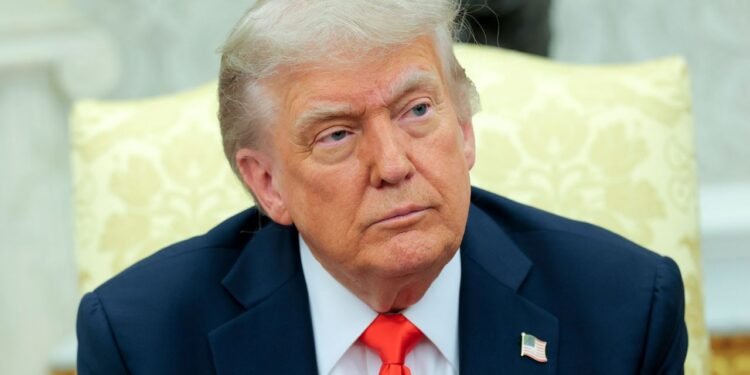
Trump, in a post on Truth social, called Iran’s response to a US proposal to end the war “totally unacceptable.”
“I have just read the response from Iran’s so-called ‘Representatives.’ I don’t like it — TOTALLY UNACCEPTABLE!”
Donald Trump
These comments followed his criticism of Iran two hours earlier, accusing Tehran of “playing games.” “Iran has been playing games with the United States, and the rest of the World, for 47 years (DELAY, DELAY, DELAY!),” Trump said in a post on social media.
Speaking to a news agency on condition of anonymity, an Iranian official disclosed that Tehran’s reply was “realistic and positive.”
According to the official, Iran’s response focuses on ending the war throughout the region, especially in Lebanon, and resolving differences with the US, includes negotiations regarding the Strait of Hormuz, the nuclear programme, and the complete lifting of sanctions and emphasises the necessity of a clear and guaranteed mechanism for lifting all forms of sanctions.
The official added that the response emphasises the necessity of clear international guarantees regarding the implementation of any agreement that may be concluded with the US and is based on the country’s supreme interests and the outcomes of our consultations with countries in the region.
Neither side has revealed the text of their proposals the main points of contention include Iran’s nuclear programme. The US wants Iran to halt the programme altogether, but Tehran says any such restrictions must be for a limited number of years. Another is Iran’s uranium stockpile. Trump says the US wants to take custody of Iran’s stockpile of 400kg (880lbs) of highly-enriched uranium. Tehran has rejected the demand.
Also, the strait of Hormuz remains a point of contention. Iran wants to formalise its control over shipping in the waterway, including by charging a transit fee, and demands that the US lift its blockade on Iranian ports. Trump says the blockade will remain in place until a deal is reached. Additionally, Iranian officials are demanding sanctions relief and the unfreezing of $20bn in assets as part of any lasting agreement.
Iran is also demanding compensation for damages caused by US and Israeli attacks, amounting to about $270bn, while the US wants to limit Tehran’s support for its regional allies, including Hezbollah in Lebanon and Hamas in Gaza, and curb its ballistic missile programme.
U.S, Iran “Pretty Much At The Same Place”
Mark Pfeifle, a former U.S National Security Adviser, has opined thar Iran and the US are “pretty much at the same place” they were before negotiations began.
He noted that Iran wants everything relieved: from its sanctions [and] the blockade to no more US military operations, or Israeli military operations and Trump wants Iran to give up its enriched uranium, dismantle its ballistic programme, and cut funding to its proxies. Nonetheless, he said that Trump is unlikely to resume the war on Iran.
“One of the things that Mr Trump and his secretary of state did recently is they said that Operation Epic Fury is over, which takes off the table, at least, from a rhetorical standpoint, the possibility of re-engaging in some heavy military operation.”
Mark Pfeifle
He suggested that Trump is now likely to ramp up the economic pressure on Iran through the US blockade and “do a military action, maybe around the coast of the Strait of Hormuz,” targeting Iran’s fast boats, drone launch pads and missile sites that threaten ships at the blockade. Trump could also tighten sanctions or continue pushing for European and Asian naval forces to help escort ships through the Strait of Hormuz. However, beyond those options, Pfeifle warned, “not a lot of tools are left in the toolbox.”
Also, Pfeifle, Founder and President of Off the Record Strategies, said that Washington and Tehran are using pressure tactics to see who will cave first. “These are not peace talks, they are pressure talks,” Pfeifle said.
He said that the US is applying pressure through sanctions, naval power and the blockade, while Iran is applying pressure from inside the Strait of Hormuz, bringing “uncertainty, fear and disruption” to the whole process. “This is more of a contest to see which side can sustain pressure longer without losing control,” he said.
READ ALSO: Ghana Government Secures GH¢6bn in T-Bill Windfall As Fitch Magic Ignites Investor Stampede