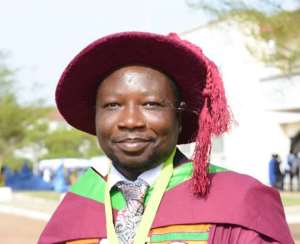
Author: Dr. John Osae-Kwapong, Democracy and Development Fellow, CDD-Ghana, and Project Director, the Democracy Project
When you ask Ghanaians what democracy means to them, the first response, as per data from the Afrobarometer survey, is “civil liberties/freedom.” In the inaugural 1999 edition, ‘civil liberties/freedom’ ranked first among 12 possible meanings of democracy, cited by 37% of Ghanaians.”
When the question was repeated in Round 3 (2005), it still ranked first among 18 possible meanings of democracy, this time cited by 55% of Ghanaians. The question was last asked in Round 6 (2014).
In that survey year, ‘civil liberties/freedom’ still ranked first among 20 possible meanings of democracy, cited by 52% of Ghanaians.” The constitution guarantees Ghanaians free speech.
The liberalization of political spaces because of the transition to multiparty democracy has resulted in citizens regularly exercising this right. It is the reason why, I believe, whenever there is a feeling that this basic democratic right is being encroached upon by The State, citizens get jittery.
Concerns are being raised about the state of free speech rights, with many points of tension. So, how do we reconcile the various points of tension in the current debate regarding freedom of speech?
Citizens’ Assessment of Free Speech Rights
In finding ways to reconcile the current debate, let’s begin by looking at how Ghanaians have assessed their free speech rights. In the first three rounds (1999, 2002, 2005) of the Afrobarometer survey, Ghanaians were asked: “For each of these following matters, would you say things today are worse, about the same, or better: Anyone can freely say what he or she thinks?”
In response, the percentage of Ghanaians who answered “better or much better” were as follows – 85% (1999), 69% (2002), and 65% (2005). In the next seven rounds (2008, 2012, 2014, 2017, 2019, 2022, 2024), the question was rephrased to “In this country, how free are you to say what you think?” In response, the percentage of Ghanaians who answered “completely free” looked like this – 78% (2008); 74% (2012); 73% (2014); 67% (2017); 71% (2019); 63% (2022); and 58% (2024).
The assessments vary, with Ghanaians feeling different levels of complete freedom to express their thoughts over the years. In addition, the survey also asked: “In this country, how often do people have to be careful of what they say about politics?” over eight rounds. In response, the percentage of Ghanaians who answered “always” looked like this – 17% (2002); 34% (2005); 32% (2008); 2012 (42%); 2014 (36%), 45% (2017 (45%); 2019 (45%); and 2022 (33%).
Again, the assessments vary, with Ghanaians feeling different levels of cautiousness when it comes to what they say about politics. I do not interpret this question as having no regard for boundaries in one’s political speech. Rather, I interpret it as fear of consequences if one’s political speech offends the sensibilities of The State.
Reconciling The Points of Tension
Constitutions like ours offer rights and protections. At the same time, there is a reason why there are laws that address speech-related matters such as defamation, contempt, causing fear and panic, disturbing the peace, etc.
These laws are not designed to have a chilling effect on speech. Rather, it is a recognition that in offering rights and protections, the exercise of it must not cause injury to others or society.
What state actors need to do is find an appropriate balance between ensuring rights and protections are not violated, while at the same time holding people responsible for speech that may, for example, breach the law. The latitude must be wide, and the threshold must be high because I strongly believe the default position must always be about protecting speech.
In addition, restraint must be a guiding principle even in the face of speech that a state actor may find provocative. Without restraint, it is easy to use institutional power to punish citizens for speech that a state actor disapproves of. In fairness, our agitations and calls for the protection of free speech cannot be oblivious to the many moments of lack of civility in our political discourse.
The narratives citizens create and share, the misinformation and disinformation perpetrated with reckless abandonment cannot be things we give tacit approval to because it may serve our partisan political needs.
We must act as each other’s keeper and normalize the practice of regularly saying to our fellow citizens, publicly or privately, “that crosses the line of civil discourse.” This is not a call to police people’s speech. And this is not a call to refrain from speaking up about grievances citizens may have.
It is also not a call to retreat in the face of perceived state injustice. It is a call to recognize that civil discourse in our public spaces needs some improvement. We, both citizens and state actors, owe it to our democracy to protect the rights and freedoms the Constitution guarantees.
READ ALSO: Parliament Urged to Work with Government to Build on Economic Gains