Derrick Opare Asamoah, a public financial management expert and legal scholar, has asserted that Ghana must prioritize strategic terms negotiation over outright mineral lease denials to secure meaningful local ownership of its natural resources.
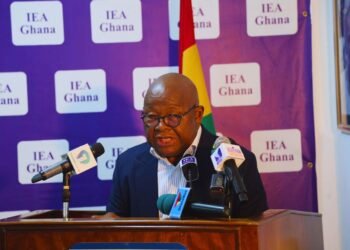
The recommendation serves as a direct counter-proposal to the Institute of Economic Affairs’ (IEA) recent call to reject mining lease renewals, a move critics argue could destabilize the nation’s fragile investment environment.
By reframing resource nationalism around diplomatic and legal leverage, this strategy seeks to maximize state revenues and domestic equity without crippling investor confidence.
“The three policy directions outlined above achieve what the IEA claims to want: more Ghanaian ownership, more community benefit, more strategic control. But they achieve it through negotiation, legislation, and planning not through a lease denial that would scare off capital and collapse the businesses we seek to protect.”
Derrick Opare Asamoah

Expanding on this economic paradigm, the proposed approach highlights how aggressive asset expropriation can inadvertently spark capital flight and stall active mining operations nationwide.
Choosing instead to maximize existing regulatory mechanisms, such as the lease renewal window, allows the government to demand structural modifications while honoring contractual stability.
This balanced intervention ensures that global mining giants retain their operating majorities, thereby maintaining the flow of external technical expertise and capital commitments necessary to exploit deep-level mineral reserves safely and efficiently.
Securing Equity and Commercial Realignment
The state can actively expand its financial footprint by negotiating greater Ghanaian equity ownership beyond the statutory 10% free carried interest historically granted to the government.
Using the impending lease renewal window as a geopolitical lever, policymakers have a unique opportunity to acquire an additional equity stake of potentially up to 30%.
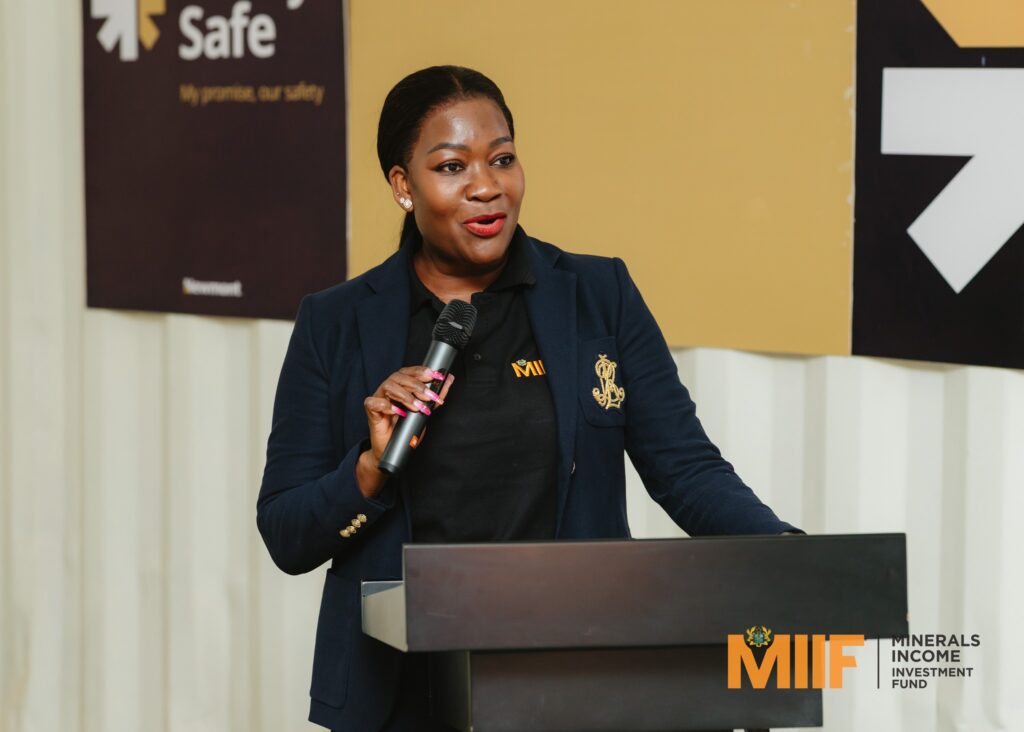
Rather than attempting to seize assets through coercive policy, the state should route this expanded ownership through the Minerals Income Investment Fund (MIIF) on strictly commercial terms.
This methodology ensures that corporate actors like Gold Fields maintain their controlling operational interest while the host nation gains “genuine ownership with board representation and dividend rights.”
Historically, aggressive “resource nationalism” built on confrontation rather than commercial negotiation has devastated emerging economies by triggering costly international legal arbitrations.
Embracing a collaborative model allows Ghana to replicate successful continental benchmarks, notably how Botswana structured its enduring, multi-decade partnership with De Beers to build a lucrative state stake in Debswana.
A negotiated equity expansion protects the broader investment ecosystem, reassuring foreign capital markets that Ghana remains an orderly, rule-of-law jurisdiction.

Ultimately, obtaining equity on commercial terms turns the state into an active partner in wealth creation rather than a passive collector of standard corporate taxes and royalties.
Mandating Community Wealth via Legislation
To resolve deep-seated developmental imbalances, Ghana must pass comprehensive legislation establishing a mandatory Mining Community Development Fund financed directly from mine revenues.
Historically, corporate social responsibility projects in host enclaves have been voluntary, leaving rural communities vulnerable to the fluctuating goodwill of corporate boards.
By hardcoding these obligations into statutory law, the government “transforms community development from charity into a right, enforceable and predictable.”
Under this framework, lease renewals will be strictly conditioned on a legally mandated funding structure, ensuring host communities no longer have to beg for basic infrastructure.
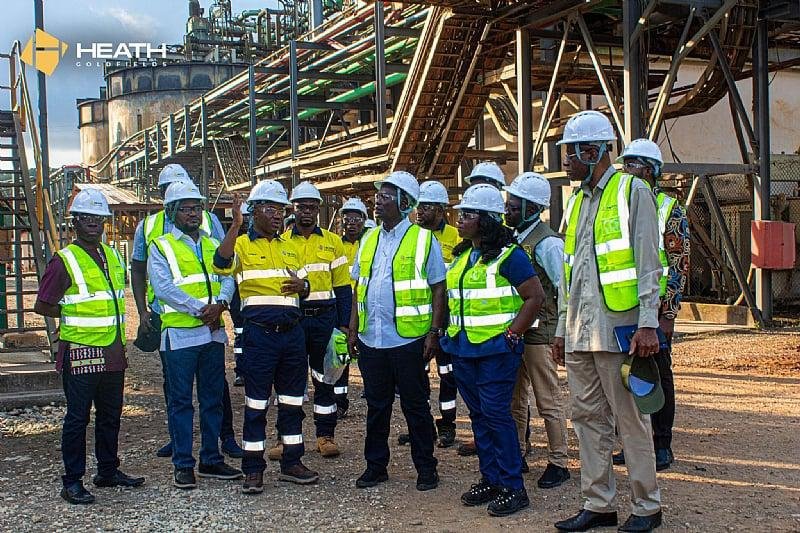
This legislative fund will be financed through a dual-income stream consisting of a fixed percentage of gross revenue from the mining company and a ring-fenced portion of the government’s own mineral revenue.
Distributing the financial burden between corporate actors and central government receipts creates an equitable wealth-sharing ecosystem that directly relieves fiscal pressure on local districts.
Consequently, mining enclaves will receive predictable, long-term capital inflows to build schools, hospitals, and clean water systems independent of national budget bottlenecks.
Moving away from arbitrary corporate benevolence ensures that local communities become legal stakeholders who benefit directly from the gold mined beneath their feet.
Institutionalizing Local Content and Strategic Strategy
Ghana must eliminate ad-hoc policymaking by formalizing a comprehensive National Resource Participation Strategy characterized by clear, legally binding localization and ownership targets.
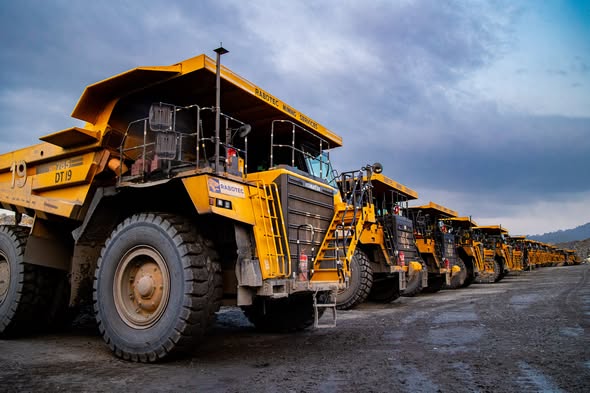
The state currently lacks a codified framework for increasing national participation, meaning regulatory bodies are essentially “improvising policy at each lease expiry.”
To build an enduring industrial base, the state must establish a definitive blueprint with time-bound targets for equity ownership, local content integration, skills transfer, and community investment.
Enacting this overarching strategy with strict parliamentary oversight guarantees policy continuity across successive political administrations, insulating the mining ecosystem from partisan interference.