UN Rights Chief, Volker Türk has welcomed a newly announced peace agreement between the United States and Iran, describing it as a “fragile but significant step” toward ending a conflict that has destabilised the Middle East, disrupted global energy markets, and caused widespread humanitarian concern.
According to Volker Türk, the agreement, which includes an immediate and permanent ceasefire and provisions for reopening the Strait of Hormuz, must be implemented in “good faith” by all sides if it is to evolve into a lasting settlement.
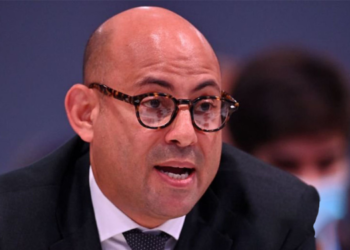
“I welcome the announcement that the United States and Iran have agreed on a peace deal that provides for an immediate and permanent ceasefire, the reopening of the Strait of Hormuz, and a framework for further negotiations.
“At this fragile moment it is clear all sides need to exercise maximum restraint and work to implement the agreement reached quickly and in good faith.”
Volker Türk
The deal, which remains a framework pending further negotiations on Iran’s nuclear programme and broader security guarantees, has been described by diplomats as the most significant diplomatic breakthrough since the outbreak of hostilities earlier this year.
It comes after months of escalation that saw strikes across multiple countries, including Iran, Israel, Lebanon and Gulf states, and left thousands dead while severely disrupting global trade routes.
UN has warned that prolonged disruption to the strait had already triggered cascading effects across global supply chains, including aviation disruptions, shipping delays, and rising food insecurity linked to fertiliser shortages.
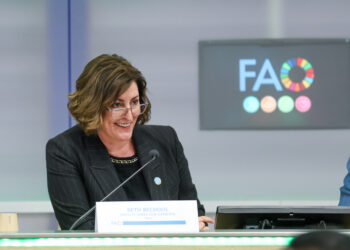
Moreover, Deputy UN High Commissioner for Human Rights Awa Dabo noted that the crisis had extended far beyond the immediate conflict zone.
“Economists warn that unless the Strait is opened, some of the world’s most vulnerable economies could be thrown into chaos, increasing poverty and hunger for millions.”
Awa Dabo
She added that humanitarian operations across the wider region had been significantly affected, urging urgent financial and logistical support for agencies such as the World Food Programme and the Food and Agriculture Organization to prevent a deeper global food crisis.
Worsening Conflict Sparks Warnings of Humanitarian Crisis
While welcoming the ceasefire, Volker Türk used his address to highlight what he described as “appalling human suffering” across multiple conflict zones, warning that the nature of modern warfare is rapidly changing and becoming more dangerous for civilians.
He pointed in particular to the increasing use of drone warfare in conflicts from Gaza and Lebanon to Myanmar and the Democratic Republic of the Congo, as well as a sharp rise in drone attacks reported in Sudan.
Moreover, UN Human Rights Chief urged states to develop stronger international legal frameworks governing the use of autonomous and remote weapons systems, warning that without human oversight and accountability, emerging technologies risk lowering the threshold for violence and increasing civilian harm.
Türk also called on G7 leaders meeting in France to place human rights at the centre of global security discussions, arguing that stability and development cannot be separated from respect for international law.
Regional Fallout Fuels Competing Narratives
The Human Rights Council session also highlighted sharp divisions over responsibility for the conflict and its humanitarian consequences.
Israeli strikes on Lebanon and cross-border attacks by Hezbollah were raised as ongoing concerns, with Türk calling for an immediate cessation of hostilities, Israel’s withdrawal from Lebanese territory, and independent investigations into alleged violations of international law by all parties involved.
However, representatives from Gulf states and Iran presented contrasting accounts of the conflict’s origins and trajectory.
The United Arab Emirates’ Permanent Representative in Geneva, Jamal Al Musharakh, said his country hoped negotiations would bring an end to what he described as sustained missile and drone attacks across the region.
Since late February, he said, the UAE alone had faced more than 3,000 ballistic and cruise missile and drone attacks.
Iran’s Ambassador Ali Bahreini, meanwhile, defended Tehran’s actions, stating that Iran had acted in self-defence under international law in response to what he described as “indiscriminate aerial bombardment.”
He added that, the ceasefire reflected Iran’s responsibility toward regional stability, despite what he called its imperfections.
Strategic Stakes of the Hormuz Agreement
Central to the agreement is the reopening of the Strait of Hormuz, a chokepoint through which a significant portion of global energy supplies normally flows. Its closure during the conflict had triggered fears of sustained global economic disruption.
UN officials warned that the blockade of Iranian ports and restrictions on shipping routes had not only disrupted energy flows but also hindered humanitarian aid deliveries across multiple countries in the region.
Deputy High Commissioner Dabo cautioned that prolonged instability in maritime routes risked triggering a broader global crisis.
“Without urgent action, the disruption to trade and aid flows could deepen food insecurity and push already fragile economies into instability.”
Awa Dabo
The International Maritime Organization also welcomed the agreement, describing it as an important step toward restoring safety for seafarers and re-establishing freedom of navigation in one of the world’s most strategically sensitive waterways.
Despite the optimism surrounding the ceasefire announcement, UN officials repeatedly stressed that the situation remains highly unstable and that the agreement’s success will depend on sustained political commitment from all parties.
The conflict, which began earlier this year following joint US and Israeli strikes on Iranian territory, has since expanded into a wider regional confrontation involving multiple state and non-state actors. Thousands of civilians have reportedly been killed, and critical infrastructure, including hospitals, schools and residential areas, has been damaged or destroyed.
READ ALSO: Ghana Urged to Champion Negotiations over Lease Denial to Achieve Resource Ownership