Planned talks in Switzerland between the United States and Iran to discuss the technical terms of their ceasefire deal have been postponed.
The Swiss Foreign Ministry confirmed that the talks, which were scheduled to take place in Burgenstock, would now not go ahead. In a message to a media outlet, the Swiss foreign ministry said, “The planned talks between the US, Iran, Qatar and Pakistan have been postponed,” without providing a new date for the talks.
“Switzerland remains ready to facilitate these talks. The relevant preparatory work at Burgenstock is continuing.”
Swiss Foreign Ministry
The White House announced that United States Vice President JD Vance’s planned trip to Switzerland to start a new round of peace talks with Iran following the signing of a memorandum of understanding (MoU) to end the war, has been delayed.
Vance and his team were reportedly ready to leave for Switzerland but the trip was cancelled at the last minute. Vance had been prepared to make an overnight flight to meet with his Iranian counterparts at a mountainside resort in the tiny Swiss village of Obbürgen and begin the technical talks.
His staff and a small pack of journalists had even gathered at Joint Base Andrews outside Washington in anticipation of the trip. Meanwhile, dozens of White House officials, advance staffers and more media gathered in Switzerland to prepare for Vance’s anticipated arrival but then abruptly, the trip was called off.
The White House issued a statement that explaining Vance, who has been selected by President Donald Trump to lead the negotiations and his delegation were prepared for talks, but they were unable to finalize plans and the Vice President would remain in Washington. “The logistics of these negotiations have never been simple or predictable,” the statement noted.
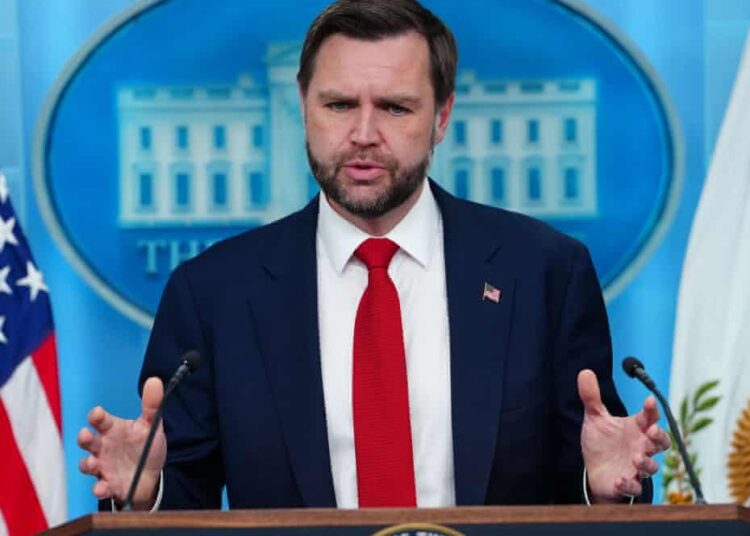
Hours before postponing his trip, Vance gave some indication of the state of flux when he told reporters at a White House briefing that he was uncertain if the talks were going to happen this weekend.
“Our plan is to go to Switzerland, I don’t know exactly when. We think these technical negotiations start sometime this weekend. That’s still the plan. But that could change.”
JD Vance
In his address to the reporters, Vance also defended the agreement between Washington and Tehran amid criticism from US officials and Israel, saying the signing of an MoU has launched a 60-day negotiating period towards a final deal.
Vance was initially expected to go to Switzerland to sign the agreement at a formal ceremony. Instead, Trump signed the document during a glitzy dinner at the Palace of Versailles with French President Emmanuel Macron, and Iranian President Masoud Pezeshkian separately signed the agreement.
Meanwhile, United States military says that it has lifted its naval blockade of Iranian ports, part of an agreement between the US and Iran suspending military operations during a period of negotiations. US Central Command (CENTCOM) said on Thursday that all US blockade efforts have ceased but that its forces will remain in the area to ensure compliance with the agreement.
Reports suggest that Iran delayed sending its delegation to discuss the technical issues linked to the ceasefire deal, signed by the two countries on Wednesday, due to Israel’s ongoing military campaign in Lebanon. The announcement of Vance’s postponed trip followed Israeli bombing in southern Lebanon, killing at least three people, overnight.
Lebanese state media said that two people were killed in a drone attack near Kfar Tebnit and another in a separate attack in Zabadin, a day after the US and Iran signed an interim agreement calling for an end to military operations on all fronts, including Lebanon.
Hezbollah said it had repelled a four-day Israeli offensive, while Israel faces growing pressure to halt attacks and withdraw its forces under the terms of the agreement.
The Israeli military announced today that it had struck targets throughout southern Lebanon overnight as its campaign continues despite the threat to the ceasefire deal between the United States and Iran. Tehran-backed Hezbollah reported intense fighting in the area.
Israeli Prime Minister Benjamin Netanyahu said yesterday that Israel’s military will stay in a “security zone” of southern Lebanon as long as “Israel’s security needs require it.” Israel and Hezbollah are not parties to the agreement.
Iran insists Israel must withdraw from the large swath of southern Lebanon it is occupying, but the wording of the interim deal doesn’t explicitly require that and only ensures Lebanon’s “territorial integrity.”
READ ALSO: Parliament’s Energy Committee Visits Aburi New Energy Plant, Pledges Local Market Support