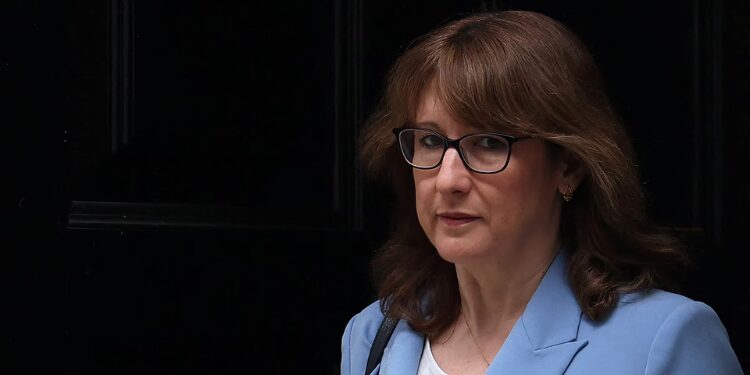
British Chancellor, Rachel Reeves has publicly endorsed Andy Burnham to become the United Kingdom’s next Prime Minister, offering a strong vote of confidence in the Labour figure widely viewed as the frontrunner to succeed Keir Starmer following his surprise resignation.
Reeves’ declaration comes at a pivotal moment for British politics as Labour begins navigating one of its most significant leadership transitions in recent years. With Burnham currently the only politician to have formally indicated his intention to seek the party leadership, attention is increasingly turning to what a future Burnham administration might look like and which senior figures from the current government could retain prominent roles.
Speaking in an interview, Reeves made clear that she believes Burnham would provide strong leadership for both the Labour Party and the country, stating, “I’m supporting Andy to be Prime Minister.”
Her endorsement is particularly notable given widespread reports suggesting Burnham may choose to replace Reeves as chancellor if he secures the leadership and enters Downing Street. Speculation has also emerged that she could be offered a more junior cabinet role under a Burnham-led government.
Despite those reports, Reeves refused to be drawn into discussions about her political future, instead stressing that such decisions would rest solely with the incoming leader.
“I’m not going to pre-empt the decisions that the new Prime Minister will make. I’m backing Andy. I think he’d be a great prime minister, but those are his decisions, not mine to make.”
Rachel Reeves
Burnham, who was sworn in earlier this week as the Member of Parliament for Makerfield, has quickly emerged as the dominant figure in discussions about Labour’s future direction. If no rival candidates enter the contest, he could become prime minister as early as 17 July, accelerating what would be one of the fastest leadership transitions in modern British political history.
While much attention has focused on personalities and cabinet positions, Reeves used the interview to emphasise policy continuity, particularly regarding fiscal management.
She argued that maintaining discipline in public finances should remain a central pillar of any future Labour administration.
The Chancellor reiterated her commitment to the government’s fiscal rules, which require day-to-day public spending to be funded through tax revenues by the end of the parliamentary term while ensuring that debt falls as a proportion of gross domestic product.
Burnham has previously indicated that he would maintain the current framework, a position likely intended to reassure financial markets and voters concerned about economic stability.
Reeves defended the approach by pointing to what she described as the consequences of fiscal mismanagement under previous administrations.
“The last government lost control of the public finances. It sent inflation through the roof and interest rates through the roof. So control of the public finances has a real impact on families today.”
Rachel Reeves
At the same time, she signalled that the government remains prepared to intervene where necessary to support households facing rising costs, indicating that targeted and temporary relief on energy bills could still be considered later in the year if circumstances warrant additional assistance.
Leadership Transition Raises Questions About Labour’s Economic Direction

As speculation intensifies over the future shape of a Burnham-led government, political observers are closely examining what the transition could mean for Labour’s economic agenda and the roles of key ministers who have shaped policy during the Starmer era.
Although Burnham has publicly aligned himself with existing fiscal rules, questions remain about how much continuity or change voters should expect should he assume the country’s highest political office.
For Reeves, the leadership transition represents both a moment of uncertainty and an opportunity to defend her record in government.
Reflecting on her tenure as chancellor, she acknowledged that there were aspects of her stewardship that could have been handled differently. However, she expressed confidence that Labour’s economic policies had strengthened the country’s financial position and improved conditions for working people.
“I know that whoever is Prime Minister and Chancellor in the future will inherit a stronger economy than the one I inherited two years ago.”
Rachel Reeves
Moreover, the Chancellor pointed to a range of achievements that she believes demonstrate progress under Labour’s economic management, including increases to both the national living wage and the national minimum wage.
Reeves argued that maintaining fiscal discipline remains critical regardless of who occupies Downing Street in the months ahead.
“Because if you lose control of the public finances, it is ordinary working people and businesses who pay the price with higher inflation, higher taxes and indeed higher interest rates.”
Rachel Reeves
As Labour prepares for a potentially swift leadership transition, party members, financial markets and voters alike will be watching closely for signals about the future direction of government policy.
READ ALSO: Canada Qualify for WC Knockout Round For The First Time Despite Defeat