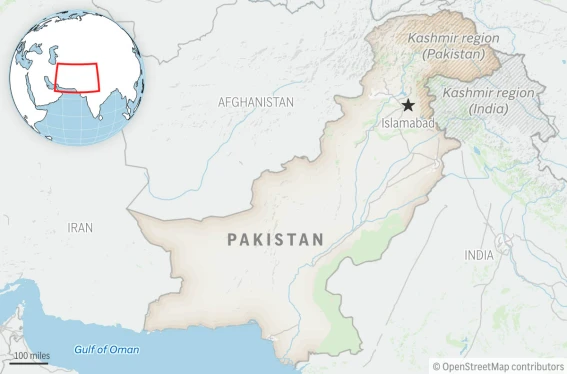
Pakistan’s security forces have carried out a ground operation and air strikes along the Pakistan-Afghanistan border in response to deadly attacks, killing 29 fighters.
In a post on social media, Pakistani Minister of Information Attaullah Tarar said that the operation was launched in response to multiple attacks by armed groups across the country.

Referring to three eastern Afghanistan provinces, Tarar said on X, “Three targets in Paktia, Paktika and Kunar were destroyed during precision strikes.” Tarar said that Pakistan’s latest operation along the Afghan border targeted hideouts and safe havens of the Pakistan Taliban.
Pakistan has witnessed a surge in attacks targeting police and security forces in recent years. Authorities have blamed the Pakistan Taliban, known by the acronym TTP, and allied armed groups for most of the violence.
The Pakistan Taliban are a separate armed group from the Afghan Taliban, although the two are allies. The Afghan Taliban returned to power in neighbouring Afghanistan in 2021.
It comes a day after fighters armed with guns and explosives targeted the regional headquarters of the paramilitary Rangers in the southern port city of Karachi, killing three soldiers.Security forces killed three attackers and arrested another assailant, whom the military identified as an Afghan national in wounded condition. Jamaat-ul-Ahrar, a breakaway faction of the Pakistan Taliban, claimed responsibility for the Karachi attack in a statement on Saturday night.
The latest operations are likely to further strain the already tense relations between Islamabad and Kabul.Sunday’s cross-border strikes and ground operation came less than three weeks after Pakistan’s military launched air strikes on what it said were fighter group hideouts in Afghanistan.
They ended about a month of relative calm following what Islamabad had described as an “open war” between the neighbouring countries, despite international efforts to broker a lasting peace. The escalation follows months of tit-for-tat military action between the countries. Hundreds of people have been killed in cross-border fighting since February, when Afghanistan launched retaliatory strikes after Pakistan carried out air strikes inside Afghan territory.
Multiple rounds of internationally mediated peace talks have failed to secure a lasting ceasefire.China also hosted the two sides in April, and Beijing later said that Pakistan and Afghanistan had agreed not to escalate their conflict and to explore a solution. Since last year, Pakistan has carried out multiple strikes along the border and inside Afghanistan, targeting alleged hideouts of the Pakistan Taliban and other armed groups.
Pakistan accuses Afghanistan’s Taliban government of harbouring fighters who carry out deadly attacks inside Pakistan, especially the Pakistan Taliban. Kabul denies the accusations.
Afghanistan Condemns Pakistan’s Attacks
In Afghanistan, government Spokesperson Zabihullah Mujahid said that Pakistan’s attacks resulted in the deaths and injuries of dozens of civilians, including women and children. “We strongly condemn this cowardly act of aggression and consider it a crime and an act of brutality,” he said.
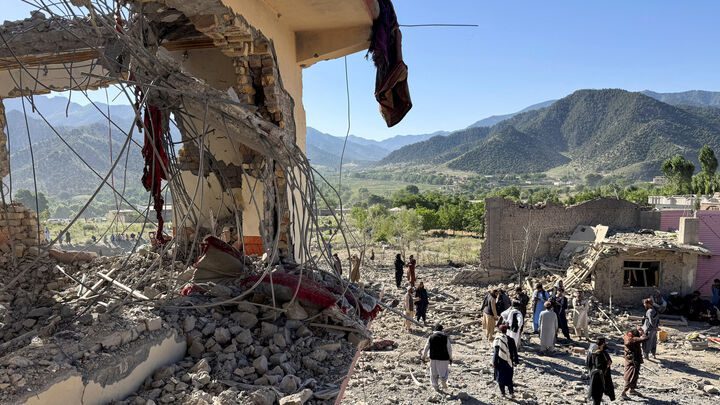
Mujahid strongly rejected Pakistan’s justification for the operation. Pakistani authorities have not publicly commented on the allegations of civilian casualties.
Security Analysts say that the operation reflects Pakistan’s determination to intensify pressure on militant groups following repeated attacks on its security forces. At the same time, they warn that cross-border military action carries the risk of further destabilising relations between the two countries and complicating regional security efforts.
The Pakistan-Afghanistan border has long been one of South Asia’s most volatile regions, with militant organisations exploiting the mountainous terrain and porous frontier to launch attacks and evade security operations. Counterterrorism efforts have remained a priority for Islamabad as authorities seek to contain violence that has affected several provinces in recent years.
While Pakistani officials described the latest operation as a success against militant networks, questions remain about its broader implications for regional stability. The allegations of civilian casualties raised by Afghan authorities are likely to attract international attention, particularly as humanitarian concerns continue to accompany military operations in border areas.
Pakistan maintains that the strikes were a necessary response to protect national security and dismantle militant infrastructure responsible for deadly attacks inside the country. With tensions between Islamabad and Kabul remaining high, observers will be closely watching whether the latest operation leads to further escalation or renewed diplomatic efforts to address the security challenges facing both countries.
READ ALSO: Chamber of Mines Demands Allocation of 30% of Mineral Royalties to Mining Communities