Ghana’s push for stronger primary health care and universal health coverage is being undercut by a missing component that has little to do with money or infrastructure, public health education, according to Family Physician Specialist, Dr Taufiq Maltiti Sayibu.
Speaking in interview on the state of primary health care (PHC) in Ghana, Dr Taufiq Maltiti Sayibu argued that the country’s renewed emphasis on decentralised, community-level care will fall short of its goals unless it is matched by sustained health education, without which even well-resourced systems will keep seeing patients arrive only after preventable conditions have become severe.
Asked to define primary health care in simple terms, Dr Taufiq Maltiti Sayibu described it as bringing health care directly to the patient by decentralising services to the community level and empowering local structures and personnel to deliver that care close to home.
He said the model depends on frontline workers such as community health nurses, supported by government, to efficiently manage the kinds of cases seen at the grassroots level, so that a patient properly managed in the north, for example, does not need to travel to Korle Bu in Accra for care that could have been handled locally, including cases involving diagnostic equipment such as MRI machines that remain concentrated in major cities.
Progress Made, But Implementation Remains the Test
Dr Taufiq Maltiti Sayibu said he believes the country is finally moving in the right direction on primary health care, pointing to efforts to strengthen health structures closer to communities in areas such as Yendi, Tamale and Bolgatanga, which he said helps ease pressure on the country’s larger referral hospitals.
His main concern, he said, lies not with the policy direction itself but with how consistently it will be implemented, including how supervision frameworks and the health insurance scheme’s support for primary care are carried through in practice.
Preventable Complications, From Diabetes to Dialysis
Dr Taufiq Maltiti Sayibu warned that many of the advanced, high-cost interventions Ghana’s health system now grapples with, including dialysis, stem directly from complications that earlier, community-level care could have prevented.

He explained that dialysis becomes necessary once a patient’s kidneys are so damaged they can no longer function without a machine to do the work for them, a stage often reached after long periods of poorly managed conditions such as hypertension and diabetes.
“Some people who have untreated type 2 diabetes end up with paralysis. You see people who have lost their sight, gone blind, because of diabetes. Some become impotent. It has a lot of consequences, and all we can do is intensify health education so people are not pushed to that stage.”
Family Physician Specialist, Dr Taufiq Maltiti Sayibu.
He said basic screening remains badly under-used even among older adults who need it most, citing men in their sixties and seventies in parts of the Volta and Upper regions who have never had an A1C test, the standard blood test used to monitor diabetes, despite guidance that adults from around age 40 should be routinely screened.
Community Empowerment Over Centralised Care
Dr Taufiq Maltiti Sayibu argued that solving this gap requires training and empowering health workers within communities themselves, rather than routing every case toward large tertiary hospitals or private specialists.

He said the goal of decentralised primary care is to bring services and health workers closer to patients, so people do not have to travel long distances or wait until a condition has become severe before receiving attention.
He drew a comparison with major medical infrastructure such as MRI machines, noting that such capacity takes years to build and is often neglected until problems become acute, by which point patients may arrive at hospital too late for treatment to be effective.
Education the Missing Link in Primary and Universal Healthcare
Asked directly whether Ghana’s healthcare gaps come down to a lack of money Dr taufiq maltiti Sayibu pushed back, arguing that funding alone would not explain why a 60- or 70-year-old man might never have had a basic diabetes screening.
He said the more overlooked component of the country’s healthcare challenge is education, insisting that neither primary health care nor universal health coverage can succeed until the health and education sectors work more closely together.
“I have a very interesting opinion about healthcare in this country. We treat it as a resource problem, but there’s a missing component, and that is education. Until health and education work together, we won’t fix this.”
Family Physician Specialist Dr Taufiq Maltiti Sayibu.
He pointed to everyday examples, such as cigarette warning labels that many smokers do not fully understand, as evidence that public health messaging often fails to translate into informed decision-making.
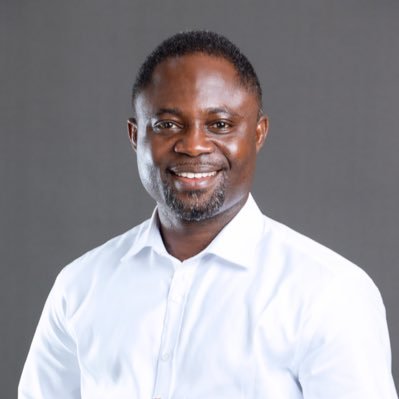
“The majority of people who smoke don’t understand the real risk behind the warning. Every person deserves the information they need to make an informed decision about their own health, and that only comes through education.”
Family Physician Specialist, Dr Taufiq Maltiti Sayibu.
For Dr Taufiq Maltiti Sayibu, that gap in education is what ultimately connects the two ends of his argument: without it, community health structures can be built and universal coverage can be expanded, but patients will still arrive at hospitals too late, having never understood the risks that decentralised, well-educated primary care is meant to catch early.
Read More: NPP Supporters March To EOCO Demanding Miracles Aboagye’s Release