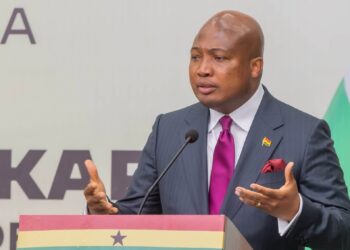
Finance Minister Dr. Cassiel Ato Forson has unveiled details of the $300 million World Bank-funded programme to transform secondary education across Ghana, with plans to deliver 210 infrastructure projects, including new schools, rehabilitated facilities and free textbooks for every student.
Presenting the 2026 Mid-Year Budget Review in Parliament, the Minister said the investment forms part of government’s broader push to eliminate the double-track system within two years while improving learning outcomes in mathematics, science and technical education.
A Sweeping Investment in School Infrastructure
Laying out the scope of the World Bank-backed initiative, the Minister described education as central to the country’s long-term development, framing the funding as a deliberate bet on the next generation.
“Education remains one of the most powerful investments we can make in the future of our country. Government is therefore taking bold steps to transform secondary education through a 300 million United States dollar World Bank financing.”
Finance Minister Dr. Cassiel Ato Forson
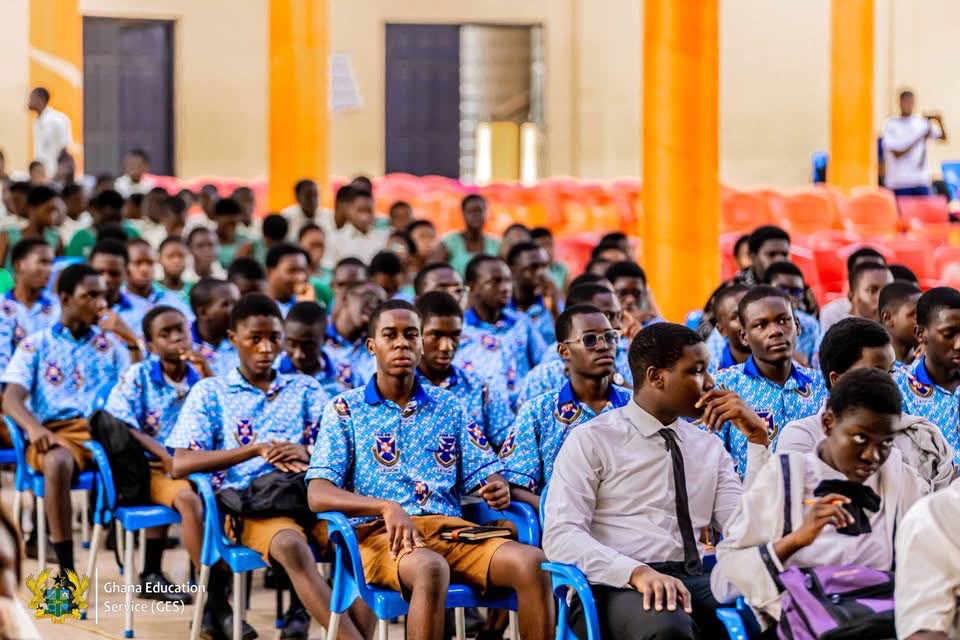
Under the arrangement, government will construct ten new secondary schools, rehabilitate 150 existing ones, and upgrade 30 Category C schools to Category B status alongside a further 20 Category B schools moving up to Category A. The programme will also fund furniture for upgraded schools and guarantee free textbooks for every secondary school student in the country.
New Schools Targeted at Underserved Regions
The Minister was explicit that the ten new schools would be spread deliberately across regions with the greatest need, rather than concentrated in already well-served areas.
“Ten new secondary schools will be strategically distributed to improve access in underserved areas, with one new school each constructed in Western, Western North, Greater Accra, Volta, Oti, Northern, Upper East, Upper West, Savannah and Central Region.”
Finance Minister Dr. Cassiel Ato Forson
The regional spread signals an attempt to close longstanding access gaps between southern and northern Ghana, as well as between urban centres and more remote districts that have historically lagged behind in secondary school infrastructure.
Millions of Students and Teachers Expected to Benefit
According to figures presented to Parliament, the completed project is projected to benefit roughly 2.3 million students, more than 100,000 teachers and about 2,000 school leaders once all 210 interventions are completed. The scale of the numbers underscores how central secondary education has become to government’s broader human capital strategy heading into the second half of its term.
Among the programme’s most closely watched goals is its role in helping government phase out the double-track system, an arrangement introduced years ago to manage overcrowding that has drawn persistent criticism from parents, teachers and students alike.
“The project will support government’s effort to eliminate the double-track system within two calendar years.”
Finance Minister Dr. Cassiel Ato Forson
By expanding physical infrastructure across the 210 targeted schools, the Minister said government expects to create enough classroom capacity to return schools to a single-track calendar, addressing one of the more visible strains on Ghana’s secondary education system in recent years.
A Push Toward STEM, TVET and Digital Skills
Beyond bricks and classrooms, the Minister said the initiative was designed to reshape the quality and direction of secondary education itself. He said the programme would place particular emphasis on strengthening outcomes in mathematics and science, while widening opportunities for girls in STEM and technical and vocational education and training.
He added that the broader ambition was to prepare young Ghanaians for an economy increasingly shaped by technology, positioning the interventions as groundwork for equipping students with digital, technical and green skills relevant to future employment.
The education announcement came as part of a broader Mid-Year Budget Review presented to Parliament, with the Finance Minister moving directly from the secondary education programme into an update on government’s Free Primary Health Care initiative, signalling that social sector investment featured prominently across the day’s presentation.
What Comes Next for Implementation
While the Minister’s presentation set out the scale and distribution of the interventions, questions remain over the construction timeline for the ten new schools and the pace at which the 150 rehabilitation projects will be rolled out across the country.
Education stakeholders are likely to watch closely for further details from the Ministry of Education on contractor engagement, disbursement schedules and monitoring mechanisms as the $300 million programme moves from budget announcement to implementation on the ground.
READ MORE: Ghana’s Spending Below 4.9% Target Hurting Job Creation -Prof. Quartey