
Speaker of Parliament, Rt. Hon. Alban Sumana Kingsford Bagbin has called on Ghana’s Supreme Court to continue strengthening public confidence in the rule of law and constitutional democracy, describing the country’s highest court as one of the nation’s most enduring institutions whose contribution extends beyond the delivery of judgments to safeguarding democratic governance, constitutional stability and peaceful coexistence.
According to him, the Supreme Court’s evolution has been inseparably linked to Ghana’s constitutional, legal and political development since its establishment in 1876 under the Supreme Court Ordinance during the colonial era.
The Speaker observed that very few public institutions in Ghana have endured for one hundred and fifty years while remaining relevant through successive constitutional dispensations, changing governments and major political transformations.
He explained that throughout the country’s constitutional evolution, the Supreme Court has consistently served as the central institution responsible for administering justice and preserving constitutional order.
“Parliament and the Judiciary exercise distinct constitutional mandates, yet they are united by a common constitutional purpose, to uphold the Constitution, preserve the rule of law and safeguard the democratic aspirations of the people of Ghana.”
Rt. Hon. Alban Sumana Kingsford Bagbin
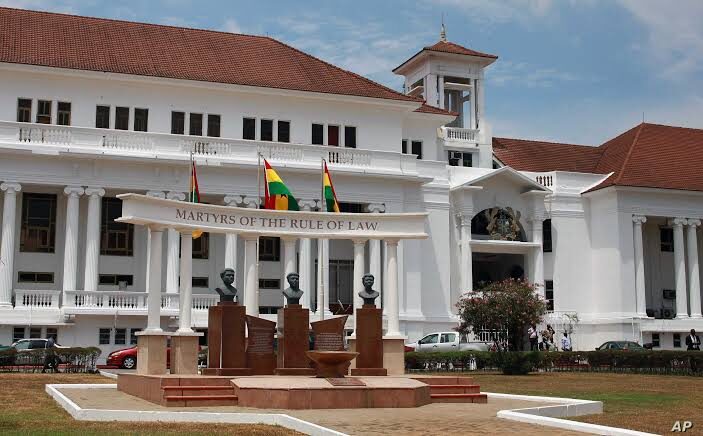
Judiciary’s Role Extends Beyond Courtrooms
Rt. Hon. Bagbin stressed that the significance of the Supreme Court mandate extends beyond the legal profession because the rule of law remains the foundation upon which Ghana’s democratic stability and national peace depend.
He argued that constitutionalism cannot be viewed exclusively as the responsibility of judges and lawyers, insisting that every citizen benefits from the work of the judiciary through the protection of constitutional rights, peaceful elections and lawful governance.
The Speaker noted that over the decades, the Court has become one of the principal institutions through which constitutional disputes have been resolved peacefully, helping to strengthen democratic governance and reinforce public confidence in the justice system.
According to him, every Ghanaian who has exercised the right to vote in peaceful elections, sought protection against unlawful governmental action or relied on constitutional safeguards has, in one way or another, benefited from the work of the Supreme Court.
Similarly, he said, state institutions have continued to discharge their constitutional mandates within the framework of law because of the Court’s leadership in interpreting and defending the Constitution.
Court’s Enduring Relevance Through Constitutional Change
Reflecting on the institution’s history, Rt. Hon. Bagbin observed that while the Court’s jurisdiction, institutional structure and jurisprudence have evolved in response to changing constitutional arrangements, its core responsibility has remained unchanged.
He said the Supreme Court has consistently administered justice according to law while protecting the constitutional order of the Republic, making it one of Ghana’s most respected democratic institutions.
The Speaker maintained that the Court’s ability to remain relevant throughout periods of constitutional transition demonstrates the resilience of Ghana’s justice system and its commitment to democratic governance.
He added that the institution’s rich institutional memory continues to provide continuity within the country’s governance architecture, allowing constitutional disputes to be addressed through legal processes rather than political confrontation.

Constitutional Stability Defines National Development
Rt Hon. Bagbin further argued that the Court’s contribution to national development should not be measured solely by the number of landmark judgments it has delivered but by the constitutional stability it has helped preserve over the decades.
He explained that the peaceful transfer of political power, protection of constitutional rights and maintenance of democratic order have all been strengthened by the judiciary’s unwavering commitment to the rule of law.
According to him, the Supreme Court has inspired confidence in Ghana’s democratic institutions by providing an impartial forum for resolving constitutional disagreements while ensuring that all public authorities remain subject to the Constitution.
He said the institution has therefore become a cornerstone of Ghana’s democratic architecture, fostering stability and reinforcing citizens’ confidence in constitutional governance.
Partnership Between Parliament and Judiciary Essential
The Speaker also reaffirmed the importance of maintaining mutual respect between Parliament and the Judiciary, describing both institutions as indispensable pillars of Ghana’s constitutional democracy.

Although each arm of government performs separate constitutional functions, he noted that both remain accountable to the Constitution and share responsibility for preserving democratic governance.
He emphasised that constitutional democracy flourishes when state institutions faithfully execute their mandates while respecting the independence and authority of one another.
Rt. Hon. Bagbin further indicated that the anniversary offers an opportunity for all constitutional bodies to recommit themselves to strengthening the rule of law and protecting democratic values that have underpinned Ghana’s political stability.
National Milestone Calls for Renewed Commitment
The Speaker described the Supreme Court’s sesquicentennial celebration as a national milestone that should inspire renewed commitment to justice, constitutionalism and good governance.

He observed that the institution’s survival and continued relevance over one hundred and fifty years reflect the resilience of Ghana’s constitutional system and the dedication of successive generations of judges who have upheld the rule of law.
He expressed confidence that the Court would continue to discharge its constitutional mandate with independence, integrity and impartiality while adapting to emerging legal and governance challenges.
As Ghana reflects on one hundred and fifty years of its highest court, Rt Hon. Bagbin maintained that preserving public trust in the administration of justice must remain central to the judiciary’s mission.
He said the Supreme Court’s enduring legacy will ultimately be measured not only by its legal decisions but by its continued ability to protect constitutional democracy, sustain public confidence in the rule of law and safeguard the democratic aspirations of present and future generations.
READ MORE: Government Backs UDS Yendi Medical School Expansion