The Member of Parliament for Atiwa East Constituency, Honourable Abena Osei-Asare, has challenged the government’s claim that public spending is being directed to the right areas, arguing that the Mid-Year Review Budget figures point to weak execution of critical development projects. The former Deputy Finance Minister questioned why capital expenditure fell significantly below its target while other spending obligations continued to expand.
Honourable Osei-Asare noted that the government initially projected revenue of GH¢227 billion before revising the target to GH¢229 billion after introducing new tax measures in 2025. She explained that actual revenue collection reached GH¢224 billion, creating a shortfall that required the administration to examine the performance of its revenue policies.
According to the Atiwa East MP, the figures presented in the Mid-Year Review draws attention to the effectiveness of the tax handles introduced by the government. She argued that the administration needs to examine why the additional revenue measures failed to produce the expected results.
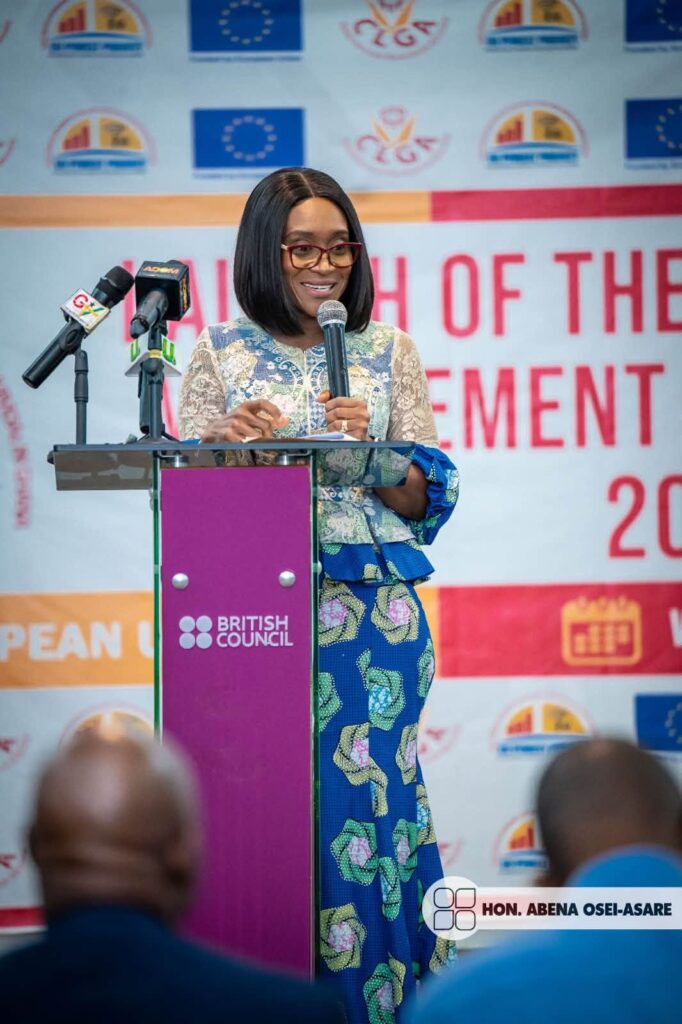
A more significant issue, she suggested, emerges from the expenditure figures. Although government budgeted GH¢21 billion for capital expenditure, actual spending reached only GH¢14 billion, a gap she linked to the slow delivery of infrastructure that could directly improve the lives of citizens.
“If you tell me you are spending in the right places, I will disagree with you because the numbers are not saying that.”
Honourable Osei-Asare
Honourable Osei-Asare pointed to roads, schools and hospitals as examples of projects that could reduce pressure on households while supporting economic activity. She argued that infrastructure investment could ease the cost of accessing essential services and create conditions for stronger economic participation.
At the same time, arrears spending exceeded its target by a significant margin. Government had projected GH¢14 billion for arrears but eventually spent GH¢29 billion, while total expenditure for 2025 fell short by GH¢36 billion.
For the former Finance Minister, the contrast between underperformance in capital expenditure and higher spending in other areas creates questions about the priorities guiding public finances. She also cited the GH¢4.5 billion transferred to the Gold Board during the final quarter of 2025 as an example of a decision that deserves closer political scrutiny.
On the economic impact of public spending, she emphasised that expenditure should create visible activity, support infrastructure delivery and reduce the daily burden on ordinary Ghanaians.
Rising Audit Infractions Raise Questions Over Local Funds
The Atiwa East MP has also questioned the management of funds transferred to District Assemblies, linking rising audit infractions and abandoned projects to weaknesses in financial controls and project supervision. She pointed to the amount of money released to whether public resources are being properly managed after reaching local authorities.
Honourable Osei-Asare cited GH¢3 billion transferred to District Assemblies and drew attention to a sharp increase in audit infractions. Figures from the Auditor General’s report, she noted, showed infractions rising from approximately GH¢18 million to GH¢21 million in 2024 to GH¢134 million.
For the former Deputy Finance Minister, the figures pointed to a need for stronger internal controls within the assemblies. She explained that releasing funds without improving the systems governing their use could limit the impact of public expenditure.

“You do not just send the money, but you also strengthen the systems that they use to spend the monies.”
Honourable Abena Osei-Asare
On sanitation, the Atiwa East MP linked financial management to the quality of services delivered in communities. She urged policymakers to examine whether funds allocated for sanitation are being used for their intended purposes, especially amid the serious flooding experienced in parts of Greater Accra.
The discussion also brought public perception into the debate over the Mid-Year Review. Honourable Osei-Asare referred to interviews with traders at Makola Market and argued that the daily experiences of citizens should form part of the assessment of economic performance.
From her perspective, official figures require a connection to life outside government statements and parliamentary documents. She therefore urged decision makers to listen to market women, households and local communities when assessing whether public spending was producing the desired results.
The management of capital projects is another major part of her argument. Honourable Osei-Asare cited contract irregularities involving abandoned and incomplete projects within District Assemblies, with the value placed at approximately GH¢189 million.
She argued that completing existing projects could deliver greater value to the public than starting new initiatives while unfinished facilities remain scattered across the country. Roads, schools and other community projects, she indicated, require completion so that public funds already committed can produce usable results.
Looking at the issue from a governance perspective, the Atiwa East MP linked financial discipline to both expenditure decisions and oversight. She argued that proper spending involves selecting useful projects, completing them and ensuring that the institutions responsible for managing public funds operate within effective controls.
READ ALSO: GoldBod CEO Refutes Minority’s Operational Losses Claims