
Vice President, Prof. Naana Jane Opoku-Agyemang, has argued that a genuine desire to occupy a leadership position does not automatically qualify a person to hold it, insisting that merit, service, and accountability must outweigh personal ambition in public office.
Reflecting on her years of experience across academia and government, Prof. Opoku-Agyemang described public office as a form of stewardship, one that requires leaders to remain focused on the welfare of the people who gave them their mandate rather than treating positions as rewards for personal aspiration.
Her remarks add a reflective, values-driven voice to ongoing conversations in the country about the qualities that should define public leadership, at a time when questions of accountability and service continue to shape political discourse.
Prof. Opoku-Agyemang was direct in separating ambition from suitability, arguing that wanting a role is fundamentally different from being equipped or entitled to it. She maintained that the true measure of a leader’s fitness for office lies not in their eagerness to occupy it, but in their demonstrated commitment to merit, service, and being answerable to those they serve.
Her comments underscored a broader philosophy that public office should be approached as a form of stewardship rather than a personal achievement, with leaders expected to prioritise the interests of the people over their own career ambitions.
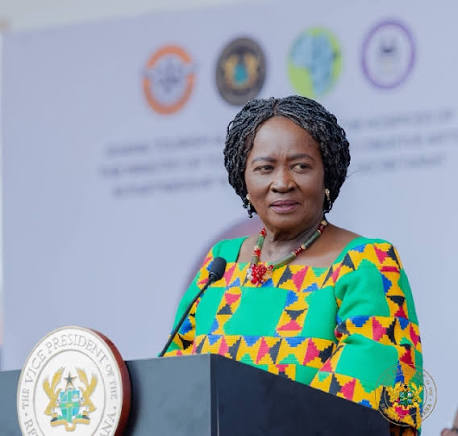
Leadership Must Focus on the People Being Served
She insisted that regardless of the setting, the focus of leadership must always remain on the people being served. Speaking candidly about the realities of criticism that come with holding public office, she noted that it is unrealistic for any leader to expect unanimous approval from the public.
In her view, securing the backing of roughly 70 percent of the public represents a strong outcome, but she cautioned that leaders must never disregard the remaining 30 percent who may hold dissenting views.
“The remaining thirty percent still deserve to be engaged with patience, not dismissed simply because they did not agree.”
Prof. Naana Jane Opoku-Agyemang
She explained that her approach to dissent involves engaging critics patiently, making a genuine effort to understand their concerns, and providing information that might help them reconsider their position, rather than shutting out opposing voices altogether.
Prof. Opoku-Agyemang linked this approach directly to her years in academia, where she said managing diverse personalities and competing expectations required constant listening and a spirit of inclusion. She maintained that these same skills remain critical in government, where decisions carry consequences that affect millions of citizens rather than a single institution or classroom.
She stressed that the fundamental work of leadership does not change depending on where it is exercised. Whether in a lecture hall, an administrative office, or a government ministry, she argued, the task remains the same: to understand people, listen to them, and ultimately serve them.

Call for Governance Beyond Partisanship
Beyond her personal reflections on leadership style, Prof. Opoku-Agyemang touched on the broader role institutions play in nation building, with her comments carrying an implicit call for a style of governance that prioritises humanity over partisanship.
She emphasised that empathy and stewardship align closely with broader calls for leaders to model behaviour capable of bridging political and social divides, rather than deepening them.
As a former academic administrator who went on to serve as Minister of Education before becoming Ghana’s first female Vice President, Prof. Opoku-Agyemang brings to these reflections a perspective shaped by both scholarly rigour and direct political experience.
Notably, she presented that experience not as a personal narrative to be celebrated, but as a practical framework for how public service ought to be conducted more broadly.
Titles Change, But the Duty of Leadership Remains
Prof. Opoku-Agyemang concluded her remarks by reiterating that while structures and titles within government and institutions will continue to evolve over time, the fundamental duty of leadership itself will not change. She suggested that the true measure of a leader’s success lies not in political victories alone, but in whether the people they serve feel heard, respected, and genuinely included in the decisions that affect their lives.
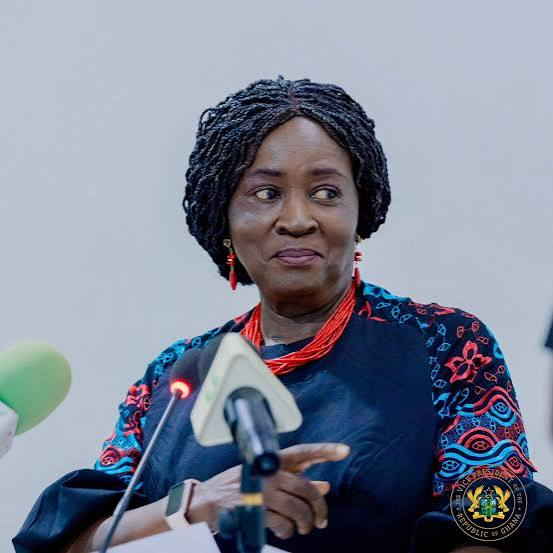
Her remarks are likely to resonate with ongoing public debate about the standards expected of leaders in both political and institutional settings, reinforcing a broader push for governance defined less by personal ambition and more by consistent accountability to the public.
As Ghana continues to navigate questions of leadership and public trust, her intervention offers a reflective, experience-based contribution to a conversation that remains central to the country’s democratic development.
READ MORE: NUGS President Proposes Social Media Ban for Children Under 15